Using AI in Recruitment: A Complete Guide for 2026
The recruitment landscape has fundamentally shifted over the past few years, with artificial intelligence becoming a cornerstone of modern hiring strategies. As organizations struggle to identify qualified candidates in an increasingly competitive talent market, using AI in recruitment has evolved from a nice-to-have advantage to a business necessity. This transformation is particularly relevant in specialized fields where skill verification and credential authenticity are paramount to successful hiring outcomes.
The Current State of AI-Powered Recruitment
The recruitment industry has embraced artificial intelligence at an unprecedented pace, with AI-driven talent acquisition reshaping how companies identify, assess, and engage with potential candidates. Organizations now leverage machine learning algorithms, natural language processing, and predictive analytics to streamline hiring workflows that once consumed weeks of human effort.
Why Traditional Recruitment Methods Fall Short
Traditional recruitment processes suffer from significant inefficiencies that AI technologies address directly. Manual resume screening can take hours per candidate, human bias often influences hiring decisions unconsciously, and scalability becomes nearly impossible when dealing with hundreds or thousands of applications.
Key challenges in conventional hiring include:
- Time-consuming manual screening processes
- Inconsistent evaluation criteria across candidates
- Limited ability to verify credentials authenticity
- High costs associated with extended vacancy periods
- Difficulty identifying passive candidates who aren't actively job hunting
The average time-to-hire in 2026 ranges from 36 to 42 days for specialized positions, with companies spending approximately $4,700 per hire according to industry benchmarks. These metrics demonstrate the urgent need for more efficient approaches.
Core Applications of AI in Modern Recruitment
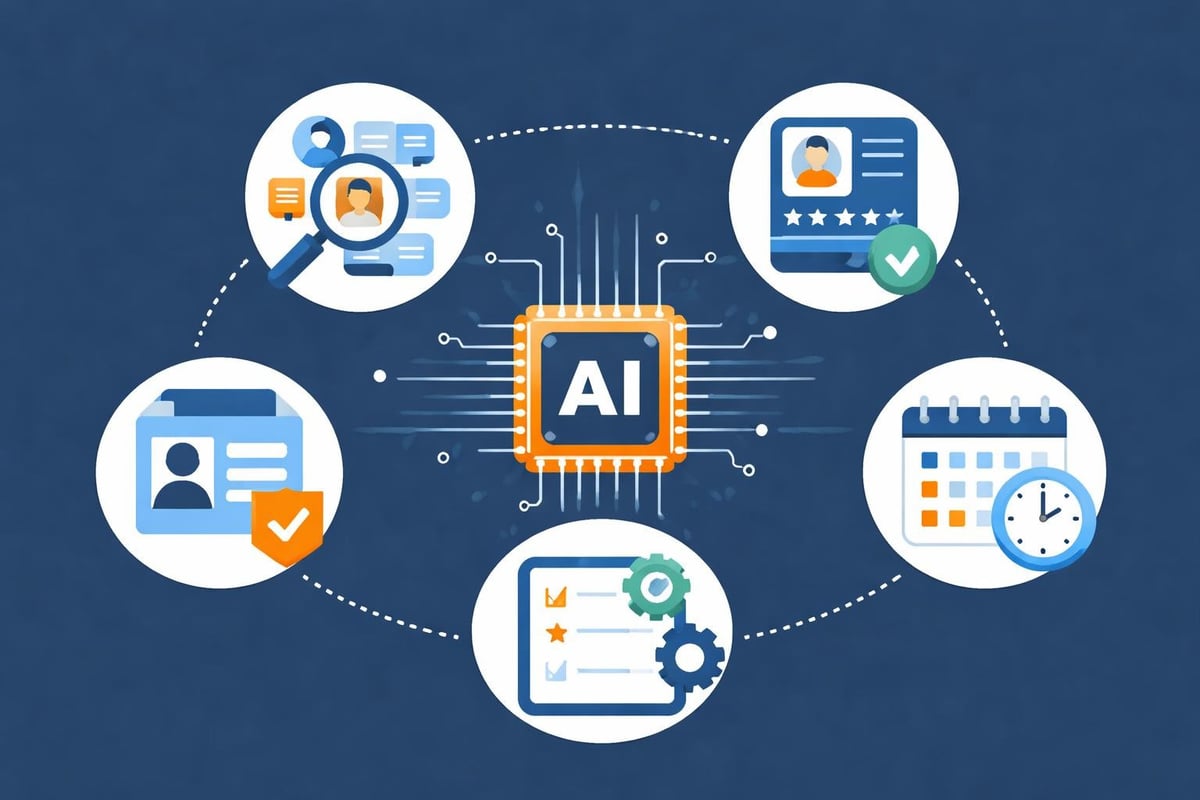
Using AI in recruitment manifests across multiple touchpoints throughout the hiring lifecycle. Each application addresses specific pain points while contributing to an integrated, intelligent hiring ecosystem.
Intelligent Candidate Sourcing
AI-powered sourcing tools scan multiple platforms simultaneously, identifying potential candidates based on sophisticated matching algorithms. These systems analyze professional networks, job boards, portfolio sites, and even public repositories to build comprehensive candidate profiles.
Modern sourcing technologies go beyond simple keyword matching. They understand contextual relevance, career trajectory patterns, and skill adjacencies that human recruiters might overlook. This capability proves especially valuable when seeking candidates with emerging skill sets or non-traditional backgrounds.
Automated Resume Screening and Parsing
Resume screening represents one of the most time-intensive aspects of recruitment. AI systems can process thousands of resumes in minutes, extracting relevant information and ranking candidates according to predetermined criteria.
| Traditional Screening | AI-Powered Screening |
|---|---|
| 200 resumes per day (manual) | 10,000+ resumes per hour |
| Subjective evaluation criteria | Consistent, objective standards |
| High risk of unconscious bias | Reduced bias through algorithmic fairness |
| Limited data extraction | Comprehensive parsing and analysis |
| No fraud detection | Advanced credential verification |
The most sophisticated platforms now incorporate context-aware frameworks using large language models that understand nuanced qualifications and relevant experience beyond surface-level keyword matching.
Candidate Fraud Detection and Verification
Resume fraud has become increasingly sophisticated, with candidates embellishing credentials, fabricating employment history, or claiming unearned qualifications. Using AI in recruitment helps organizations combat this challenge through automated verification systems.
AI-driven fraud detection capabilities:
- Cross-referencing employment dates across multiple data sources
- Validating educational credentials against institutional databases
- Analyzing writing patterns to detect inconsistencies
- Verifying professional certifications and licenses
- Identifying suspicious patterns in application behavior
For organizations hiring AI professionals specifically, platforms like Augmnt ATS provide verified matching and candidate fraud detection specifically designed for technical roles, ensuring that only qualified and authenticated candidates enter the hiring pipeline.
Enhancing Candidate Experience Through AI
The candidate experience significantly impacts employer brand and acceptance rates. AI technologies create more engaging, responsive, and personalized interactions throughout the recruitment journey.
Conversational AI and Chatbots
Recruitment chatbots provide immediate responses to candidate questions, schedule interviews automatically, and guide applicants through complex application processes. These virtual assistants operate 24/7, ensuring candidates receive timely information regardless of time zones or business hours.
Advanced conversational AI systems can conduct preliminary screening interviews, asking relevant questions and evaluating responses using natural language understanding. This approach maintains human connection while scaling recruitment capacity.
Personalized Job Recommendations
AI algorithms analyze candidate profiles, search behavior, and application history to recommend positions that align with their skills and career aspirations. This personalization increases application quality and reduces time wasted on mismatched opportunities.
The technology works bidirectionally, also helping recruiters discover candidates who might not have considered specific roles but possess transferable skills and growth potential.
Addressing Bias and Fairness Concerns
Strategies for successful AI adoption in recruitment must prioritize fairness and bias mitigation. While AI can reduce human bias, poorly designed algorithms can perpetuate or amplify existing discriminatory patterns.
Building Fair AI Systems
Organizations implementing AI recruitment tools should establish governance frameworks that ensure algorithmic fairness. This includes regular bias audits, diverse training data sets, and transparent decision-making processes.
Essential fairness practices:
- Regular algorithmic audits for discriminatory patterns
- Diverse data sets representing various demographics
- Human oversight at critical decision points
- Transparent criteria for candidate evaluation
- Ongoing monitoring of hiring outcomes by demographic groups
Research on fairness and explainability in automated hiring systems emphasizes the importance of making AI decisions interpretable to both recruiters and candidates.
The Role of Explainable AI
Explainable AI (XAI) allows recruiters to understand why specific candidates were recommended or rejected. This transparency builds trust, enables better decision-making, and helps organizations comply with employment regulations requiring justifiable hiring decisions.
The importance of HR managers' AI literacy cannot be overstated, as their understanding of system outputs directly influences interpretation and decision quality.
Practical Implementation Strategies
Successfully using AI in recruitment requires thoughtful planning, stakeholder alignment, and iterative refinement. Organizations should approach implementation as a transformation journey rather than a simple technology deployment.
Starting With High-Impact Use Cases
Rather than attempting comprehensive AI integration immediately, focus on specific pain points where AI delivers measurable value. Resume screening, interview scheduling, and candidate communication often provide quick wins that build organizational confidence.
- Assess current recruitment bottlenecks through data analysis and stakeholder interviews
- Identify AI solutions that directly address prioritized challenges
- Pilot with limited scope to test effectiveness and gather feedback
- Measure impact using defined metrics like time-to-hire and quality-of-hire
- Scale successful initiatives while continuing to optimize and refine
Integration With Existing Systems
AI recruitment tools should integrate seamlessly with applicant tracking systems, HRIS platforms, and communication tools. Fragmented systems create data silos and reduce the efficiency gains AI promises.
| Integration Requirement | Business Impact |
|---|---|
| ATS connectivity | Centralized candidate data |
| Calendar system sync | Automated interview scheduling |
| Communication platform integration | Streamlined candidate messaging |
| Background check API connections | Faster verification processes |
| Analytics dashboard consolidation | Unified recruitment insights |
Many organizations choose platforms that offer comprehensive solutions rather than piecing together multiple point solutions.
Training and Change Management
The human element remains critical when using AI in recruitment. Recruiters need training on how to interpret AI recommendations, override system decisions when appropriate, and leverage technology to enhance rather than replace human judgment.
Change management programs should address concerns about job displacement, clarify how AI augments human capabilities, and demonstrate the value AI brings to recruiters' daily work.
Measuring ROI and Success Metrics
Systematic analysis of AI's role in employee recruitment reveals that organizations must establish clear metrics to evaluate technology effectiveness and business impact.
Key Performance Indicators
Time-based metrics:
- Time-to-hire reduction percentage
- Screening time per candidate
- Interview scheduling efficiency
- Offer acceptance timeline
Quality metrics:
- Quality-of-hire scores
- First-year retention rates
- Performance ratings of AI-sourced candidates
- Hiring manager satisfaction scores
Cost metrics:
- Cost-per-hire reduction
- Recruiter productivity improvements
- Reduced agency fees
- Lower turnover-related costs
Organizations should track these metrics before and after AI implementation to demonstrate tangible value and identify areas requiring optimization.
Industry-Specific AI Recruitment Applications
Different industries face unique talent challenges that AI addresses through specialized solutions. The healthcare sector, for example, has seen AI transforming recruitment and sourcing by matching complex credential requirements with qualified professionals.
Technology and AI Talent Acquisition
Hiring AI professionals presents distinct challenges given the specialized nature of required skills and the prevalence of credential fraud in emerging technology fields. Organizations need platforms that combine technical skill assessment with robust verification mechanisms.
For companies building AI teams, applying as verified candidates through specialized marketplaces ensures both parties benefit from pre-validated qualifications and authentic skill demonstrations.
Healthcare Professional Recruitment
Healthcare recruitment demands verification of multiple credentials, licenses, and certifications across various regulatory jurisdictions. AI systems streamline this complexity by automatically checking credentials against authoritative databases and flagging discrepancies.
Financial Services Hiring
Financial institutions require rigorous background checks and compliance verification. AI accelerates these processes while maintaining thorough documentation trails required for regulatory compliance.
Future Trends in AI Recruitment Technology
The trajectory of AI recruitment technology points toward increasingly sophisticated capabilities that blur the lines between artificial and human intelligence in talent acquisition.
Predictive Analytics and Talent Intelligence
Advanced AI systems will predict candidate success with greater accuracy by analyzing vast datasets including work samples, assessment results, cultural fit indicators, and career trajectory patterns. These predictions help organizations make more informed hiring decisions and reduce costly mis-hires.
Multimodal Assessment Capabilities
Future AI recruitment tools will analyze candidate presentations across multiple modalities including written communication, video interviews, coding samples, and portfolio work. This comprehensive assessment provides richer candidate insights than single-dimension evaluations.
Continuous Learning Systems
Machine learning models will continuously improve through feedback loops, learning from hiring outcomes to refine candidate matching algorithms. Organizations that consistently provide outcome data will benefit from increasingly accurate recommendations.
Ethical Considerations and Regulatory Compliance
As AI becomes more prevalent in recruitment, regulatory frameworks are emerging to protect candidate rights and ensure fair hiring practices. Organizations using AI in recruitment must stay informed about evolving legal requirements.
Data Privacy and Protection
Recruitment AI systems process sensitive personal information, requiring strict adherence to data protection regulations like GDPR, CCPA, and emerging AI-specific legislation. Organizations must implement robust data governance practices, obtain proper consent, and provide transparency about how candidate data is used.
Right to Explanation
Several jurisdictions now require organizations to explain automated decisions that significantly affect individuals. Recruitment decisions clearly fall into this category, making explainable AI not just a best practice but a legal requirement in many regions.
Ongoing Compliance Monitoring
Compliance isn't a one-time checkbox but an ongoing responsibility. Organizations should establish processes for regular compliance reviews, algorithmic audits, and policy updates that reflect changing regulatory landscapes.
Building a Sustainable AI Recruitment Strategy
Long-term success with AI recruitment requires strategic vision beyond immediate efficiency gains. Organizations should view AI as an enabler of strategic talent acquisition rather than merely a cost-reduction tool.
Balancing Automation and Human Touch
The most effective recruitment strategies combine AI efficiency with human empathy and judgment. AI handles repetitive, data-intensive tasks while humans focus on relationship building, nuanced evaluation, and cultural fit assessment.
Optimal human-AI collaboration:
- AI screens and ranks candidates; humans conduct final interviews
- AI schedules logistics; humans personalize candidate communication
- AI detects credential fraud; humans investigate discrepancies
- AI identifies skill gaps; humans design development plans
- AI tracks metrics; humans interpret trends and adjust strategy
Investing in Continuous Improvement
AI recruitment systems require ongoing refinement based on hiring outcomes, user feedback, and technological advances. Organizations should allocate resources for system optimization, training data enhancement, and capability expansion.
Regular review cycles help identify what's working, what needs adjustment, and where new AI capabilities might address emerging challenges.
Using AI in recruitment represents a fundamental shift in how organizations identify and engage talent, offering unprecedented efficiency, accuracy, and scale. By thoughtfully implementing these technologies with attention to fairness, transparency, and human collaboration, companies can build competitive advantages in talent acquisition while creating better experiences for candidates. Augmnt provides a verified marketplace that intelligently connects businesses with authenticated AI professionals, combining AI-powered matching with human expertise to ensure only qualified, fraud-free candidates enter your hiring pipeline.