Resume Fraud Detection: Protect Your Hiring Process in 2026
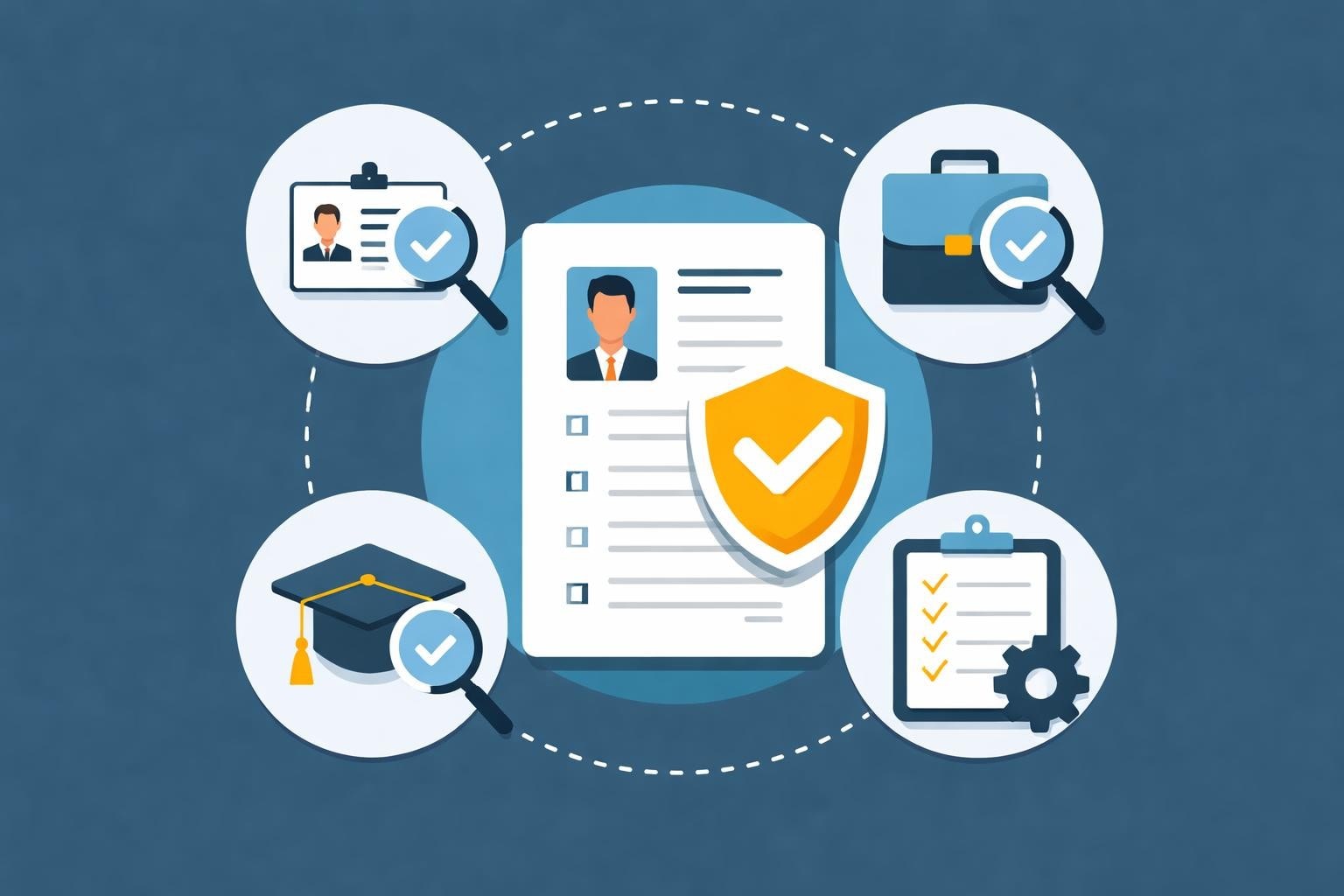
Resume fraud has emerged as one of the most significant challenges facing recruiters and hiring managers in 2026. With the rise of remote work and digital hiring processes, candidates have found increasingly sophisticated ways to embellish qualifications, fabricate employment histories, and misrepresent their skills. For businesses seeking AI professionals and specialized talent, the stakes are even higher. A single fraudulent hire can cost organizations hundreds of thousands of dollars in lost productivity, damaged projects, and potential legal liabilities. Understanding how to implement effective resume fraud detection strategies is no longer optional-it's essential for protecting your organization's hiring integrity.
The Growing Threat of Resume Fraud in Modern Recruitment
The landscape of candidate deception has evolved dramatically over the past few years. What once consisted of minor embellishments about job titles or responsibilities has transformed into elaborate schemes involving fake degrees, fabricated employment histories, and even stolen identities.
Recent studies indicate that nearly 78% of resumes contain some form of misleading information. While not all misrepresentations constitute outright fraud, the spectrum ranges from harmless exaggerations to criminal deception.
Common Forms of Resume Deception
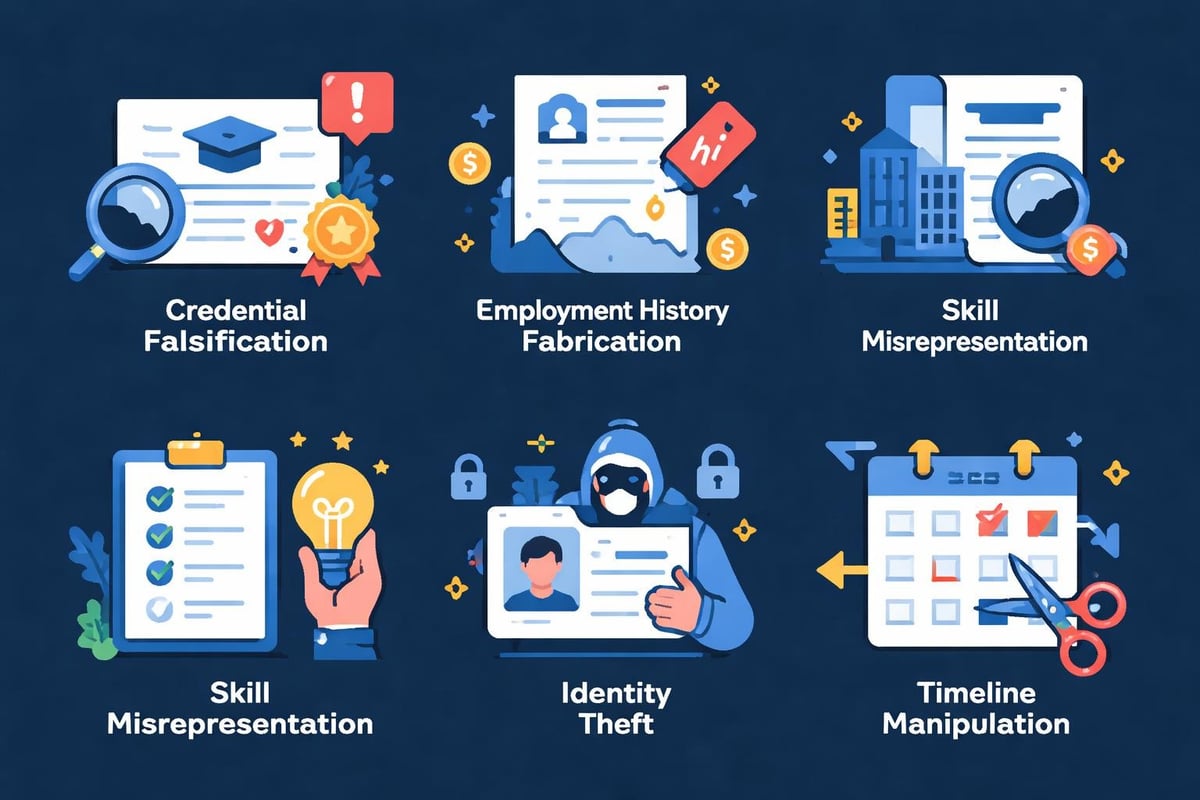
Organizations face multiple types of fraudulent activity during the hiring process. Understanding these categories helps build more effective detection systems.
Educational Credential Fraud:
- Claiming degrees from non-existent institutions
- Forging transcripts and diplomas
- Misrepresenting graduation dates or majors
- Falsifying certifications and professional licenses
Employment History Manipulation:
- Extending employment dates to cover gaps
- Inflating job titles and responsibilities
- Fabricating entire positions at real companies
- Creating fake companies to support false claims
Skills and Achievement Fabrication:
- Claiming proficiency in technologies never used
- Inventing project contributions and outcomes
- Misrepresenting language fluencies
- Fabricating awards and recognitions
The intelligence-driven screening methods employed by forward-thinking organizations have become critical in identifying these deceptions early in the recruitment lifecycle.
Why Resume Fraud Detection Matters for AI Talent Acquisition
For companies hiring AI professionals, the consequences of failing to detect resume fraud extend beyond typical hiring mistakes. The specialized nature of AI work means that unqualified candidates can cause significant damage before their incompetence becomes apparent.
Financial and Operational Impact
The cost of a fraudulent hire in the AI sector can be staggering. Beyond the direct expenses of recruitment, onboarding, and salary, organizations face:
| Impact Category | Estimated Cost Range | Time to Resolution |
|---|---|---|
| Failed projects and deliverables | $150,000 - $500,000 | 6-12 months |
| Team productivity loss | $50,000 - $200,000 | 3-6 months |
| Reputation damage | Varies significantly | 12-24 months |
| Legal and compliance issues | $25,000 - $100,000+ | 6-18 months |
These figures don't account for opportunity costs when qualified candidates are passed over in favor of fraudulent applicants. The AI talent market is highly competitive, and losing top candidates to competitors while dealing with a fraudulent hire creates compounding losses.
Security and Intellectual Property Risks
AI projects often involve sensitive data, proprietary algorithms, and competitive intelligence. A fraudulent hire who lacks proper credentials may also lack the ethical framework and security awareness required to protect these assets. Some cases of resume fraud are actually precursors to corporate espionage or data theft.
Research examining vulnerabilities in AI-driven resume screening systems demonstrates how sophisticated actors can manipulate automated systems, highlighting the need for multi-layered verification approaches.
Building an Effective Resume Fraud Detection System
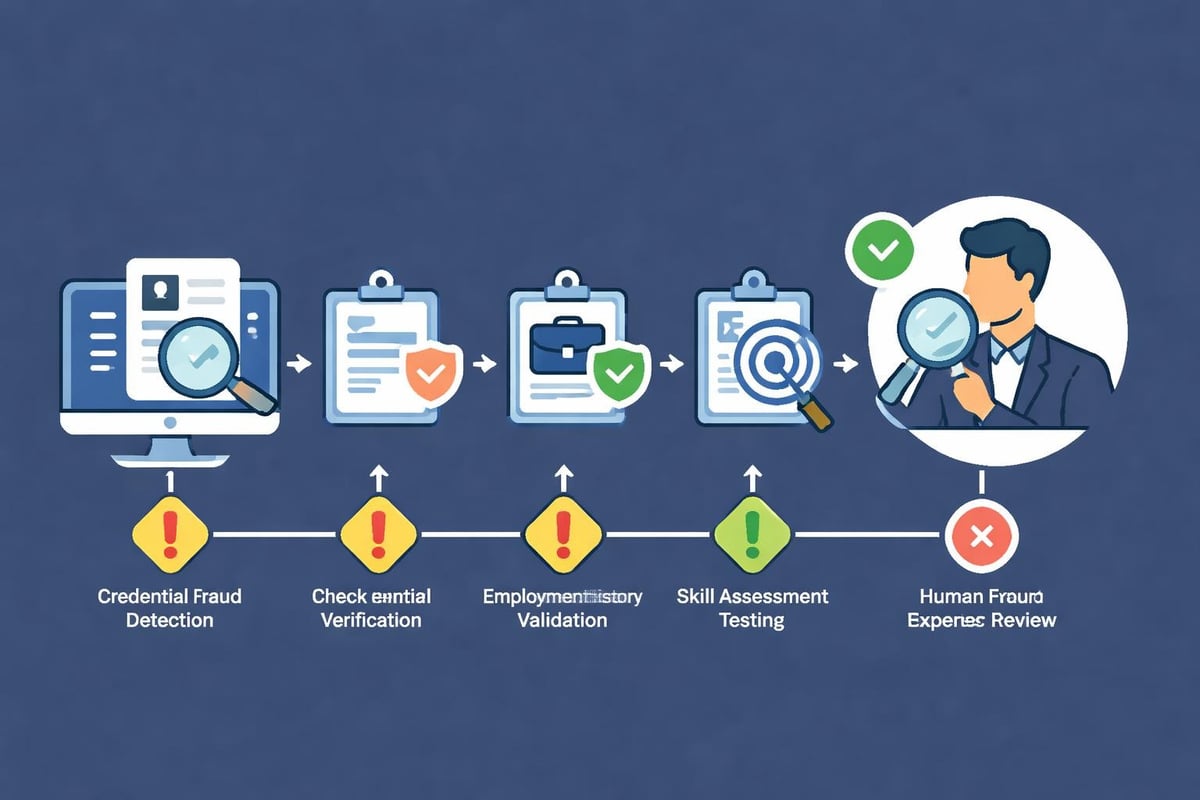
Implementing comprehensive resume fraud detection requires a strategic combination of technology, process, and human expertise. Organizations that successfully combat resume fraud typically employ multiple verification layers rather than relying on a single screening method.
Technology-Enabled Verification Methods
Modern resume fraud detection leverages several technological approaches to identify inconsistencies and fabrications.
Automated Background Checks: These systems cross-reference candidate claims against authoritative databases including educational institutions, professional licensing boards, and employment records. Advanced platforms can verify information in real-time, flagging discrepancies immediately.
Digital Credential Verification: Blockchain-based credential systems and direct institutional verification portals allow employers to authenticate degrees and certifications without relying on candidate-provided documentation. This approach eliminates the possibility of forged documents entering the verification process.
AI-Powered Pattern Recognition: Machine learning algorithms analyze resume patterns to identify anomalies that may indicate fraud. These systems examine writing styles, formatting inconsistencies, timeline gaps, and correlation patterns between claimed experiences and demonstrated knowledge.
Platforms like Augmnt ATS integrate verified matching and candidate fraud detection directly into the hiring workflow, combining AI analysis with human expert validation to ensure authenticity.
Human-Led Investigation Techniques
While technology provides scale and efficiency, human investigators bring critical thinking and contextual understanding that algorithms cannot replicate.
Behavioral Interview Techniques: Trained interviewers can identify knowledge gaps and inconsistencies through targeted questioning. Asking candidates to describe specific situations, explain technical decisions, or walk through their problem-solving process reveals whether claimed experience is genuine.
Reference Check Protocols: Comprehensive reference checks go beyond simple employment verification. Detailed conversations with former supervisors and colleagues can uncover discrepancies between claimed and actual responsibilities.
Skills Assessment Testing: Practical evaluations require candidates to demonstrate proficiency in areas they claim on their resumes. For AI professionals, this might include coding challenges, algorithm design exercises, or machine learning model development tasks.
Advanced Strategies for Detecting Sophisticated Fraud
As detection methods improve, fraudsters develop more sophisticated techniques to evade scrutiny. Organizations must stay ahead of these evolving tactics through continuous improvement of their verification processes.
Timeline and Consistency Analysis
One of the most revealing aspects of resume fraud detection involves examining the logical consistency of a candidate's career narrative.
Experienced investigators look for:
- Chronological impossibilities: Overlapping employment dates, degrees completed in unrealistic timeframes, or certifications obtained before prerequisite qualifications
- Career progression anomalies: Unexplained jumps in responsibility, returns to junior roles without explanation, or skill acquisition that doesn't align with stated positions
- Geographic inconsistencies: Employment claims at locations far from residential addresses without explanation of remote work or relocation
- Educational timeline conflicts: Work experience claimed during periods when full-time education would have been required
Research on AI-assisted candidate evaluation systems demonstrates how quantifying truth and authenticity in resumes improves overall hiring efficiency while reducing fraud risk.
Social Media and Digital Footprint Verification
A candidate's digital presence often provides corroborating evidence for resume claims-or reveals contradictions.
LinkedIn Timeline Comparison: Cross-referencing LinkedIn employment history with resume claims can reveal discrepancies. Investigators note when LinkedIn profiles are recently updated to match resumes, which may indicate fabrication.
Professional Publication Verification: For candidates claiming research or thought leadership experience, verifying publications, conference presentations, and professional contributions provides concrete evidence of expertise.
GitHub and Portfolio Analysis: For technical roles in AI, examining a candidate's actual code contributions, project history, and technical writing offers direct evidence of capabilities that either supports or contradicts resume claims.
Implementing Fraud Detection Without Damaging Candidate Experience
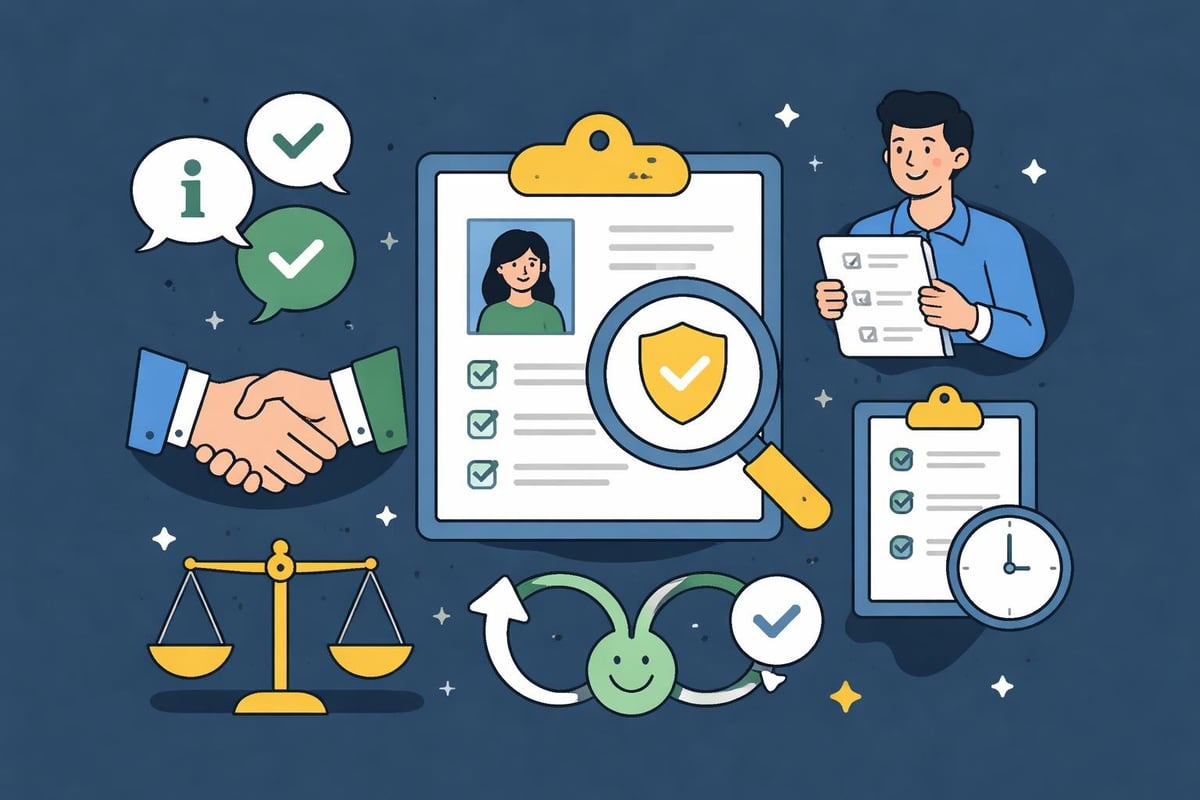
While rigorous resume fraud detection is essential, organizations must balance security with creating a positive candidate experience. Overly invasive or time-consuming verification processes can drive away qualified candidates.
Transparent Communication
Candidates should understand what verification steps will occur and why. Clear communication about background checks, reference calls, and credential verification demonstrates professionalism and sets appropriate expectations.
Best practices include:
- Explaining verification processes during initial conversations
- Providing estimated timelines for each verification stage
- Requesting specific documentation upfront rather than repeatedly asking for materials
- Offering candidates opportunity to address discrepancies before disqualification
Efficient Process Design
Streamlined verification workflows respect candidates' time while maintaining thoroughness. The AI-powered solutions available today enable real-time verification that doesn't create bottlenecks in the hiring process.
| Verification Stage | Traditional Timeline | Optimized Timeline | Method |
|---|---|---|---|
| Education verification | 5-10 business days | 24-48 hours | Digital credential platforms |
| Employment verification | 7-14 business days | 2-3 business days | Automated database checks |
| Reference checks | 5-7 business days | 3-5 business days | Structured scheduling systems |
| Skills assessment | Varies | 1-2 sessions | Standardized testing protocols |
Legal and Ethical Considerations in Resume Fraud Detection
Organizations must navigate complex legal requirements when implementing resume fraud detection programs. Different jurisdictions have varying regulations regarding background checks, data privacy, and candidate rights.
Compliance Requirements
Fair Credit Reporting Act (FCRA): Background checks conducted by third-party services fall under FCRA regulations, requiring specific disclosures and candidate consent procedures.
State and Local Laws: Many states have "ban the box" legislation and restrictions on when background checks can be performed. Some jurisdictions limit the types of information employers can consider.
Data Protection Regulations: For organizations hiring internationally or operating in multiple jurisdictions, compliance with GDPR, CCPA, and similar privacy frameworks is essential when collecting and processing candidate information.
Organizations should consult legal counsel to ensure their resume fraud detection practices comply with applicable regulations while effectively protecting against fraudulent hires.
Avoiding Discrimination Claims
Fraud detection processes must be applied consistently across all candidates to avoid discrimination claims. Documentation of verification procedures, standard protocols for all applicants, and objective criteria for flagging concerns are essential.
The Role of Verified Marketplaces in Combating Resume Fraud
The traditional hiring model places the burden of fraud detection entirely on individual employers. This approach is inefficient, as multiple organizations often verify the same candidates independently. Verified talent marketplaces represent a paradigm shift by centralizing authentication efforts.
Centralized Verification Benefits
When candidate verification occurs once at the marketplace level rather than repeatedly by each employer, several advantages emerge:
- Reduced redundancy: Candidates aren't subjected to multiple verification processes
- Higher-quality screening: Specialized verification teams develop greater expertise
- Faster hiring cycles: Pre-verified candidates can move through employer-specific processes more quickly
- Improved candidate experience: Single comprehensive verification rather than repeated checks
Platforms like Augmnt demonstrate how combining AI analysis with human expert validation creates more reliable candidate authentication while streamlining the hiring process for employers seeking AI talent.
Continuous Verification Models
Rather than one-time verification at the point of hire, advanced platforms implement ongoing credential monitoring. This approach identifies when certifications lapse, degrees are revoked, or other credential changes occur that might affect a professional's qualifications.
Emerging Technologies Shaping Resume Fraud Detection
The resume fraud detection landscape continues to evolve as new technologies emerge and fraudsters adapt their tactics. Organizations that stay informed about these developments can maintain effective defense against increasingly sophisticated deception.
Blockchain Credentialing
Educational institutions and professional organizations are increasingly issuing verifiable credentials on blockchain platforms. These digital certificates cannot be forged or altered, providing employers with tamper-proof verification of qualifications.
As adoption grows, blockchain credentialing will likely become the standard for educational and professional certification, dramatically reducing opportunities for credential fraud.
Behavioral Biometrics
Advanced authentication systems analyze typing patterns, mouse movements, and other behavioral signatures during application processes. These systems can identify when multiple candidates share suspiciously similar behavioral patterns, potentially indicating fraud rings or application assistance services.
Natural Language Processing for Resume Analysis
NLP algorithms become increasingly sophisticated at identifying language patterns associated with fraudulent resumes. These systems analyze writing style consistency, detect copied content from job descriptions, and flag resumes with suspicious similarity to templates known to be associated with fraud.
Understanding how top companies utilize technology including machine learning algorithms provides valuable insights into implementing effective detection systems.
Creating a Culture of Hiring Integrity
Technology and process improvements are essential components of resume fraud detection, but organizational culture plays an equally important role. Companies that prioritize hiring integrity at all levels create more resilient defenses against fraud.
Training and Awareness
Recruiters, hiring managers, and interview teams should receive regular training on:
- Common fraud indicators and red flags
- Effective questioning techniques to verify claimed experience
- Documentation requirements and verification protocols
- Legal and ethical considerations in fraud investigation
Warning Signs Training Should Cover:
- Resume formatting that exactly matches common templates
- Vague or generic descriptions of responsibilities
- Inconsistent verb tense usage suggesting multiple authors
- Unusual employment gaps without explanation
- Credential claims from unfamiliar institutions
Accountability and Reporting
Clear policies defining consequences for submitting fraudulent application materials set expectations and deter deceptive behavior. Organizations should also establish internal reporting mechanisms when fraud is suspected or discovered.
Vendor and Partner Verification
For organizations using staffing agencies, recruitment firms, or talent marketplaces, verifying that partners maintain rigorous fraud detection standards is essential. The effectiveness of your hiring integrity depends on the weakest link in your recruitment ecosystem.
Measuring Resume Fraud Detection Effectiveness
Organizations should establish metrics to evaluate their fraud detection programs and identify areas for improvement. Without measurement, it's impossible to know whether detection efforts are working or resources are being wasted.
Key Performance Indicators
Detection Rate: The percentage of fraudulent applications identified before hiring decisions are made. This metric requires thorough post-hire verification to establish ground truth.
False Positive Rate: How often legitimate candidates are flagged incorrectly as potentially fraudulent. High false positive rates damage candidate experience and slow hiring processes.
Time to Verification: Average duration required to complete credential verification for candidates. This metric helps identify process bottlenecks.
Cost Per Verification: Total investment in fraud detection divided by number of candidates screened. This calculation should include technology costs, staff time, and third-party services.
| Metric | Target Range | Review Frequency |
|---|---|---|
| Detection rate | >85% of fraud cases | Quarterly |
| False positive rate | <5% of candidates | Monthly |
| Average verification time | 3-5 business days | Weekly |
| Cost per verification | $50-$150 | Monthly |
Continuous Improvement Process
Regular review of fraud detection effectiveness should inform program adjustments. Analyzing cases where fraud was missed, gathering feedback from verification teams, and staying informed about emerging fraud tactics enables continuous refinement.
Organizations should also benchmark their practices against industry standards and learn from the experiences of others facing similar challenges in the AI talent acquisition space.
Protecting your organization from resume fraud requires a comprehensive approach combining technology, process, and human expertise. As fraudsters become more sophisticated, detection methods must evolve accordingly, leveraging advances in AI, blockchain verification, and behavioral analysis while maintaining strong human oversight. For businesses seeking AI professionals, where the cost of a fraudulent hire can be particularly devastating, partnering with platforms that provide verified candidate pools eliminates much of the risk. Augmnt offers exactly this advantage-connecting you with pre-verified AI professionals who have undergone rigorous fraud detection and skill validation, allowing you to focus on finding the right talent match rather than worrying about credential authenticity.