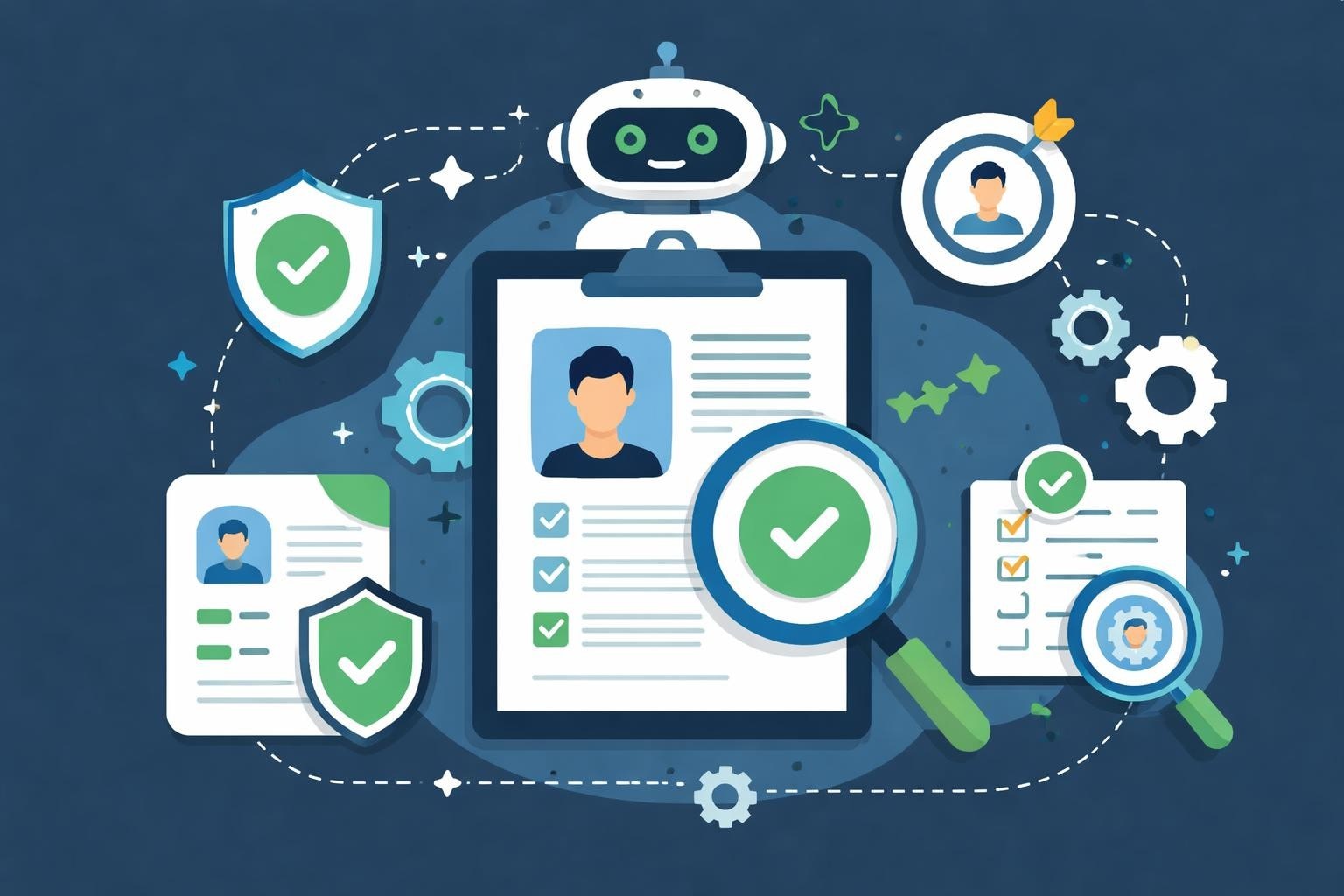
Using AI for Recruitment: Transform Your Hiring Process
The recruitment landscape has undergone a fundamental shift in recent years as organizations grapple with increasing candidate volumes, limited resources, and the persistent challenge of identifying truly qualified talent. Using AI for recruitment has emerged as a powerful solution that addresses these pain points while simultaneously enhancing the quality of hiring decisions. By automating repetitive tasks, improving candidate matching accuracy, and introducing sophisticated verification processes, artificial intelligence is redefining how companies approach talent acquisition in 2026.
The Evolution of AI-Powered Recruitment
Traditional recruitment methods relied heavily on manual resume screening, keyword matching, and recruiter intuition. These approaches consumed significant time and often missed qualified candidates who didn't fit conventional patterns. AI in recruitment has fundamentally changed this dynamic by introducing machine learning algorithms that can process thousands of applications simultaneously while identifying subtle patterns that indicate candidate suitability.
The technology has matured considerably over the past few years. Early AI recruitment tools focused primarily on keyword matching and basic automation. Today's solutions incorporate natural language processing, predictive analytics, and sophisticated verification mechanisms that go far beyond simple resume parsing.
Key Technological Advances Driving Change
Modern AI recruitment platforms leverage multiple technologies working in concert:
- Natural Language Processing (NLP) to understand context and meaning beyond keywords
- Machine learning algorithms that improve matching accuracy over time
- Predictive analytics to forecast candidate success and retention
- Computer vision for credential verification and identity confirmation
- Behavioral analysis to assess cultural fit and work style compatibility
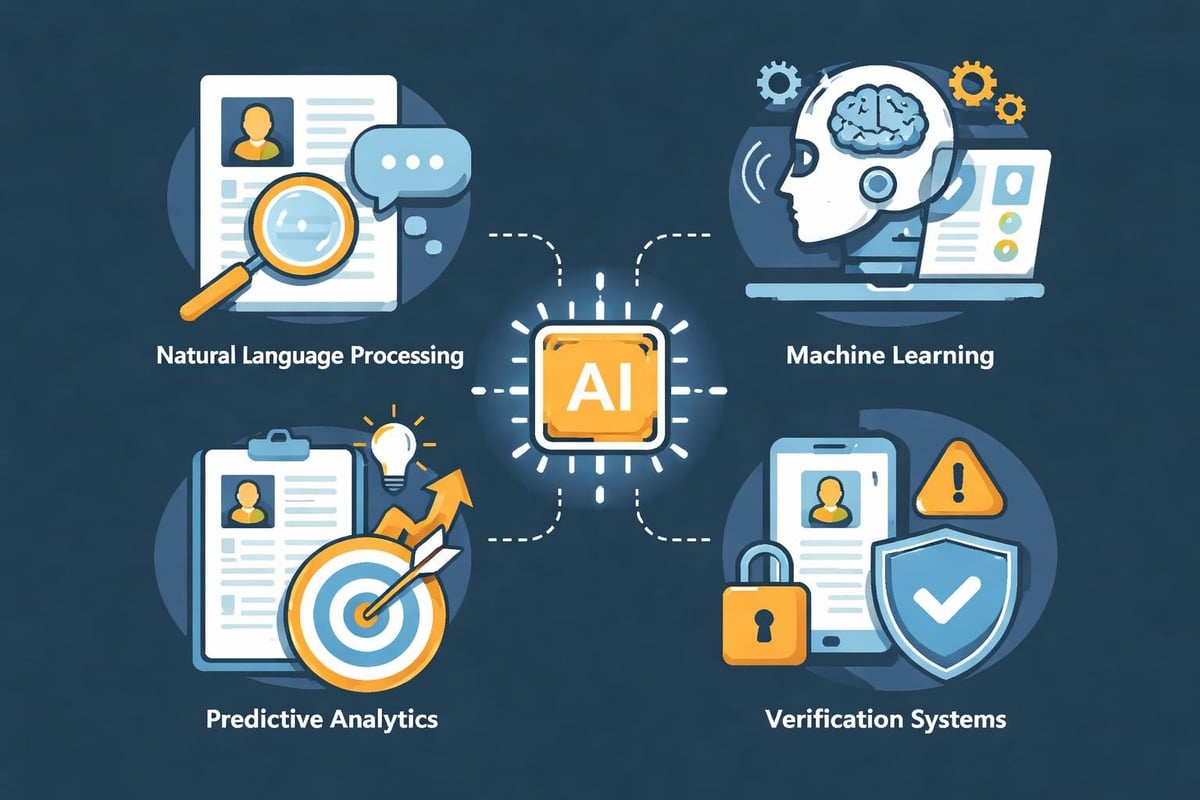
According to IBM's research on AI in recruitment, these technologies work together to create recruitment experiences that are faster, more accurate, and significantly more scalable than traditional approaches.
Automating the Screening Process
The initial screening phase represents one of the most time-intensive aspects of recruitment. Recruiters often spend hours reviewing resumes that don't meet basic qualifications. Using AI for recruitment transforms this bottleneck into an efficient, automated process that filters candidates based on multiple criteria simultaneously.
AI-powered screening systems analyze resumes for relevant experience, educational background, technical skills, and career progression patterns. Unlike simple keyword matching, advanced systems understand context and can identify transferable skills from adjacent industries or roles.
Benefits of Automated Screening
| Benefit Category | Traditional Screening | AI-Powered Screening |
|---|---|---|
| Time per Resume | 3-5 minutes | Seconds |
| Candidate Volume | 50-100 per day | Thousands per day |
| Consistency | Variable (recruiter fatigue) | Uniform criteria application |
| Bias Reduction | Subject to unconscious bias | Rules-based evaluation |
The efficiency gains extend beyond speed. AI systems maintain consistent evaluation criteria across all candidates, reducing the variability that occurs when multiple recruiters assess applications or when individual recruiters experience fatigue.
Research on artificial intelligence in hiring demonstrates that automated screening can reduce time-to-hire by up to 75% while simultaneously improving the quality of candidates who advance to interview stages.
Enhanced Candidate Matching and Skills Verification
Moving beyond basic screening, sophisticated AI platforms excel at matching candidates to specific role requirements. Using ai for recruitment means leveraging algorithms that understand the nuanced relationships between skills, experience levels, and job requirements.
These systems analyze job descriptions to identify critical competencies, then evaluate candidate profiles against these criteria using weighted scoring models. The technology considers factors including:
- Years of experience in specific technologies or methodologies
- Progression of responsibility across career history
- Relevance of educational background and certifications
- Project complexity and scale indicators
- Industry-specific domain knowledge
The Verification Challenge
As AI recruitment tools have become more prevalent, a concerning trend has emerged. Candidates are increasingly using AI to fabricate credentials, embellish experience, and even misrepresent their identities during the hiring process. Employers report that candidates using AI to fake identities are creating significant challenges, with fraudulent hires costing companies thousands of dollars in wasted resources and lost productivity.
This reality makes comprehensive verification absolutely essential. Advanced platforms now incorporate multi-layered verification processes including credential validation, identity confirmation, and skills assessment to ensure candidate authenticity.
For organizations seeking robust verification alongside intelligent matching, Augmnt ATS provides verified matching and candidate fraud detection specifically designed for modern hiring challenges, combining AI efficiency with human insight to ensure only qualified, authentic candidates reach your consideration.
Reducing Bias and Improving Diversity
One of the most compelling arguments for using AI for recruitment centers on its potential to reduce unconscious bias in hiring decisions. Human recruiters, despite best intentions, carry implicit biases related to names, educational institutions, employment gaps, and other factors that may not correlate with job performance.
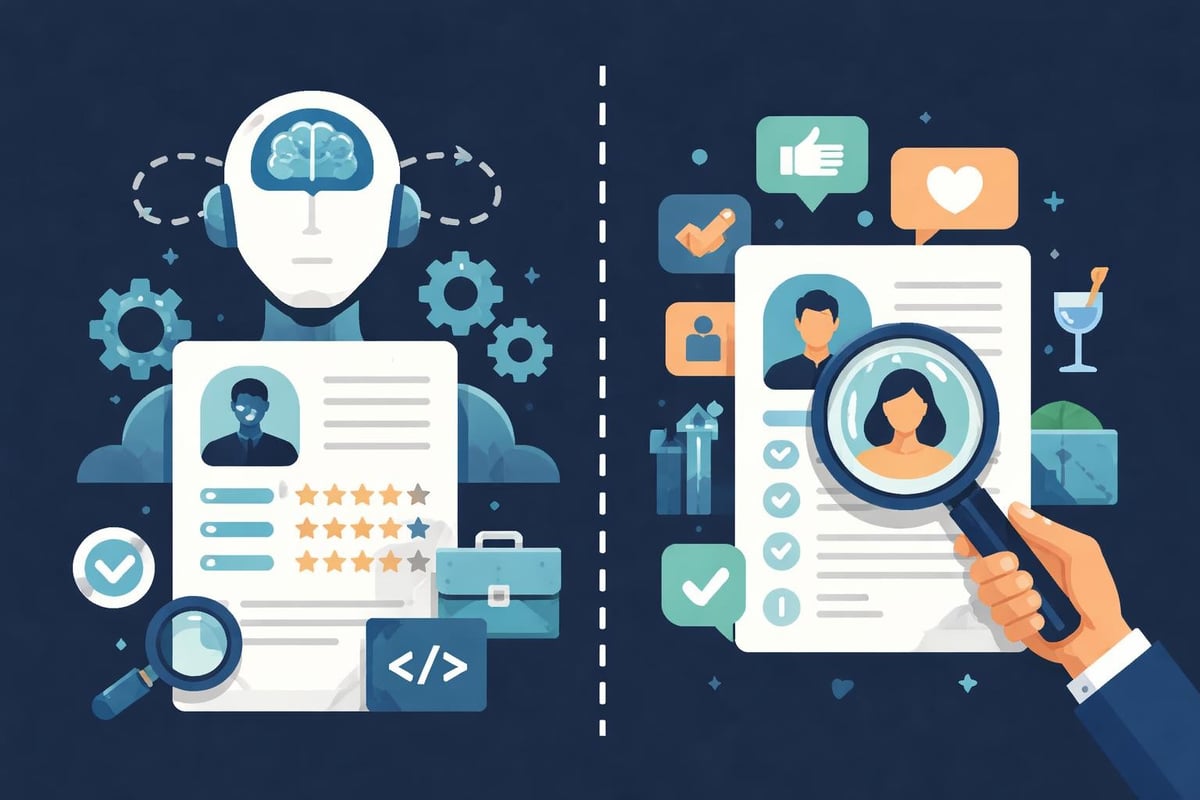
AI systems can be designed to evaluate candidates based solely on job-relevant criteria, ignoring demographic information and other potentially biasing factors. When properly configured, these tools focus exclusively on:
- Demonstrable skills through assessment results and verified experience
- Relevant accomplishments tied to measurable outcomes
- Career trajectory patterns that indicate growth and adaptability
- Technical competencies validated through testing or credential verification
However, it's critical to acknowledge that AI systems are only as unbiased as their training data and programming. Organizations must regularly audit their AI recruitment tools to ensure they're not perpetuating historical biases present in past hiring decisions.
Best Practices for Bias Mitigation
- Regularly review AI-generated candidate rankings for demographic patterns
- Use diverse training datasets that represent varied successful employee profiles
- Implement human oversight at critical decision points
- Test algorithms against known bias scenarios before deployment
- Maintain transparency about which factors influence candidate scoring
The academic research on AI-driven resume screening demonstrates how context-aware frameworks can improve fairness while maintaining effectiveness in candidate evaluation.
Improving Candidate Experience Through AI
While efficiency benefits are often emphasized, using AI for recruitment also significantly enhances the experience for candidates themselves. Modern AI-powered recruitment platforms provide immediate feedback, transparent communication, and personalized interactions that keep candidates engaged throughout the process.
Conversational AI tools, such as those highlighted in Workday's acquisition of Paradox, enable candidates to ask questions, schedule interviews, and receive updates without waiting for human recruiter availability. This 24/7 accessibility creates a more responsive and professional impression.
Elements of Enhanced Candidate Experience
AI recruitment platforms improve candidate interactions through several mechanisms:
- Instant application acknowledgment with clear next steps
- Automated status updates at each stage of the process
- Chatbot assistance for common questions about roles and companies
- Personalized communication based on candidate background and interests
- Flexible scheduling through AI-powered calendar integration
- Constructive feedback for unsuccessful candidates based on assessment data
These improvements matter significantly in competitive talent markets where candidate experience directly influences acceptance rates and employer brand perception.
AI for Specialized and Technical Recruitment
The complexity of technical recruitment, particularly for emerging fields like artificial intelligence and machine learning, makes using AI for recruitment especially valuable. These roles require highly specific skill combinations that are difficult to assess through traditional resume review.
AI platforms designed for technical recruitment can:
- Parse complex technical resumes with specialized terminology
- Assess coding skills through integrated technical assessments
- Verify claimed proficiencies against industry-standard benchmarks
- Match candidates based on specific technology stack requirements
- Identify candidates with rare or emerging skill combinations
For AI-specific roles, the irony of using AI to recruit AI talent is not lost on organizations. However, this application proves particularly effective because the technology understands the nuanced distinctions between different AI specializations, frameworks, and methodologies.
Technical Assessment Integration
| Assessment Type | Traditional Approach | AI-Enhanced Approach |
|---|---|---|
| Coding Skills | Manual review of take-home projects | Automated analysis with anti-plagiarism detection |
| Technical Knowledge | Phone screens with standard questions | Adaptive assessments that adjust difficulty |
| Problem-Solving | Whiteboard interviews | AI-proctored coding challenges with detailed analytics |
| Portfolio Review | Manual evaluation | Automated authenticity verification and impact analysis |
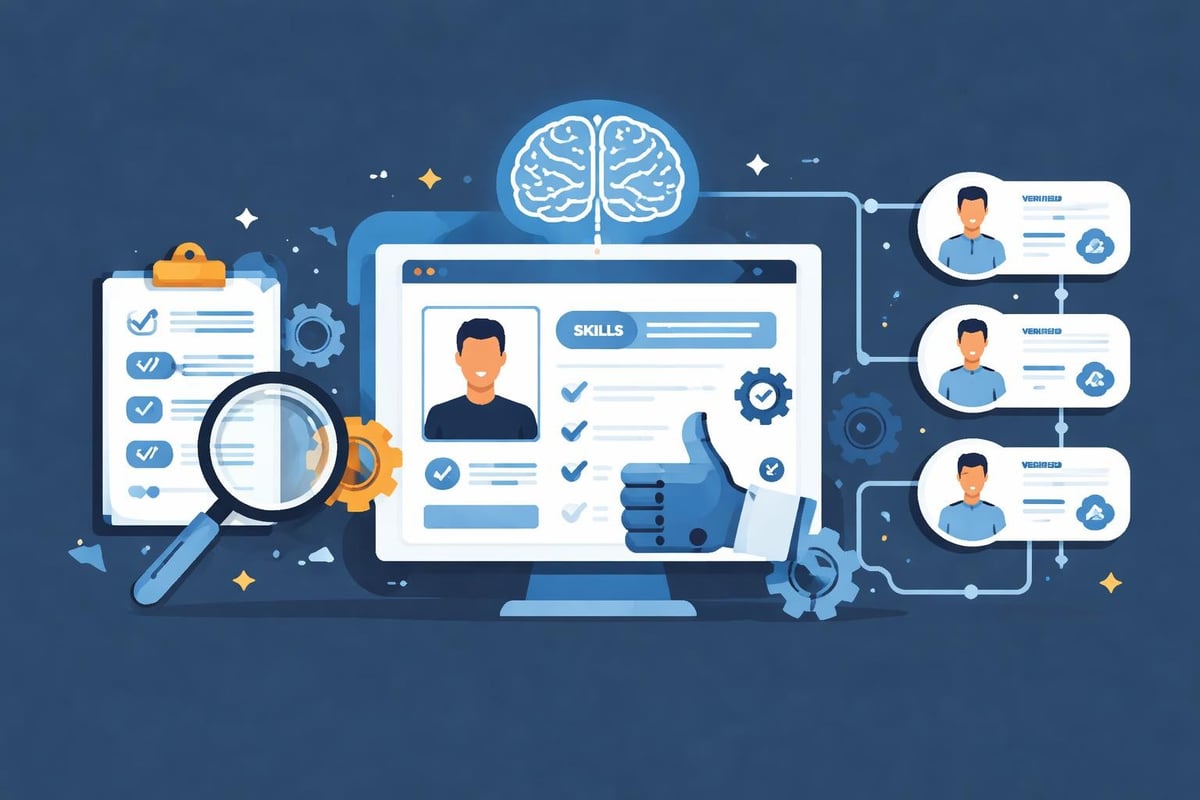
Data-Driven Recruitment Insights
Beyond individual candidate evaluation, using AI for recruitment generates valuable data that informs broader talent acquisition strategy. AI platforms track metrics across the entire recruitment funnel, identifying bottlenecks, predicting outcomes, and recommending process improvements.
These analytics capabilities provide recruitment leaders with unprecedented visibility into:
- Source effectiveness showing which channels produce the highest-quality candidates
- Time-to-hire trends broken down by role type, seniority level, and department
- Candidate drop-off points identifying where prospects lose interest
- Offer acceptance patterns correlated with various recruitment process factors
- Quality of hire predictions based on assessment performance and background factors
This data transforms recruitment from an intuition-based practice to a metrics-driven discipline where decisions are grounded in evidence rather than assumptions.
Predictive Analytics Applications
Modern AI recruitment platforms don't just report on past performance; they forecast future outcomes. Predictive models can estimate:
- Likelihood of candidate acceptance if an offer is extended
- Expected tenure based on career pattern analysis
- Probability of successful onboarding and ramp-up
- Cultural fit scores predicting long-term satisfaction
- Performance potential relative to role requirements
These predictions enable recruiters to prioritize candidates strategically and make informed decisions about where to invest time and resources.
Implementation Considerations and Challenges
Despite the substantial benefits, organizations must approach AI recruitment implementation thoughtfully. Businesses are often unprepared for AI's impact on hiring, leading to suboptimal outcomes or even counterproductive results when systems are deployed without proper planning.
Critical Implementation Steps
Successfully deploying AI recruitment technology requires careful attention to several key areas:
- Data preparation ensuring historical hiring data is clean, representative, and unbiased
- Integration planning connecting AI tools with existing ATS and HRIS systems
- Stakeholder training equipping recruiters and hiring managers to work effectively with AI insights
- Process redesign adapting workflows to leverage AI capabilities fully
- Compliance verification ensuring AI tools meet regulatory requirements for hiring practices
Organizations should start with pilot programs focused on specific roles or departments before rolling out AI recruitment tools company-wide. This approach allows teams to learn, adjust, and build confidence in the technology.
Common Pitfalls to Avoid
- Over-automation removing human judgment entirely from critical decisions
- Insufficient training data leading to unreliable or biased AI recommendations
- Lack of transparency preventing candidates from understanding evaluation criteria
- Inadequate monitoring failing to detect when AI systems produce problematic results
- Poor change management generating recruiter resistance rather than adoption
Understanding AI in recruiting requires acknowledging both the technology's capabilities and its limitations, implementing it as a tool that augments rather than replaces human expertise.
The Future of AI-Enhanced Recruitment
As we move through 2026 and beyond, using AI for recruitment will continue evolving with emerging technologies and changing workforce dynamics. Several trends are shaping the next generation of AI recruitment platforms:
Multi-modal assessment combining resume analysis, video interviews, technical assessments, and behavioral data into holistic candidate profiles. These comprehensive evaluations provide richer insights than any single data source.
Explainable AI addressing the "black box" problem by providing clear reasoning for AI recommendations. Recruiters and candidates alike benefit from understanding why certain matching decisions were made.
Continuous learning systems that adapt to organizational hiring outcomes, refining their algorithms based on which candidates ultimately succeed within specific company environments.
Integration with workforce planning connecting recruitment AI with broader talent management systems to forecast future needs and proactively build talent pipelines.
The Augmnt marketplace represents this evolution, demonstrating how AI and human insight combine to create recruitment experiences that prioritize both efficiency and authenticity in connecting businesses with verified professionals.
Preparing for Tomorrow's Recruitment Landscape
Organizations that want to remain competitive in talent acquisition should:
- Invest in AI recruitment capabilities that align with specific hiring challenges
- Build internal expertise in AI tool evaluation and deployment
- Establish governance frameworks for responsible AI use in hiring
- Create feedback loops that continuously improve AI system performance
- Maintain flexibility to adopt emerging recruitment technologies as they mature
The recruitment function will increasingly become a strategic differentiator for organizations, with AI capabilities playing a central role in attracting, evaluating, and securing top talent efficiently.
Balancing Technology and Human Judgment
Perhaps the most important consideration when using AI for recruitment is maintaining the appropriate balance between technological efficiency and human insight. AI excels at processing large volumes of data, identifying patterns, and automating repetitive tasks. However, human recruiters bring irreplaceable qualities to the hiring process.
Effective recruitment strategies leverage AI for what it does best while preserving human involvement where it adds unique value:
| Function | Best Handled By |
|---|---|
| Initial resume screening | AI (speed, consistency, volume) |
| Nuanced cultural fit assessment | Humans (contextual understanding) |
| Skills verification | AI (objective testing, fraud detection) |
| Final hiring decisions | Humans (strategic considerations, gut instinct) |
| Candidate communication at scale | AI (availability, efficiency) |
| Building candidate relationships | Humans (empathy, persuasion) |
| Data analysis and pattern recognition | AI (processing power, objectivity) |
| Strategy development and adaptation | Humans (creativity, business context) |
This collaborative model, where AI handles data-intensive tasks while humans focus on relationship-building and strategic decision-making, produces superior outcomes compared to either approach alone.
The future of recruitment isn't about replacing recruiters with algorithms. It's about empowering recruitment professionals with tools that eliminate tedious work, surface better candidates, and provide insights that improve decision quality.
Using AI for recruitment has transitioned from experimental technology to essential capability for organizations serious about competing for talent effectively. By automating screening, enhancing matching accuracy, reducing bias, and providing data-driven insights, AI transforms recruitment into a faster, more reliable, and more strategic function. However, success requires thoughtful implementation that balances technological capabilities with human judgment and maintains rigorous verification standards to combat emerging challenges like credential fraud. Augmnt addresses these needs by combining AI-powered matching with comprehensive candidate verification, ensuring businesses connect with qualified, authentic AI professionals through a streamlined, fraud-resistant recruitment process. Discover how intelligent talent acquisition can transform your hiring outcomes today.