
Top IT Staffing Firms: The Complete 2026 Guide
Finding the right technical talent has become increasingly complex as organizations compete for specialized skills in artificial intelligence, cybersecurity, cloud computing, and software development. The top IT staffing firms serve as critical partners in this competitive landscape, offering access to pre-vetted candidates, market expertise, and flexible engagement models that align with evolving business needs. These firms handle everything from contract placements to direct hire searches, enabling companies to scale their technical teams efficiently while maintaining quality standards.
Understanding the IT Staffing Industry Landscape
The IT staffing sector has experienced substantial transformation over the past several years. According to industry analysis, the U.S. IT staffing market represents a $58.3 billion industry, with projections indicating continued growth through 2028. This expansion reflects sustained demand for technical expertise across industries, from healthcare and finance to retail and manufacturing.
Several market forces shape how top IT staffing firms operate today:
- Skill shortages in emerging technologies drive premium placement fees for AI/ML engineers and cybersecurity specialists
- Remote work normalization expands talent pools geographically while increasing competition
- Project-based engagements replace traditional long-term contracts in many scenarios
- Compliance requirements around worker classification demand sophisticated legal frameworks
These dynamics create opportunities for staffing firms that can adapt quickly to changing client needs while maintaining candidate quality standards.
Market Segmentation and Specialization
Modern IT staffing firms typically focus on specific market segments to differentiate their services. Some concentrate exclusively on permanent placements for senior leadership roles, while others specialize in high-volume contract staffing for project-based work. The most successful firms identify niche expertise areas where they can build deep networks and domain knowledge.

| Firm Type | Primary Focus | Typical Engagement |
|---|---|---|
| Boutique Specialists | Niche technologies (AI, blockchain, quantum computing) | Direct hire, senior level |
| Enterprise Providers | Multiple verticals, large-scale projects | Contract, contract-to-hire |
| Regional Firms | Geographic proximity, local market knowledge | Mixed placements |
| Global Networks | International placements, distributed teams | All engagement types |
Leading Players Among Top IT Staffing Firms
Several organizations have established themselves as industry leaders through consistent performance, broad service offerings, and extensive candidate networks. TEKsystems operates as one of the largest providers, with particular strength in infrastructure and application development placements. ASGN Incorporated maintains significant market share through its diverse portfolio of specialized brands serving different technical disciplines.
Insight Global has built its reputation on rapid deployment capabilities and strong client relationships across Fortune 500 companies. Randstad Technologies brings global reach combined with local market expertise, while Kforce focuses on technology and finance sector placements with emphasis on professional relationships. Experis, part of ManpowerGroup, leverages extensive international networks for cross-border technical staffing needs.
Evaluation Criteria for Staffing Partners
When assessing potential staffing partners, organizations should consider multiple factors beyond price and candidate availability. The evaluation process should examine how firms source, screen, and validate technical capabilities before presenting candidates.
Technical Assessment Capabilities
Top IT staffing firms invest heavily in technical evaluation processes. This includes coding challenges, system design interviews, and hands-on skill demonstrations that verify claimed expertise. Firms with proprietary assessment tools or partnerships with technical evaluation platforms generally deliver higher-quality matches.
Candidate Network Depth
The strength of a staffing firm's candidate network directly impacts time-to-fill metrics and placement quality. Established firms maintain relationships with thousands of technical professionals across various specializations, enabling rapid response to client requests. Some firms cultivate exclusive candidate pools through targeted recruitment campaigns and long-term relationship building.
Industry Vertical Expertise
Certain staffing firms develop deep expertise in specific industry verticals such as healthcare IT, financial services technology, or manufacturing systems. This specialization enables better understanding of regulatory requirements, domain-specific technical skills, and cultural fit considerations that generalist firms might overlook.
Services and Engagement Models
The top IT staffing firms offer various engagement models designed to address different organizational needs and hiring scenarios. Understanding these options helps companies select the most appropriate approach for their specific requirements.
Contract Staffing Solutions
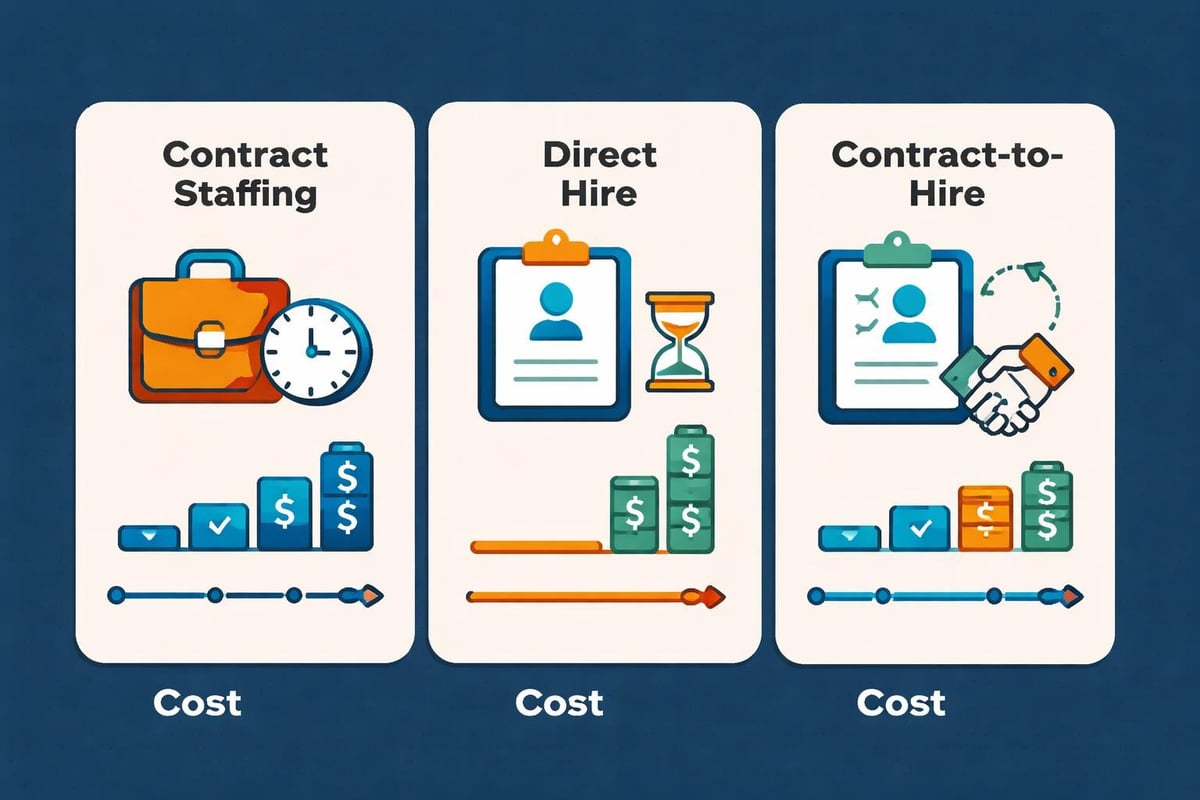
Contract placements remain the most common staffing model, particularly for project-based work or seasonal demand fluctuations. Companies engage contractors for defined periods ranging from weeks to years, with the staffing firm handling payroll, benefits, and administrative overhead. This model provides flexibility while minimizing long-term commitments.
Contract staffing works particularly well for:
- Short-term projects requiring specialized skills not available internally
- Seasonal workload increases that don't justify permanent headcount
- Pilot initiatives where long-term resource needs remain uncertain
- Coverage needs during employee leave or transition periods
Direct Hire and Permanent Placement
For critical positions requiring deep organizational integration, direct hire services connect companies with candidates seeking permanent employment. Staffing firms conduct comprehensive searches, handle initial screening, and present qualified candidates for client interviews. Fee structures typically involve percentage-based payments upon successful placement.
Many firms now integrate fraud detection capabilities into their candidate validation processes. Solutions like Augmnt ATS combine AI-powered analysis with human expertise to identify resume discrepancies and verify claimed credentials, reducing hiring risks for both staffing firms and their clients.
Contract-to-Hire Arrangements
This hybrid model allows companies to evaluate contractors in actual work environments before making permanent offers. Candidates work as contractors initially, with the understanding that successful performance may lead to direct employment. This approach reduces hiring risk while giving both parties time to assess mutual fit.
Emerging Trends Reshaping IT Staffing
The staffing industry continues evolving in response to technological advancement and shifting workforce expectations. Current IT staffing trends highlight several developments that will influence how top IT staffing firms operate in 2026 and beyond.
AI-Driven Matching and Automation
Artificial intelligence increasingly powers candidate matching, resume screening, and initial assessments. Advanced algorithms analyze job requirements, candidate profiles, and historical placement data to identify optimal matches more quickly than manual processes allow. This technology enables staffing firms to handle higher volumes while maintaining quality standards.
Flexible Talent Models
Traditional employment categories are blurring as organizations embrace diverse workforce models. Top IT staffing firms now facilitate arrangements ranging from full-time remote contractors to fractional executive placements, hybrid team structures, and project-based expert consultations. This flexibility accommodates both candidate preferences and evolving business needs.
Skills-Based Hiring Focus
Degree requirements and years of experience are giving way to demonstrated skills and competency-based assessments. Progressive staffing firms emphasize practical capability verification over credential checking, opening opportunities for non-traditional candidates while improving placement quality.
Cybersecurity Talent Demand
Organizations face persistent challenges securing qualified cybersecurity professionals as threat landscapes grow more complex. The IT and engineering staffing industry reports sustained high demand for security specialists, penetration testers, security architects, and compliance experts. Staffing firms specializing in this domain command premium fees due to talent scarcity.
Geographic Considerations and Market Variations
IT staffing needs and firm capabilities vary significantly across geographic markets. Major technology hubs like San Francisco, Seattle, Austin, and Boston feature highly competitive talent markets with premium pricing. Emerging tech centers including Denver, Charlotte, and Nashville offer growing talent pools at more accessible cost points.
Understanding regional dynamics helps organizations select staffing partners with appropriate market presence:
| Region | Talent Characteristics | Average Rate Differential |
|---|---|---|
| Silicon Valley | Cutting-edge skills, high expectations | +40-60% above national average |
| Texas Triangle | Growing diversity, strong mid-level talent | +10-20% above national average |
| Midwest Hubs | Stable workforce, strong retention | -5-10% below national average |
| Southeast Metros | Rapidly growing, competitive pricing | National average range |
Remote work capabilities have partially mitigated geographic constraints, but location still influences availability, cost, and cultural considerations that impact placement success.
Quality Assurance and Candidate Validation
The reliability of top IT staffing firms depends heavily on their candidate validation processes. Comprehensive screening separates strong performers from unqualified applicants, protecting client interests while maintaining firm reputations.
Multi-Stage Assessment Frameworks
Leading firms employ multi-layered evaluation approaches combining automated screening, technical assessments, and human judgment. Initial resume reviews identify candidates meeting basic requirements, followed by technical evaluations specific to required skills. Behavioral interviews assess soft skills, communication abilities, and cultural fit indicators.
Background Verification Components
Thorough background checks validate employment history, educational credentials, professional certifications, and references. Some firms conduct criminal background screening, credit checks for finance-related positions, and drug testing based on client requirements or industry regulations.
Technical Skill Validation
Beyond self-reported capabilities, rigorous testing verifies actual proficiency levels. Coding assessments for software developers, network configuration exercises for infrastructure engineers, and scenario-based problem-solving for architects ensure candidates can perform required tasks.

Cost Structures and Pricing Models
Understanding staffing firm pricing helps organizations budget appropriately and negotiate favorable terms. Fee structures vary based on engagement type, skill level, and market conditions.
Contract Placement Fees
For contractor placements, firms typically add markup percentages to candidate pay rates. These markups cover overhead costs, benefits, liability insurance, and profit margins. Standard markups range from 40% to 75% depending on skill level and assignment duration, with specialized or high-demand skills commanding premium rates.
Permanent Placement Fees
Direct hire placements generally involve percentage-based fees calculated on the candidate's first-year compensation. Industry standards range from 15% to 25% of annual salary, with senior executive searches sometimes exceeding 30%. Some firms offer guarantees replacing candidates who leave or underperform within specified periods.
Volume Discount Arrangements
Companies with ongoing staffing needs often negotiate master service agreements providing volume discounts or preferred pricing. These arrangements may include dedicated account management, expedited fulfillment commitments, and customized reporting.
Technology Integration and Platform Capabilities
Modern IT staffing operations rely extensively on technology platforms managing candidate databases, client relationships, and placement processes. Top IT staffing firms invest in sophisticated applicant tracking systems, customer relationship management tools, and proprietary matching algorithms.
The most advanced platforms integrate with client systems, enabling seamless data exchange and reducing administrative friction. Integration capabilities between staffing platforms and corporate ATS solutions streamline requisition management, candidate submittal, and onboarding workflows.
Data Analytics and Reporting
Comprehensive analytics help both staffing firms and clients optimize placement strategies. Performance dashboards track time-to-fill metrics, submission-to-interview ratios, offer acceptance rates, and retention statistics. These insights identify improvement opportunities and validate staffing partner performance against agreed service levels.
Building Effective Staffing Partnerships
Success with top IT staffing firms requires active partnership rather than transactional relationships. Organizations that invest in partner collaboration typically achieve better outcomes through improved communication, mutual understanding, and aligned incentives.
Clear Requirement Documentation
Detailed job descriptions specifying required skills, experience levels, and cultural fit criteria enable more accurate candidate matching. Including information about team dynamics, project context, and growth opportunities helps staffing partners identify candidates likely to succeed and remain engaged.
Regular Communication Cadence
Scheduled check-ins between hiring managers and staffing account teams ensure alignment on evolving needs, provide feedback on submitted candidates, and address emerging challenges proactively. This ongoing dialogue builds institutional knowledge that improves placement quality over time.
Performance Feedback Loops
Sharing detailed feedback about submitted candidates helps staffing firms refine their understanding of client preferences. Constructive input on why candidates were advanced, rejected, or hired accelerates the learning process and improves future submissions.
| Partnership Element | Impact on Outcomes | Implementation Approach |
|---|---|---|
| Requirement Clarity | 35% improvement in first-submission quality | Structured intake templates |
| Feedback Timeliness | 25% reduction in time-to-fill | 24-hour response commitments |
| Relationship Continuity | 40% increase in retention rates | Dedicated account management |
Industry-Specific Considerations
Different industry sectors present unique staffing challenges requiring specialized approaches. Top IT staffing firms often develop vertical expertise addressing sector-specific requirements.
Healthcare Technology Staffing
Healthcare IT positions require candidates understanding HIPAA compliance, electronic health record systems, and clinical workflows. Staffing firms serving this sector maintain networks of professionals with relevant certifications and healthcare experience, recognizing that technical skills alone prove insufficient.
Financial Services Technology
Banking, insurance, and investment firms demand strict background screening, regulatory compliance knowledge, and understanding of financial systems. Staffing partners must navigate complex security clearance requirements while sourcing candidates comfortable in highly regulated environments.
Emerging Technology Sectors
Artificial intelligence, machine learning, and blockchain represent rapidly evolving fields where traditional credentials provide limited guidance. For businesses focused on these domains, platforms like Augmnt offer specialized candidate validation ensuring AI professionals possess genuine expertise rather than superficial familiarity with trending technologies.
Selecting among the top IT staffing firms requires careful evaluation of specialization, validation processes, and partnership approaches that align with organizational needs. The most successful engagements combine clear communication, mutual accountability, and shared commitment to quality outcomes. When enhanced candidate verification becomes essential for critical technical roles, Augmnt provides AI-powered validation and fraud detection ensuring businesses connect with genuinely qualified professionals ready to deliver immediate value.