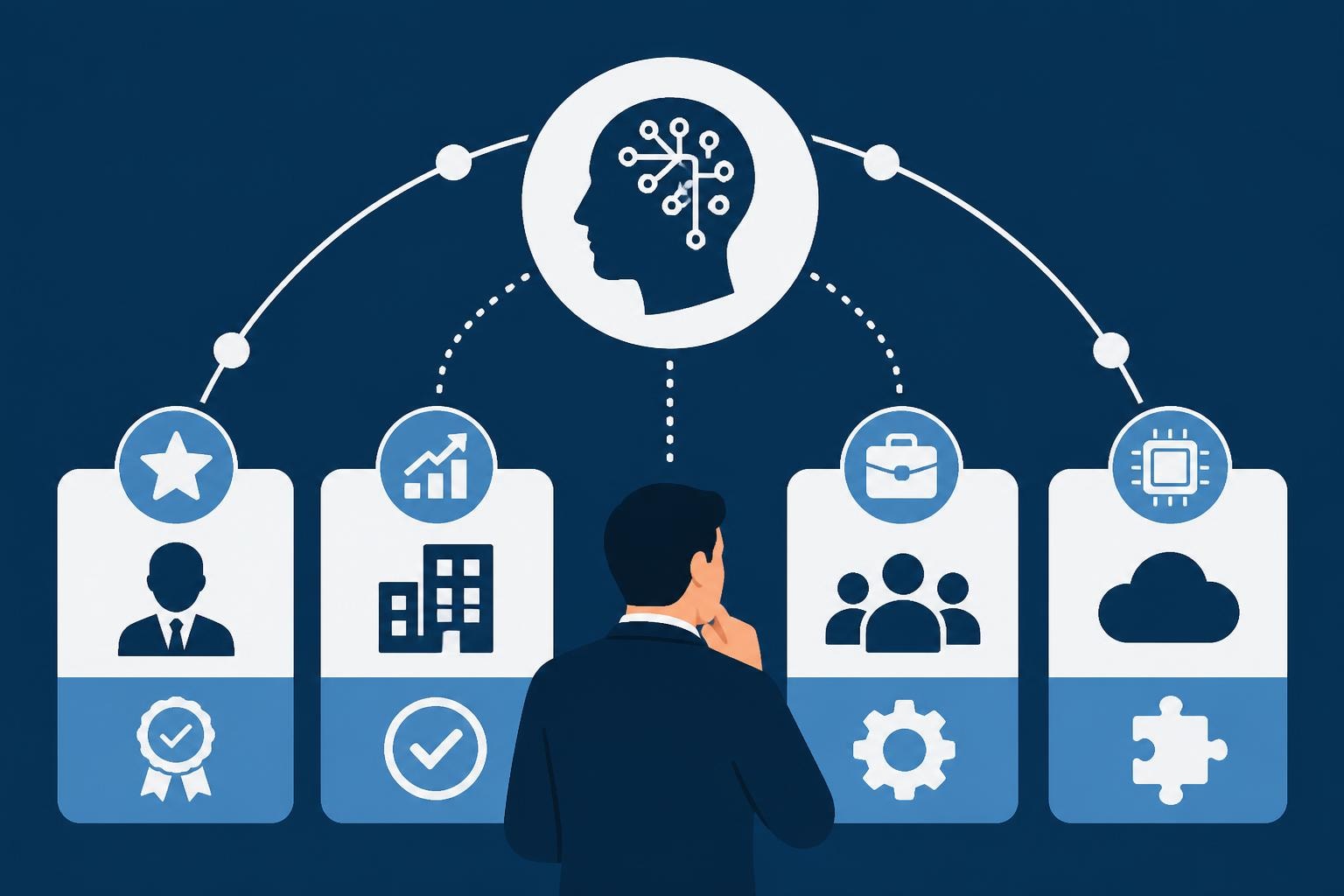
Top AI Consulting Firms: 2026 Market Leaders Guide
Artificial intelligence has evolved from an experimental technology to a strategic imperative for businesses across every industry. As organizations race to implement AI solutions that drive measurable results, the demand for expert guidance has created a thriving ecosystem of specialized consulting firms. Selecting the right AI consulting partner can determine whether your AI initiatives deliver transformational value or become costly experiments. Understanding which firms lead the market, what differentiates them, and how to evaluate their capabilities has become essential for business leaders planning their AI transformation journey in 2026.
The AI Consulting Landscape in 2026
The AI consulting industry has matured significantly, with market growth projections indicating continued expansion as businesses move from pilot projects to enterprise-wide deployments. The landscape now spans a diverse range of players, from traditional management consultancies that have built AI practices to specialized boutique firms focused exclusively on machine learning and generative AI implementations.
What distinguishes the current environment is the shift in client expectations. Organizations no longer need consultants to explain what AI can do. Instead, they require partners who can navigate the complex journey from strategy to production deployment, ensuring solutions deliver ROI while addressing governance, ethics, and integration challenges.
Market Dynamics Shaping Consulting Demand
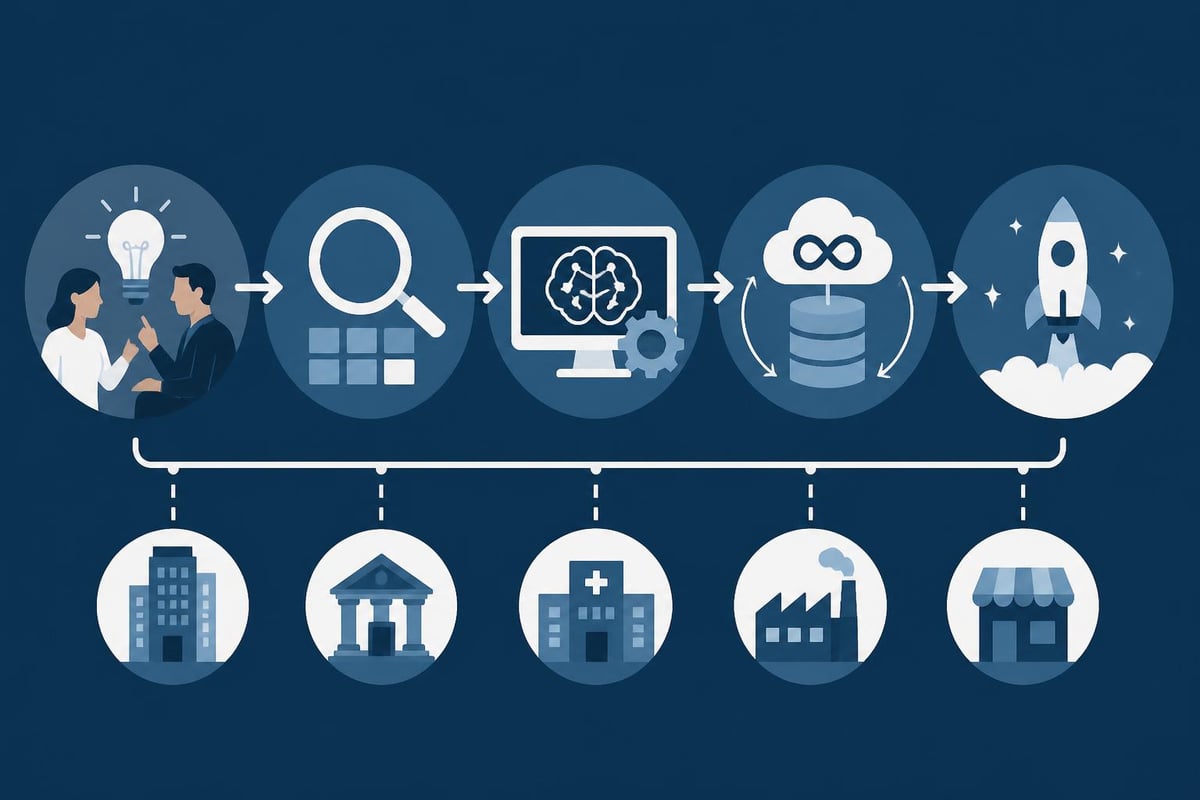
Several factors are driving the evolution of top AI consulting firms. The rapid advancement of generative AI has created unprecedented demand for implementation expertise, particularly among mid-market companies that lack internal AI capabilities. Simultaneously, enterprises are seeking partners who can help them scale beyond proof-of-concept projects to achieve production-grade AI systems.
The consulting model itself is transforming. Firms that demonstrate clear, measurable value through outcome-based engagements are capturing market share, while traditional time-and-materials approaches face increasing scrutiny. Clients demand transparency around deliverables, timelines, and the specific business metrics their AI investments will impact.
Evaluating Top AI Consulting Firms
Selecting from among the top AI consulting firms requires a structured evaluation framework that goes beyond marketing claims and focuses on demonstrable capabilities. The most successful partnerships emerge when organizations align their specific needs with a consultant's proven strengths.
Key Evaluation Criteria
When assessing potential consulting partners, consider these critical dimensions:
Technical Expertise and Specialization
- Depth of knowledge in relevant AI domains (NLP, computer vision, predictive analytics, generative AI)
- Track record with specific frameworks and platforms your organization uses
- Quality and credentials of the consulting team's data scientists and ML engineers
- Publication record, patents, or contributions to open-source AI projects
Industry Experience and Domain Knowledge
- Previous projects in your sector with documented outcomes
- Understanding of industry-specific regulations and compliance requirements
- Relationships with technology vendors relevant to your stack
- Case studies demonstrating business impact, not just technical implementation
Implementation Track Record
- Percentage of projects that reach production deployment
- Client retention rates and references
- MLOps maturity and ability to establish sustainable AI operations
- Experience scaling AI solutions across enterprise environments
According to comprehensive rankings of AI consulting firms, the leaders in 2026 consistently demonstrate strong performance across all three dimensions, with particular emphasis on production deployment success rates.
| Evaluation Factor | Weight | Key Indicators |
|---|---|---|
| Technical Capabilities | 30% | Team credentials, technology partnerships, R&D investments |
| Industry Expertise | 25% | Sector-specific case studies, domain knowledge depth |
| Deployment Success | 25% | Production systems, client ROI metrics, scaling ability |
| Cultural Fit | 20% | Communication style, collaborative approach, flexibility |
Differentiating Generalist vs. Specialist Firms
The top AI consulting firms fall into distinct categories, each with advantages for different organizational contexts. Large management consultancies like Accenture, Deloitte, and McKinsey bring enterprise-scale resources, global reach, and deep industry relationships. They excel at organization-wide transformations that require change management alongside technical implementation.
Specialized AI consultancies offer concentrated technical expertise and often more innovative approaches to emerging challenges. These firms typically maintain closer relationships with academic research and emerging technology vendors, providing early access to cutting-edge capabilities.
For organizations hiring AI talent, the distinction matters. Firms with robust talent networks and verification processes can accelerate your team-building while ensuring quality. Solutions like Augmnt ATS provide verified matching and candidate fraud detection, helping companies avoid costly hiring mistakes when building internal AI capabilities alongside consulting engagements.
Leading Firms by Specialization
The top AI consulting firms have increasingly developed specializations that align with specific use cases, industries, or technology stacks. Understanding these specializations helps match your requirements with the right partner.
Enterprise AI Transformation Leaders
Several firms dominate the enterprise transformation space, bringing comprehensive capabilities across strategy, implementation, and organizational change:
IBM Consulting maintains a strong position through its Watson ecosystem integration and hybrid cloud expertise. The firm excels at helping large enterprises modernize legacy systems while incorporating AI capabilities, particularly in regulated industries like healthcare and finance.
Accenture Applied Intelligence combines traditional consulting with advanced analytics and AI implementation. Their strength lies in connecting AI initiatives to business strategy and ensuring governance frameworks support responsible AI deployment at scale.
Cognizant AI & Analytics focuses on practical, business-outcome-driven implementations with particular strength in customer experience optimization and operational efficiency use cases.
Generative AI Implementation Specialists
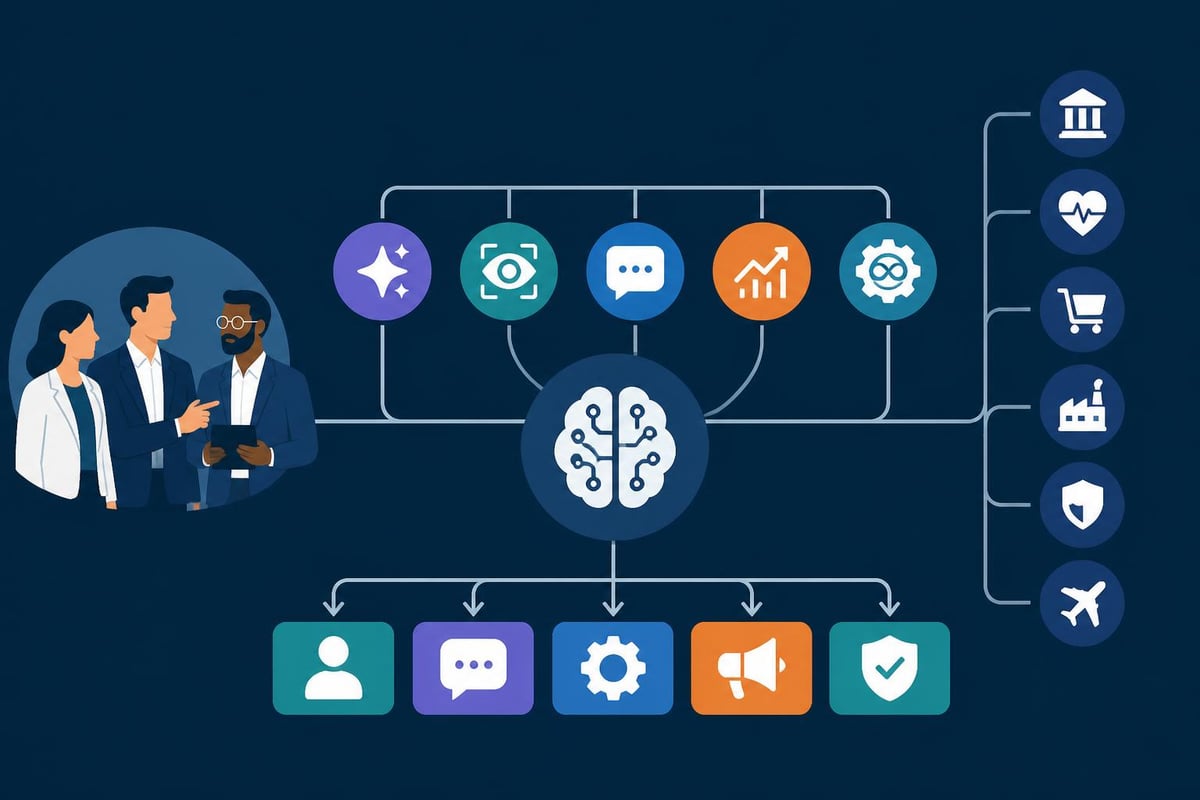
The explosion of generative AI has created opportunities for firms specializing in large language model implementation, fine-tuning, and responsible deployment:
These specialists help organizations navigate the complex landscape of foundation models, determining whether to use commercial APIs, fine-tune existing models, or develop proprietary solutions. They address critical challenges around data privacy, hallucination mitigation, and integration with existing business processes.
According to industry analysis, firms demonstrating measurable ROI from generative AI projects are commanding premium rates as demand outstrips available expertise.
Vertical-Specific AI Consultants
Industry-focused firms bring deep domain expertise that accelerates implementation and ensures solutions address sector-specific challenges:
- Healthcare AI Specialists: Navigate HIPAA compliance, clinical validation requirements, and EHR integration complexities
- Financial Services Consultants: Address regulatory requirements, fraud detection, and risk modeling with AI
- Manufacturing and Supply Chain Experts: Focus on predictive maintenance, quality control, and demand forecasting
- Retail and E-commerce Firms: Specialize in personalization, inventory optimization, and customer analytics
Building Effective Consulting Partnerships
Success with top AI consulting firms depends as much on how you structure the engagement as on which firm you select. The most productive partnerships share common characteristics that maximize value delivery and knowledge transfer.
Structuring the Engagement for Success
Define clear objectives with measurable success criteria before engaging any consultant. Vague goals like "explore AI opportunities" rarely produce actionable outcomes. Instead, specify business metrics you aim to impact, such as reducing customer churn by 15% or improving forecast accuracy by 20%.
Recommended Engagement Phases:
- Discovery and Strategy (4-6 weeks): Assess current state, identify high-value use cases, create roadmap
- Proof of Concept (8-12 weeks): Validate technical approach and business case with limited scope project
- Pilot Implementation (3-6 months): Deploy initial solution to subset of users, measure results
- Scale and Operationalize (6-12 months): Expand successful pilots, establish MLOps, build internal capabilities
The evolving nature of AI consulting services emphasizes the importance of flexible engagement models that can adapt as projects progress and business priorities shift.
Knowledge Transfer and Capability Building
Top AI consulting firms should enhance your internal capabilities, not create permanent dependencies. Structure contracts to include:
- Documentation Requirements: Comprehensive technical documentation, playbooks, and decision frameworks
- Training Programs: Hands-on workshops for your data scientists, engineers, and business users
- Transition Plans: Clear handoff processes that transfer ownership to internal teams
- Advisory Periods: Post-implementation support as your team assumes full responsibility
Organizations that treat consulting engagements as learning opportunities build sustainable AI capabilities that continue delivering value long after consultants depart.
Cost Considerations and ROI Expectations
Investment in top AI consulting firms represents a significant financial commitment, with wide variation in pricing models and total project costs. Understanding typical cost structures helps set realistic budgets and evaluate proposals.
Pricing Models Across Firm Types
| Firm Type | Typical Rate Range | Common Pricing Model | Best For |
|---|---|---|---|
| Large Management Consultancies | $250-$600/hour | Time & materials or fixed-fee projects | Enterprise transformations, strategic initiatives |
| Specialized AI Boutiques | $175-$400/hour | Sprint-based or outcome-focused | Technical implementations, specific use cases |
| Offshore/Nearshore Firms | $75-$200/hour | Dedicated teams or project-based | Development-heavy projects, cost-sensitive initiatives |
| Independent Experts | $150-$350/hour | Hourly or retainer | Advisory, architecture review, niche expertise |
Beyond hourly rates, consider the total cost of engagement including technology licenses, infrastructure, and internal resource allocation. A comprehensive AI implementation typically requires 20-40% of costs allocated to your internal team's time, even when using external consultants.
Measuring Return on Investment
The rapid advancement of AI in business has shifted evaluation criteria from proving AI's value to demonstrating effective scaling and measurable impact. Establish baseline metrics before implementation and track improvements across relevant dimensions:
Quantitative ROI Indicators:
- Revenue impact (new revenue streams, increased conversion rates, pricing optimization)
- Cost reduction (automation savings, efficiency gains, reduced errors)
- Customer metrics (satisfaction scores, retention rates, lifetime value)
- Operational improvements (cycle time reduction, quality improvements, throughput increases)
Most successful AI implementations achieve positive ROI within 12-18 months, though transformative initiatives may require longer horizons. Consultants should provide ROI projections during the proposal phase and track progress against these benchmarks throughout the engagement.
Emerging Trends in AI Consulting
The top AI consulting firms are adapting to several significant trends that will shape the industry through 2026 and beyond. Understanding these developments helps identify forward-thinking partners positioned to deliver long-term value.
Responsible AI and Governance
Regulatory pressure and ethical concerns have elevated responsible AI from a nice-to-have to a business imperative. Leading consultants now integrate fairness testing, bias mitigation, and explainability into every implementation. They help organizations establish governance frameworks that balance innovation with risk management.
Firms demonstrating expertise in AI ethics, regulatory compliance (including emerging AI-specific regulations), and transparent model development are increasingly preferred by enterprises concerned about reputational and legal risks.
AI-Native Operating Models
The most progressive consultants are helping organizations move beyond point solutions to AI-native operating models where artificial intelligence becomes embedded in core business processes. This requires rethinking organizational structures, decision-making frameworks, and talent strategies.
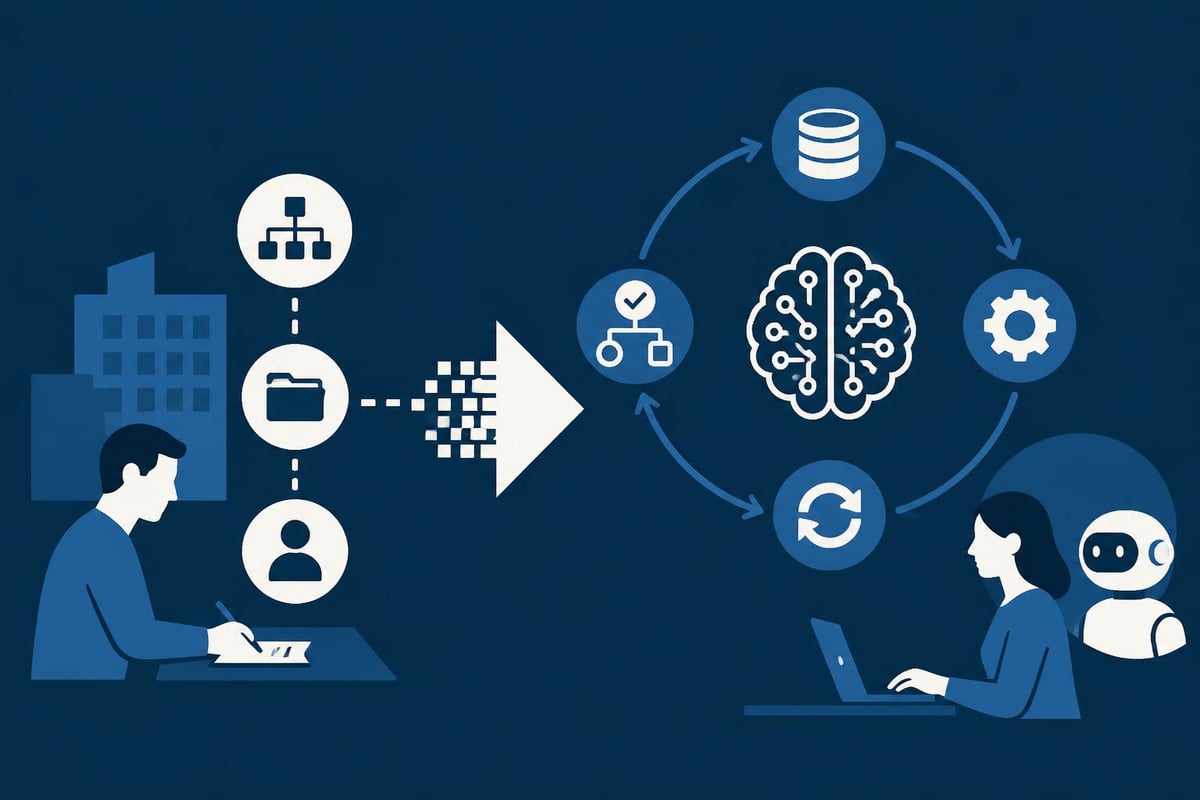
These engagements extend beyond technology implementation to address culture change, talent development, and organizational design-areas where experienced partners bring valuable cross-industry perspective.
Platform and Ecosystem Approaches
Rather than building custom solutions from scratch, top AI consulting firms increasingly leverage platform approaches that accelerate time-to-value. They help clients select and integrate best-of-breed AI platforms, customize pre-built models, and participate in industry-specific AI ecosystems.
This shift reduces implementation risk and cost while allowing organizations to benefit from continuous platform improvements. Consultants add value through intelligent platform selection, customization expertise, and integration with existing enterprise systems.
Regional and Global Considerations
For organizations with international operations, the geographic footprint and cultural competency of top AI consulting firms become critical selection factors. AI implementations often encounter regional variations in data privacy regulations, language requirements, and market dynamics.
Global Firms vs. Regional Specialists
Advantages of Global Consulting Firms:
- Consistent methodology across regions
- Centralized knowledge management and best practice sharing
- Ability to staff projects from global talent pools
- Standardized governance and quality assurance
Benefits of Regional Specialists:
- Deep understanding of local market conditions and regulations
- Native language capabilities and cultural alignment
- Relationships with regional technology vendors and partners
- Often more cost-competitive for region-specific projects
Many organizations adopt a hybrid approach, engaging global firms for enterprise strategy and regional specialists for local implementations. This balances consistency with local relevance while optimizing costs.
Vendor Partnerships and Technology Stack
The technology partnerships maintained by top AI consulting firms significantly impact their ability to deliver certain solutions efficiently. Most consultants align with major cloud providers (AWS, Azure, Google Cloud) and AI platform vendors, which influences their recommendations and expertise.
Navigating Consultant-Vendor Relationships
Understand potential conflicts of interest when consultants have strong vendor partnerships. While these relationships provide valuable technical expertise and preferential support, they may bias recommendations toward specific platforms even when alternatives better suit your needs.
Questions to Ask:
- What vendor certifications and partnership levels does your firm maintain?
- How do vendor partnerships influence technology recommendations?
- Can you provide examples of recommending against a partner's solution when appropriate?
- What portion of your revenue comes from vendor referral fees or reselling arrangements?
The most reputable firms maintain transparency about partnerships while demonstrating willingness to recommend the best solution regardless of vendor relationships.
Making the Final Selection
After evaluating capabilities, specializations, and costs, the final selection among top AI consulting firms often comes down to cultural fit and collaborative potential. The most technically capable consultant will underdeliver if working styles clash or communication breaks down.
The Selection Process
- Issue RFP to 3-5 Shortlisted Firms: Include specific use cases, technical requirements, and evaluation criteria
- Review Proposals for Approach, Not Just Credentials: Assess how deeply firms understand your challenges and the creativity of proposed solutions
- Conduct Working Sessions: Have finalists present approaches and engage in collaborative problem-solving exercises
- Reference Checks with Similar Clients: Speak with references about delivery quality, responsiveness, and post-engagement support
- Negotiate Terms with Flexibility in Mind: Build in checkpoints, success metrics, and adjustment mechanisms
Many organizations start with a smaller, defined project before committing to comprehensive engagements. This "try before you buy" approach reduces risk and validates working relationships before major investments.
Red Flags to Watch For
Certain warning signs should prompt careful reconsideration of top AI consulting firms during evaluation:
- Overpromising results or timelines: Realistic consultants acknowledge uncertainties and provide ranges
- Lack of specific, relevant experience: General AI expertise doesn't substitute for domain-specific knowledge
- Unwillingness to provide references: Strong performers readily connect prospects with satisfied clients
- Opaque pricing or scope creep tendencies: Clear, detailed proposals indicate professional project management
- Limited focus on knowledge transfer: Dependencies benefit consultants but harm clients long-term
Trust your instincts about cultural alignment and communication style. The best technical team won't succeed if collaboration feels forced or communication unclear.
Beyond Implementation: Long-Term Success
Engagement with top AI consulting firms shouldn't end when initial projects deploy. The most valuable partnerships evolve into ongoing relationships that support continuous improvement and new initiative development.
Ongoing Advisory Relationships
Many organizations maintain advisory retainers with consultants after implementation projects complete. These arrangements provide access to expertise for architecture reviews, troubleshooting complex issues, and evaluating emerging technologies without the overhead of full project engagements.
Advisory relationships work best when scope and expectations are clearly defined. Typical arrangements include monthly or quarterly strategy sessions, on-demand technical consultations within defined hour limits, and periodic reviews of AI systems performance and optimization opportunities.
Building Internal AI Capabilities
The ultimate measure of consulting success is your organization's enhanced ability to conceive, develop, and deploy AI solutions independently. Top AI consulting firms accelerate this capability building through structured knowledge transfer, mentoring relationships, and collaborative development approaches.
As you build internal teams, platforms like Augmnt help identify and verify qualified AI professionals who can sustain and extend the capabilities consultants helped establish. This ensures your AI initiatives continue delivering value as you transition from external expertise to internal excellence.
Selecting from the top AI consulting firms represents a strategic decision that influences your organization's AI trajectory for years to come. The right partner brings not only technical expertise but also practical implementation experience, industry knowledge, and collaborative approaches that accelerate time-to-value while building your internal capabilities. As you evaluate potential consultants, focus on demonstrated success with similar challenges, cultural alignment, and commitment to measurable outcomes rather than impressive credentials alone. When you're ready to complement consulting engagements with verified AI talent who can sustain and extend your initiatives, Augmnt connects you with pre-screened professionals through intelligent matching and comprehensive fraud detection, ensuring you build the high-quality team your AI ambitions demand.