The Essential AI Hire Guide for 2026
In 2026, organizations face unprecedented competition for top AI talent across every sector. As the influence of artificial intelligence accelerates, the stakes for every ai hire grow higher.
This essential guide offers a step-by-step approach to sourcing, evaluating, and retaining the best AI professionals in a shifting landscape. Discover emerging hiring trends, must-have skills, proven screening techniques, onboarding strategies, and the latest tools you need to make every ai hire a success.
Understanding the 2026 AI Talent Landscape
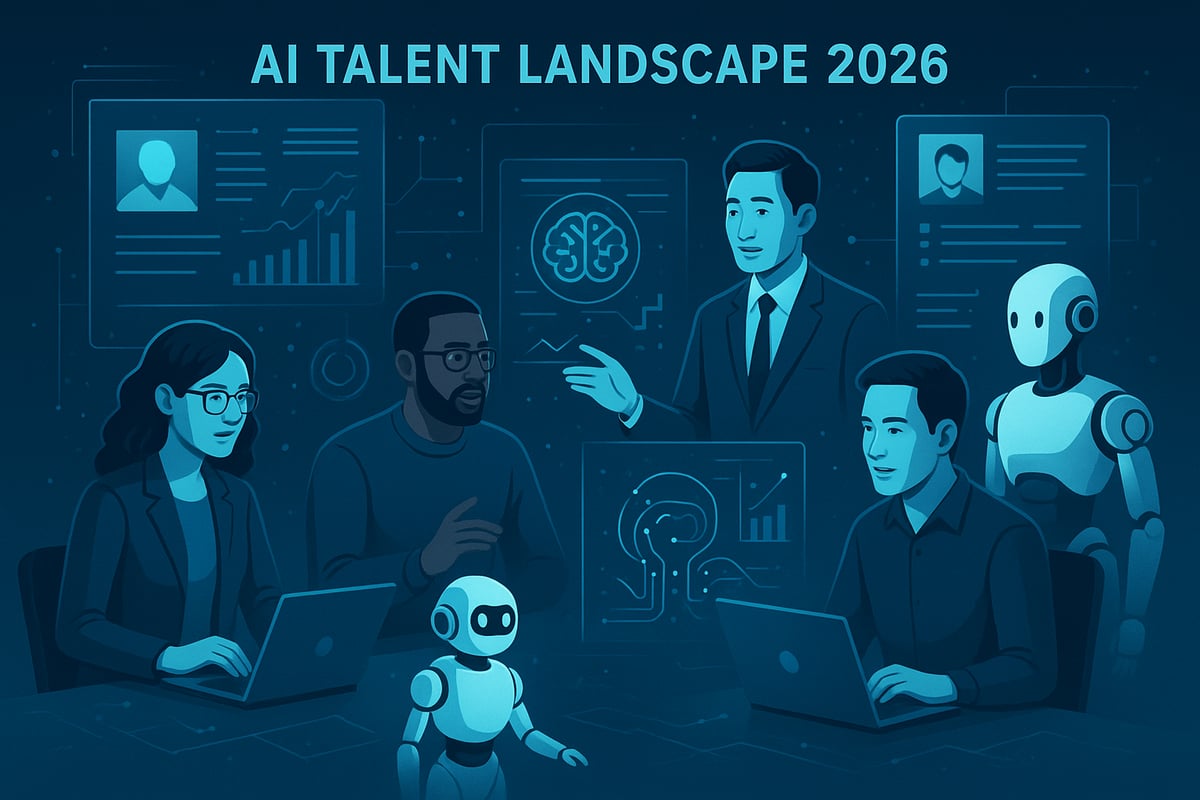
The landscape for ai hire in 2026 is shifting rapidly as organizations across sectors race to secure top talent. Demand is reaching new heights, driven by digital transformation and the urgent need for advanced AI solutions. Companies that adapt to these changes will be best positioned for success.
Evolving Demand for AI Professionals
The demand for ai hire has surged as industries like healthcare, finance, manufacturing, and retail expand their AI initiatives. According to Gartner's 2026 talent acquisition trends, AI job postings are projected to grow by 30% from 2024 to 2026.
New roles such as AI ethicist, AI operations manager, and AI cybersecurity engineer are emerging. Fortune 500 companies are scaling their AI teams by 50% within two years, underscoring the urgency of effective ai hire strategies.
Hybrid skillsets that blend AI expertise with business acumen are now essential. As a result, the competition to attract and retain top candidates is fiercer than ever.
Skill Gaps and Market Shortages
Despite rising interest, organizations face a significant skill gap in ai hire. Gartner reports there is only one qualified AI candidate for every five open roles, indicating a persistent shortage.
The most sought-after skills include reinforcement learning, generative AI, and MLOps. Global hotspots for AI talent are the US, Canada, Western Europe, and the APAC region.
Remote and hybrid work models are expanding the talent pool, yet competition remains intense. Companies must innovate their ai hire processes to reach untapped talent.
Impact of Generative AI on Hiring
Generative AI is transforming the ai hire process by automating tasks such as resume screening and candidate matching. Recruitment teams now use AI-driven tools to identify top talent quickly and efficiently.
However, this shift introduces new ethical considerations. Organizations must address bias and ensure transparency when deploying AI for hiring decisions.
Balancing automation with human oversight is critical. Companies that get this right can reduce time-to-hire while maintaining fairness and compliance in their ai hire approach.
Compensation and Retention Trends
Compensation packages for ai hire are reaching new highs, with median AI engineer salaries expected to hit $180,000 in 2026. To attract and retain talent, companies are offering not only competitive pay but also equity, remote work options, and continuous learning opportunities.
Tech giants are launching internal AI academies to upskill employees and boost retention. Flexible benefits and clear growth paths are becoming standard in the ai hire market.
These strategies help organizations stand out in a saturated talent market and support long-term workforce stability.
Diversity, Equity, and Inclusion in AI Hiring
Diversity, equity, and inclusion are now central to every ai hire strategy. Diverse AI teams are proven to deliver more ethical and effective solutions, driving innovation and market success.
DEI-focused recruitment initiatives are gaining traction worldwide. Over 200 organizations have signed the Global AI Diversity Pledge, committing to building inclusive teams.
By prioritizing DEI, companies create a more welcoming environment and strengthen their reputation as leaders in responsible ai hire practices.
Defining Your AI Hiring Needs and Strategy
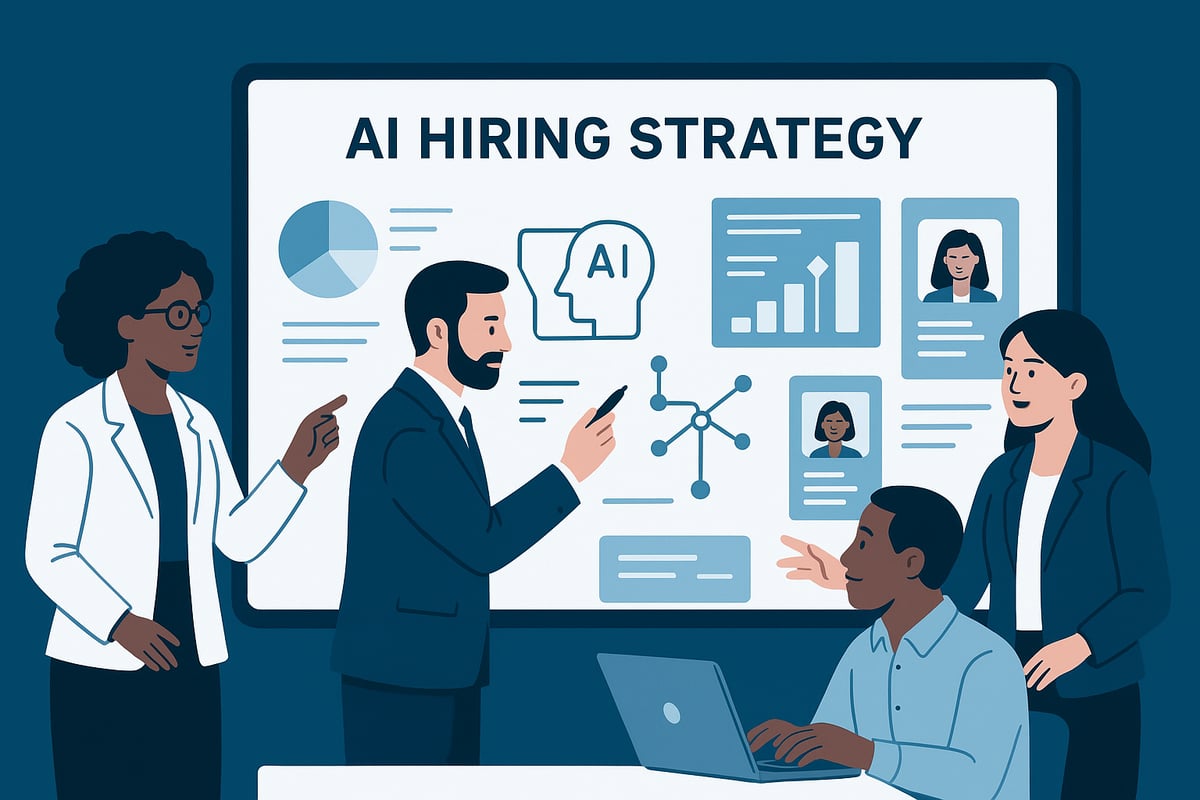
Setting a clear strategy for ai hire success in 2026 requires a comprehensive approach. Organizations must first understand their current capabilities, then identify the right roles, build strong candidate profiles, establish realistic budgets, and create an employer brand that stands out in a crowded market.
Assessing Organizational AI Maturity
Begin your ai hire journey by evaluating the maturity of your organization’s AI capabilities. Map out existing AI projects, current skill sets, and technology infrastructure. This assessment helps pinpoint gaps and align hiring with business goals.
Consider leveraging industry benchmarks and AI in recruitment trends and statistics to understand where your organization stands compared to others. For example, a retailer integrating AI with omnichannel strategy would assess both technical and business skill gaps.
Engage stakeholders from IT, HR, and business units to ensure a holistic view. This collaborative approach streamlines the ai hire process and ensures alignment with digital transformation objectives.
Identifying Critical AI Roles for 2026
Defining which roles are essential for your ai hire strategy is crucial. The landscape in 2026 includes positions like Machine Learning Engineer, Data Scientist, AI Product Manager, and AI Security Specialist.
Roles are evolving, with an increasing demand for cross-functional expertise that bridges technical and business needs. For instance, financial firms now seek AI risk analysts to automate compliance and manage regulatory requirements.
Regularly review role requirements as technology advances. This forward-looking perspective positions your organization to stay ahead in the ai hire race.
Building the Ideal Candidate Profile
A successful ai hire depends on clearly outlining the skills and qualifications needed. Start with core technical skills such as Python, TensorFlow, PyTorch, and experience with cloud AI platforms. Add essential soft skills like communication, problem-solving, and ethical reasoning.
Include advanced degrees or certifications, such as an MS or PhD in AI-related fields. Industry certifications demonstrate up-to-date expertise and commitment.
Summarize requirements in a candidate profile table for clarity:
| Technical Skills | Soft Skills | Education/Certifications |
|---|---|---|
| Python, ML tools | Communication | MS/PhD in AI, certifications |
| Cloud platforms | Problem-solving | Specialized courses |
| Data engineering | Ethical reasoning | Kaggle/GitHub contributions |
This structured approach attracts candidates who fit your ai hire needs.
Setting Realistic Budgets and Timelines
Budgeting for ai hire initiatives requires careful benchmarking against industry standards. In 2026, competitive compensation packages are the norm, including salary, equity, and learning budgets.
Plan for average lead times, which can reach 60 days for senior roles. Factor in recruitment costs, onboarding, and potential relocation if applicable.
For startups, allocating up to 20 percent of the annual budget to ai hire efforts is becoming common. This proactive planning ensures you remain competitive and fill roles efficiently.
Creating an Inclusive & Attractive Employer Brand
An effective ai hire strategy is not complete without a compelling employer brand. Highlight your organization’s commitment to innovation, learning, and diversity.
Showcase employee testimonials and success stories from past AI projects. Use your company blog and social channels to feature AI team achievements and thought leadership.
Implement inclusive hiring practices to reach diverse talent pools. This not only broadens your reach but also supports ethical and effective ai hire outcomes.
Sourcing and Attracting Top AI Talent
Finding the right professionals for your next ai hire is both an art and a science in 2026. Companies must move quickly and strategically to connect with the best minds in artificial intelligence. The competition is fierce, but with the right sourcing approaches, you can build a world-class AI team.
Leveraging Modern AI Talent Marketplaces
AI talent marketplaces have become essential for organizations looking for their next ai hire. These specialized platforms offer access to pre-vetted professionals, reducing time-to-hire and minimizing risk.
- Platforms provide verified skills and background checks.
- Faster matching means open roles are filled in days, not weeks.
- Fraud prevention tools protect companies from resume inaccuracies.
According to AI recruitment industry growth statistics, the use of AI-powered hiring platforms has surged, making them a critical channel for sourcing AI talent efficiently.
Building University and Research Partnerships
Partnering with leading universities and research institutions is a proven strategy for securing top ai hire candidates. These relationships provide early access to emerging talent and research breakthroughs.
- Internship and co-op programs create real-world pipelines.
- Sponsoring hackathons uncovers high-potential students.
- Collaborations foster innovation and long-term loyalty.
By engaging with academic leaders, companies position themselves as employers of choice for the brightest AI minds.
Employer Branding and Thought Leadership
A strong employer brand is vital for attracting the best ai hire talent. Organizations that demonstrate thought leadership and a commitment to innovation stand out in a crowded market.
- Host webinars and publish research to share expertise.
- Highlight successful AI projects on company platforms.
- Feature team spotlights and employee testimonials.
Mission-driven professionals are drawn to companies that visibly invest in AI and support ongoing learning.
Optimizing Job Descriptions and Outreach
Crafting clear, inclusive, and compelling job postings is key to a successful ai hire. The right messaging not only attracts qualified candidates but also broadens your reach.
- Use AI-driven tools to analyze and refine postings.
- Emphasize growth, learning, and impact in every description.
- Remove jargon and ensure language is welcoming to all backgrounds.
Personalized outreach, combined with optimized job ads, increases your chances of finding the perfect AI fit.
Employee Referral and Advocacy Programs
Your current AI team is a powerful resource for your next ai hire. Referral and advocacy programs tap into trusted networks and reach passive candidates.
- Offer incentives for successful referrals.
- Encourage employees to share openings with their networks.
- Leverage team participation in AI communities and events.
Referral programs often account for a significant portion of quality hires, reducing sourcing costs and speeding up recruitment.
Competitive Offers and Flexible Work Arrangements
In 2026, flexibility is as important as salary when making an ai hire. Top talent expects remote or hybrid options, professional development budgets, and a supportive culture.
| Perk | Impact on AI Talent Attraction |
|---|---|
| Remote/Hybrid Work | High |
| Skill Development | High |
| Equity | Medium |
| Flexible Hours | High |
Offering a package that combines competitive compensation with flexibility ensures your company remains attractive to in-demand AI professionals.
Screening, Assessing, and Validating AI Candidates
Finding the right fit for an ai hire requires a blend of technology, strategy, and human judgment. The modern recruitment process is more complex than ever, demanding a systematic approach to ensure candidates meet both technical and organizational needs. Here’s how leading organizations structure their ai hire evaluations for optimal results.
Advanced Screening Techniques for AI Roles
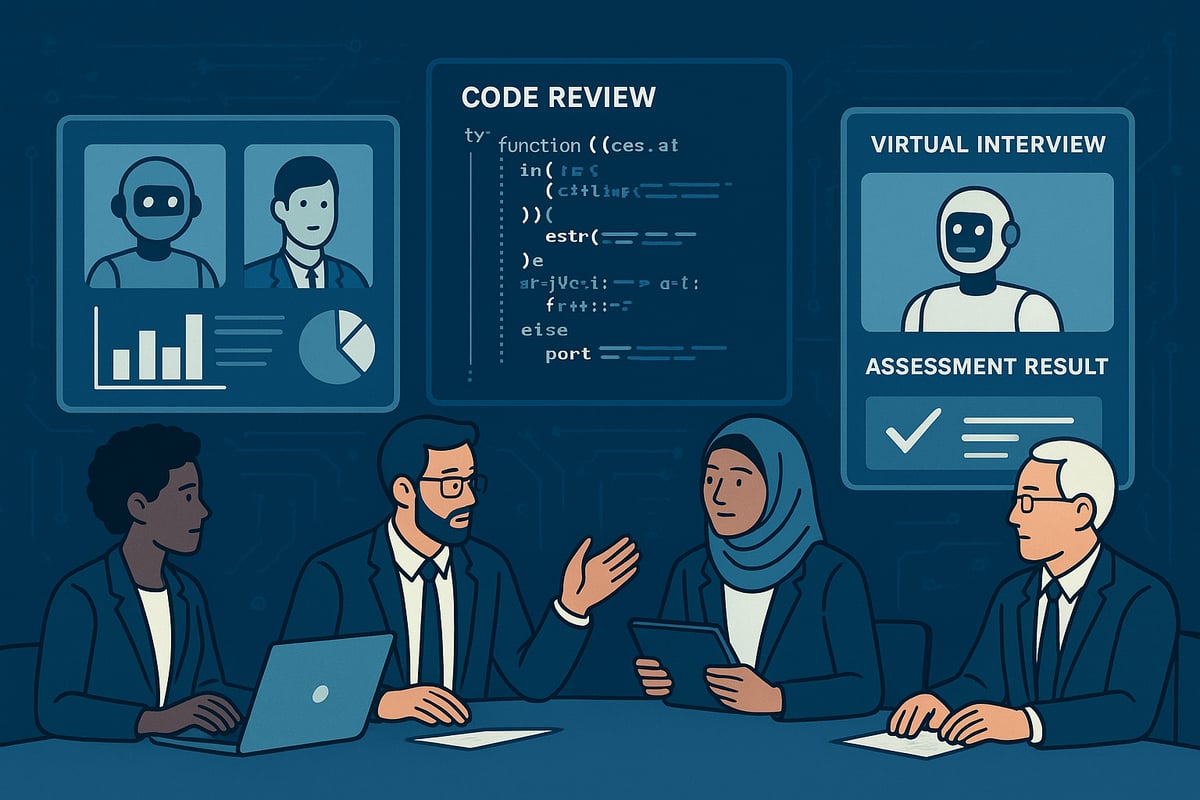
The first step in every ai hire process involves a multi-stage screening. Organizations combine technical assessments, behavioral interviews, and culture-fit evaluations to get a holistic view of each candidate.
- Technical screening: Automated coding challenges and AI-driven assessments
- Behavioral interviews: Scenario-based questions to gauge ethics and problem-solving
- Culture fit: Team interviews to ensure alignment with company values
Many companies now use AI-powered tools to streamline these stages, reducing time-to-hire by up to 40% while improving accuracy in ai hire decisions.
Portfolio and Project Evaluation
A strong portfolio is a key indicator of ai hire potential. Review candidates’ open-source contributions, Kaggle competition results, and GitHub repositories to assess practical abilities.
Look for:
- Completed real-world AI projects with measurable outcomes
- Published research or whitepapers in reputable journals
- Evidence of innovation, such as novel algorithms or unique data solutions
For an ai hire, tangible achievements often speak louder than résumés, giving insight into both technical depth and creative problem-solving.
Technical Skill and Knowledge Validation
Rigorous skill validation is essential for every ai hire. Use structured interviews, standardized assessments, and practical take-home assignments to measure core competencies.
| Assessment Type | Focus Area | Tools Used |
|---|---|---|
| Coding Challenges | Algorithms, ML Frameworks | HackerRank, Codility |
| Data Engineering | ETL, Data Prep | SQL, Python Scripts |
| System Design | Scalability, Architecture | Whiteboard, Case Studies |
Standardized testing ensures each ai hire meets your technical bar, and third-party proctoring can help prevent fraud.
Soft Skills and Team Fit Assessment
The best ai hire candidates excel beyond code. Evaluate communication, collaboration, and ethical reasoning with panel interviews and situational judgment tests.
Example approaches:
- Present real-world dilemmas to gauge bias mitigation strategies
- Use group interviews to assess teamwork dynamics
- Ask about handling project setbacks or ethical conflicts
Soft skills are critical for long-term success, ensuring your ai hire can thrive in cross-functional teams and high-stakes projects.
Reference and Background Checks
Verifying a candidate’s claims is a non-negotiable step in the ai hire process. Conduct thorough reference checks with past employers and colleagues to confirm skills and experience.
- Validate education and certifications
- Review employment history and project contributions
- Screen for resume inflation or multiple job juggling, especially in remote roles
Recent data shows 15% of ai hire resumes contain exaggerations. Diligent background checks reduce risk and ensure only qualified talent joins your team.
Ensuring Diversity and Reducing Bias in Assessment
Building diverse AI teams is essential for effective and ethical solutions. Standardize interviews, adopt blind resume reviews, and use inclusive language analysis tools to minimize bias throughout the ai hire journey.
For a deeper look at the intersection of technology and fairness, explore AI's impact on hiring processes. Diverse interview panels and structured assessments can increase minority representation in ai hire outcomes by up to 25%.
Onboarding and Retaining AI Talent for Long-Term Success
Welcoming and keeping top AI professionals is vital for any organization aiming to maximize the value of every ai hire. A strategic approach to onboarding and retention ensures new talent is integrated smoothly and remains engaged for the long term.
Designing an Effective Onboarding Program
A structured onboarding program is essential for a successful ai hire. Begin with a clear roadmap for the first 90 days including technical training, mentorship assignments, and immersion in current projects.
- Assign a mentor to guide each new ai hire.
- Provide access to documentation, systems, and tools from day one.
- Set clear expectations for performance and integration milestones.
Encourage early collaboration with cross-functional teams to help new hires grasp the organization's culture and workflow. A well-executed onboarding process not only accelerates productivity but also increases retention rates among AI professionals.
Continuous Learning and Upskilling Opportunities
Ongoing learning is crucial to the satisfaction and growth of every ai hire. Offer access to specialized AI courses, certifications, and conferences so talent stays ahead of industry advancements.
- Provide learning budgets for online courses or workshops.
- Host internal hackathons to encourage practical skill development.
- Support attendance at leading AI events or seminars.
Internal AI academies and peer learning groups foster a culture of continuous improvement. When employees see a clear commitment to their professional growth, they are more likely to remain loyal and motivated.
Career Pathing and Growth Frameworks
A transparent career path is a key factor in retaining every ai hire. Define clear progression routes for both individual contributors and future leaders, such as technical leads or AI managers.
- Set regular performance reviews and personalized development goals.
- Offer opportunities to transition between technical and managerial tracks.
- Create frameworks that link promotions to measurable achievements.
This clarity helps AI professionals envision a long-term future with your organization. It also encourages them to invest their skills and energy in your company's mission.
Building a Culture of Innovation and Inclusion
Innovation thrives in environments where every ai hire feels respected and included. Encourage open communication, experimentation, and the sharing of ideas across teams.
- Establish affinity groups to support diversity.
- Provide inclusive leadership training.
- Celebrate contributions from all backgrounds and perspectives.
A culture that values both innovation and inclusion attracts and retains top AI talent. Diverse teams are proven to deliver more creative and effective AI solutions.
Recognition, Rewards, and Retention Strategies
Recognizing achievements and offering competitive rewards are powerful tools for retaining any ai hire. Go beyond salary by providing equity, performance bonuses, and public acknowledgment of project successes.
- Highlight AI team wins in company communications.
- Implement peer recognition programs.
- Offer spot bonuses for exceptional contributions.
A structured recognition system boosts morale and fosters a sense of belonging. AI professionals who feel valued are more likely to stay and grow with your organization.
Preventing Burnout and Supporting Wellbeing
Preventing burnout is essential to the long-term success of every ai hire. Promote work-life balance by offering flexible schedules, remote options, and mental health resources.
- Monitor workloads to avoid overburdening teams.
- Provide access to wellness programs and counseling.
- Encourage regular time off and recovery periods.
Supporting wellbeing helps AI professionals maintain peak performance and reduces turnover. A healthy, balanced workplace is a strong foundation for lasting retention.
Future-Proofing Your AI Hiring Process
The pace of AI innovation shows no signs of slowing. Companies need a proactive approach for every ai hire to ensure teams remain competitive and resilient. Future-proofing your ai hire process means more than just keeping up—it means staying ahead.
Adapting to New AI Technologies and Roles
AI is evolving rapidly, and so are the positions required to drive progress. For every successful ai hire, organizations must frequently reassess role definitions and required skills. Emerging areas such as explainable AI, edge AI, and AI ethics are shifting the landscape.
A practical approach is to update job requirements annually. For example:
required_skills = ['Explainable AI', 'Edge AI', 'Ethical AI']
This keeps your ai hire process aligned with current and upcoming needs. Early adoption of new roles can provide a significant competitive edge.
Leveraging AI in Recruitment and Talent Management
Modern recruitment leverages AI-powered tools to streamline the ai hire journey. From sourcing to engagement, these tools automate repetitive tasks and offer predictive analytics for talent planning.
Consider using AI-driven platforms that reduce time-to-hire by half. They can analyze candidate data, screen resumes, and even match applicants to roles based on skill fit. This approach not only saves time but also enhances the accuracy of each ai hire.
Building Internal AI Talent Pipelines
Developing internal talent is a key part of a future-ready ai hire strategy. Upskilling existing employees through rotational programs and cross-training ensures you have a steady pipeline of qualified candidates.
Internal mobility programs can fill up to 25 percent of AI vacancies. Encourage current staff to pursue AI certifications or participate in internal hackathons. This investment reduces reliance on external hiring and increases retention for every ai hire your organization makes.
Measuring and Optimizing AI Hiring Outcomes
Data-driven decision-making is vital for optimizing the ai hire process. Track metrics such as time-to-hire, quality-of-hire, and retention rates to identify areas for improvement.
Regular feedback loops with hiring managers and new hires help you refine your strategies. By analyzing these insights, organizations can increase offer acceptance rates and improve the long-term success of each ai hire.
Ensuring Compliance and Ethical Standards
Staying compliant with evolving regulations is non-negotiable for your ai hire process. This includes adhering to data privacy laws, work eligibility rules, and ethical recruitment practices.
Conduct regular compliance audits to ensure transparency and fairness. Implementing standardized, bias-free recruitment procedures protects both the company and every ai hire, supporting a trustworthy employer brand.
Preparing for the Unknown: Agility in AI Hiring
The AI landscape is unpredictable, requiring agility in your ai hire approach. Scenario planning helps organizations respond to sudden changes, such as surges in AI project demand or shifts in technology.
Build strong relationships with talent networks and academic partners to access new talent quickly. With a flexible ai hire strategy, companies can rapidly scale teams and maintain a competitive edge, no matter what the future brings.
As you navigate the complexities of AI hiring in 2026, it’s clear that finding truly qualified candidates takes more than traditional methods. With the growing demand for specialized skills and the risks of resume fraud, you deserve a process that’s transparent, efficient, and tailored to your needs. That’s where Augmnt comes in—combining AI-driven insights with human expertise to connect you with thoroughly validated professionals, streamlining every step from screening to onboarding. If you’re ready to elevate your hiring strategy and build an exceptional AI team, let’s take the next step together—Request a Demo.
Article written using RankPill.