Technical Candidate Verification: Complete 2026 Guide
The hiring landscape for technical talent has transformed dramatically, with organizations now facing sophisticated resume fraud, credential misrepresentation, and skill inflation. As companies compete for qualified professionals in artificial intelligence, machine learning, and software development, the stakes for accurate technical candidate verification have never been higher. A single bad hire in a technical role can cost organizations upwards of $240,000 when accounting for salary, lost productivity, and team disruption. This comprehensive guide explores the methodologies, technologies, and best practices that leading organizations deploy to ensure they bring only genuinely qualified technical professionals onto their teams.
The Critical Need for Technical Candidate Verification
The technical recruiting landscape has experienced a dramatic shift in complexity over the past five years. According to recent industry data, approximately 78% of resumes contain misleading information, with technical resumes showing even higher rates of skill embellishment. This proliferation of fraudulent credentials has forced organizations to fundamentally rethink their hiring processes.
Several factors contribute to this verification crisis. The rapid evolution of technology creates knowledge gaps that candidates attempt to bridge through exaggeration. Remote work has made it easier for candidates to misrepresent their capabilities without immediate detection. Additionally, the pressure to fill critical technical roles quickly often leads hiring teams to shortcut verification steps, creating vulnerabilities in the recruitment process.
Technical candidate verification serves three primary business objectives. First, it protects organizations from costly hiring mistakes that drain resources and damage team morale. Second, it ensures that technical teams maintain the skill levels necessary to execute on strategic initiatives. Third, it creates a fair competitive environment where genuinely qualified professionals are rewarded for their authentic capabilities.

Multi-Dimensional Assessment Framework
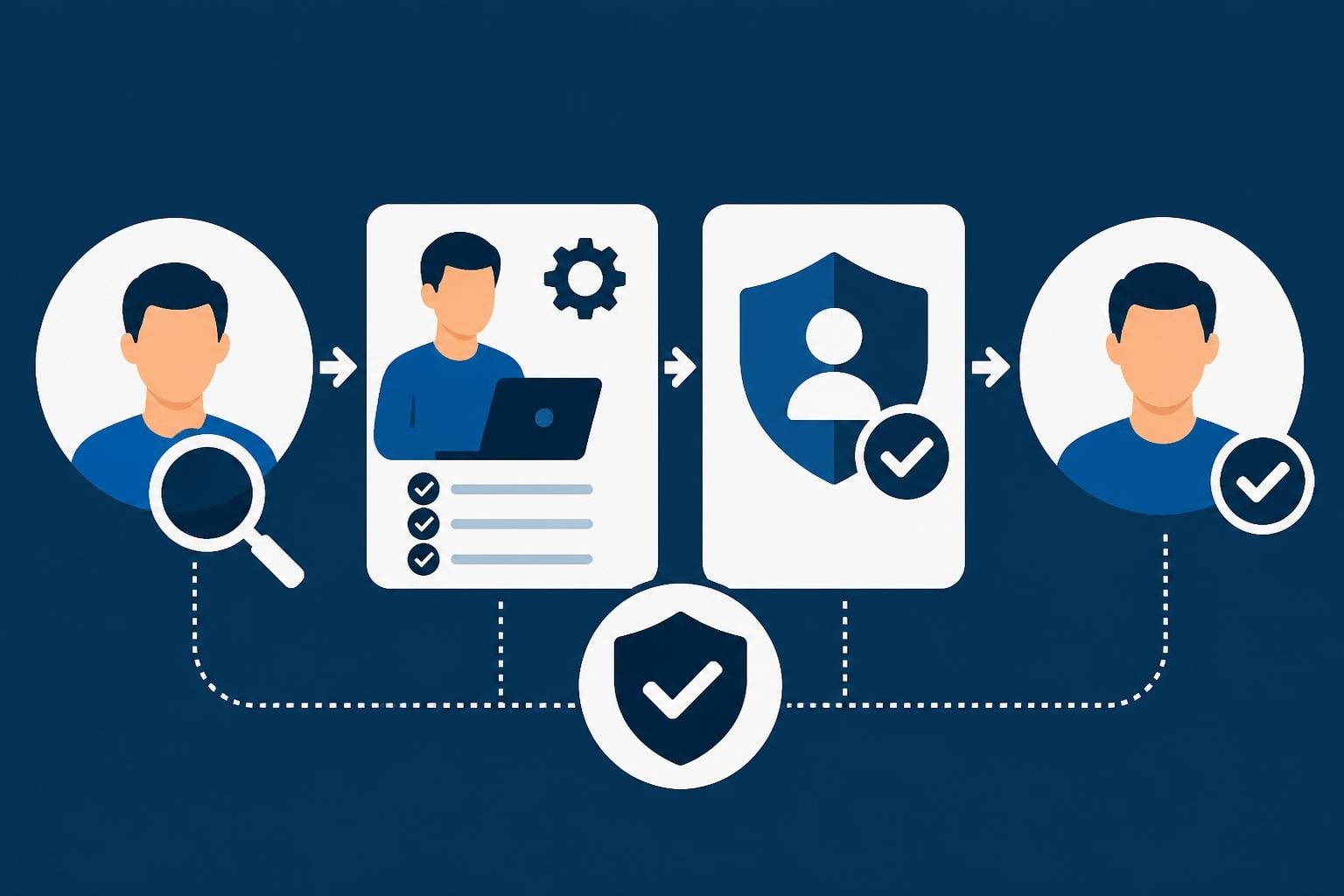
Effective technical candidate verification requires a structured approach that evaluates multiple dimensions of competency. Modern frameworks typically incorporate four distinct evaluation stages, each designed to reveal different aspects of technical capability.
Knowledge Verification Stage
The knowledge verification stage assesses whether candidates possess fundamental understanding of core concepts in their claimed areas of expertise. This stage typically includes targeted questioning about theoretical foundations, industry standards, and best practices. For AI and machine learning roles, this might involve questions about algorithm selection, model evaluation metrics, or data preprocessing techniques.
Organizations implementing comprehensive technical skills assessments have found that knowledge verification filters out approximately 40% of unqualified candidates in the initial screening phase. However, knowledge alone provides an incomplete picture of technical capability.
Practical Application Assessment
The practical application stage moves beyond theory to evaluate how candidates apply their knowledge to solve real-world problems. This assessment typically involves coding challenges, system design exercises, or technical case studies that mirror actual job responsibilities.
The format for practical assessments varies significantly based on role requirements:
- Live coding sessions that reveal problem-solving approaches in real-time
- Take-home projects that allow candidates to demonstrate work quality without time pressure
- Pair programming exercises that assess collaboration and communication skills
- Code review scenarios that evaluate ability to identify and improve existing code
- Architecture design challenges that test system-level thinking
Research on how candidates prepare for technical interviews reveals interesting patterns about the effectiveness of various assessment formats. Candidates who practice with realistic scenarios perform significantly better than those who memorize algorithms, suggesting that practical assessments provide more accurate verification of job-relevant skills.
Technical Reasoning Evaluation
Technical reasoning assessment examines how candidates approach unfamiliar problems and adapt their knowledge to novel situations. This dimension proves particularly valuable when hiring for rapidly evolving fields like artificial intelligence, where specific tools and frameworks change faster than foundational reasoning capabilities.
Effective reasoning evaluation presents candidates with scenarios they have not encountered before, then observes their problem decomposition strategies, question-asking patterns, and solution iteration processes. This assessment reveals whether candidates can genuinely think technically or merely recall memorized solutions.
Credential and Background Validation
While skills assessment verifies current capabilities, credential validation ensures that claimed educational achievements, certifications, and work history are authentic. This aspect of technical candidate verification has become increasingly critical as credential fraud has grown more sophisticated.
Educational Verification Methods
Educational verification confirms that candidates actually completed the degrees and programs they claim on their resumes. This process involves direct contact with educational institutions, verification through third-party services, or review of official transcripts and diplomas.
| Verification Method | Accuracy | Speed | Cost |
|---|---|---|---|
| Direct institution contact | High | Slow (7-14 days) | Low |
| Third-party verification services | High | Medium (3-5 days) | Medium |
| Blockchain-verified credentials | Very High | Fast (immediate) | Low |
| Manual document review | Medium | Fast (1-2 days) | Low |
Organizations should pay particular attention to verifying advanced degrees in technical fields, as these credentials often command significant salary premiums and influence hiring decisions. Following best practices for pre-employment background checks ensures thorough validation without creating unnecessary delays.
Professional Certification Validation
Technical certifications from vendors like AWS, Google Cloud, Microsoft, and specialized AI platforms carry significant weight in hiring decisions. Verifying these certifications typically involves checking issuing organization databases or requesting verification codes that candidates can provide from their certification accounts.
Advanced platforms now incorporate automated certification verification that cross-references candidate claims against official certification registries in real-time. This automation significantly reduces verification time while improving accuracy.
Employment History Confirmation
Employment verification confirms the accuracy of claimed job titles, responsibilities, employment dates, and achievements. For technical roles, this verification should extend beyond basic employment confirmation to validate the actual technical work performed.
Effective employment verification for technical candidates includes:
- Confirmation of employment dates and titles with previous employers
- Validation of specific technical projects and responsibilities claimed
- Reference checks with technical managers who can speak to skill levels
- Review of portfolio work or code repositories when available
- Verification of claimed achievements and contributions
Resume Fraud Detection Technologies
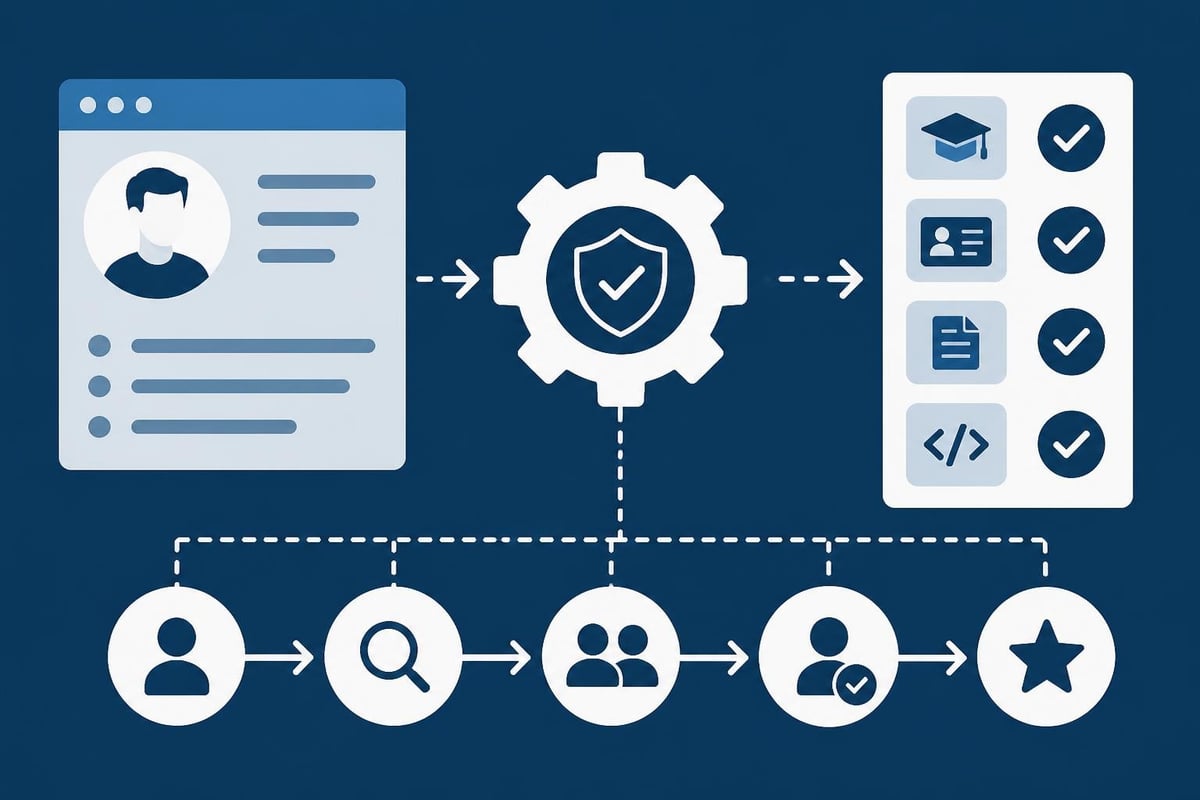
The sophistication of resume fraud has necessitated equally sophisticated detection technologies. Modern technical candidate verification leverages multiple detection methodologies to identify misrepresentation before it impacts hiring decisions.
Pattern Recognition Analysis
Advanced systems analyze resume patterns to identify common fraud indicators. These patterns include inconsistent date ranges, suspicious gaps in employment, credential combinations that rarely occur together, or skill progressions that don't align with typical career development paths.
Machine learning models trained on millions of verified and fraudulent resumes can now detect subtle inconsistencies that human reviewers might miss. These systems flag anomalies for further investigation rather than automatically rejecting candidates, ensuring that legitimate unusual career paths aren't penalized.
Skill Claim Validation
Skill claim validation cross-references candidate assertions against multiple data sources. For example, if a candidate claims ten years of experience with a technology that was only released five years ago, automated systems immediately flag this discrepancy.
Modern platforms analyze skill combinations for technical coherence. A candidate claiming expertise in advanced machine learning but listing only basic programming languages raises legitimate questions about the depth of their claimed capabilities. These platforms leverage modern technical skills assessment methods to validate claims through practical demonstration.
Digital Footprint Analysis
Digital footprint analysis examines candidates' online professional presence to corroborate resume claims. This includes reviewing GitHub repositories, Stack Overflow contributions, technical blog posts, conference presentations, and professional social media activity.
Platforms like Augmnt ATS combine AI-powered analysis with human review to detect inconsistencies between claimed experience and demonstrable online technical activity. This multi-faceted approach provides comprehensive fraud detection that protects hiring quality.
Implementing Structured Verification Processes
Organizations that successfully implement technical candidate verification follow structured processes that balance thoroughness with candidate experience. The most effective approaches integrate verification seamlessly into existing hiring workflows rather than creating separate, cumbersome additional steps.
Stage-Gate Verification Model
The stage-gate model applies different verification techniques at each hiring stage, with candidates progressing only after passing verification checkpoints. This approach prevents investment in later-stage interviews for candidates who won't pass verification requirements.
Initial Screening Stage:
- Automated resume fraud detection
- Basic credential validation
- Initial skills screening assessment
Technical Interview Stage:
- Live coding or technical challenges
- System design evaluation
- Technical reasoning assessment
Final Verification Stage:
- Comprehensive background checks
- Employment history validation
- Reference checks with technical depth
Balancing Speed and Thoroughness
One of the primary challenges in technical candidate verification is maintaining verification rigor while moving quickly enough to secure top talent. The most successful organizations achieve this balance through automation, parallel processing, and risk-based verification levels.
High-volume roles may utilize standardized assessment batteries that can be automatically scored, while specialized positions might receive customized evaluation frameworks. Establishing partnerships with verified talent marketplaces can significantly accelerate verification for critical hires by leveraging pre-verified candidate pools.
Assessment Method Selection Guide
Choosing appropriate assessment methods requires understanding both the technical requirements of the role and the practical constraints of the hiring process. Different technical positions demand different verification approaches.
Role-Specific Verification Strategies
| Role Type | Primary Assessment Focus | Recommended Methods |
|---|---|---|
| AI/ML Engineers | Algorithm knowledge, model building, data analysis | Take-home ML projects, live model explanation, dataset analysis challenges |
| Full-Stack Developers | End-to-end development, system integration | Complete feature builds, API design tasks, debugging exercises |
| Data Scientists | Statistical reasoning, business insight, visualization | Case study analysis, statistical problem-solving, presentation of findings |
| DevOps Engineers | System architecture, automation, troubleshooting | Infrastructure design, scripting challenges, incident response scenarios |
| Front-End Developers | UI/UX implementation, performance optimization | Component building, responsive design tasks, performance debugging |
Organizations exploring various talent assessment methods should align their selection with specific competencies that drive success in each role. Generic assessments rarely provide the verification depth needed for specialized technical positions.
Time Investment Considerations
Technical candidate verification requires significant time investment from both candidates and hiring teams. Understanding typical time requirements helps organizations design realistic verification processes that respect everyone's schedules.
Most comprehensive verification processes require candidates to invest 4-8 hours across all assessment stages, while hiring teams typically spend 6-12 hours per candidate on evaluation and verification activities. Organizations can reduce this burden through better assessment design and leveraging integration capabilities with existing ATS platforms for automated verification steps.

Continuous Verification and Quality Metrics
Technical candidate verification doesn't end when a hire is made. Leading organizations track verification effectiveness through post-hire performance metrics and continuously refine their processes based on outcome data.
Measuring Verification Effectiveness
Organizations should track several key metrics to evaluate their verification process quality:
- False positive rate: Percentage of candidates who passed verification but underperformed in role
- False negative rate: Percentage of rejected candidates who would have succeeded (harder to measure)
- Time-to-verification: Average days required to complete full verification process
- Verification cost per hire: Total resources invested in verification divided by successful hires
- Candidate experience scores: Feedback from candidates about verification process fairness and professionalism
These metrics reveal where verification processes need adjustment. High false positive rates suggest assessments aren't accurately predicting job performance, while low candidate experience scores may indicate that verification creates unnecessary friction.
Iterative Process Improvement
The most effective verification frameworks evolve based on performance data. Organizations should review verification metrics quarterly and adjust methodologies based on findings. This might involve updating assessment content to reflect new technologies, modifying difficulty levels based on pass rates, or streamlining steps that don't correlate with hire success.
Creating feedback loops between hiring managers and recruitment teams ensures that verification processes remain aligned with actual job requirements. When hiring managers report skill gaps in new hires, recruitment teams can strengthen verification in those specific areas.
Legal and Ethical Considerations
Technical candidate verification must comply with employment law while respecting candidate privacy and maintaining ethical standards. Organizations operating across multiple jurisdictions face complex compliance requirements that vary by location.
Privacy and Data Protection
Verification processes collect sensitive candidate information including educational records, employment history, and assessment results. Organizations must handle this data in compliance with regulations like GDPR in Europe, CCPA in California, and various state-level privacy laws across the United States.
Best practices include obtaining explicit candidate consent before conducting background checks, limiting data collection to job-relevant information, securing all verification data with appropriate encryption and access controls, and establishing clear data retention policies that don't keep verification data longer than necessary.
Avoiding Discrimination and Bias
Technical assessments can inadvertently introduce bias if not carefully designed. Organizations must ensure that verification methods measure job-relevant skills rather than cultural fit, communication style preferences, or other factors that may correlate with protected characteristics.
Implementing structured technical assessment frameworks helps reduce bias by evaluating all candidates against consistent criteria. Regular auditing of verification outcomes across demographic groups can identify unintended discriminatory effects that require process adjustments.
Reasonable Accommodation Requirements
Verification processes must provide reasonable accommodations for candidates with disabilities. This might include extended time for timed assessments, alternative formats for coding challenges, or assistive technology support during evaluation sessions.
Organizations should proactively communicate accommodation availability to all candidates and establish clear processes for requesting and implementing accommodations without penalizing candidates in the verification process.
Emerging Technologies in Verification
The technical candidate verification landscape continues to evolve with new technologies offering improved accuracy, efficiency, and candidate experience. Organizations should monitor these developments to maintain competitive verification capabilities.
AI-Powered Assessment Platforms
Artificial intelligence is transforming how organizations conduct technical assessments. Modern platforms can automatically generate role-specific coding challenges, evaluate code quality across multiple dimensions, identify plagiarism or unauthorized assistance, and provide detailed skill gap analysis.
These platforms learn from thousands of assessments to improve their evaluation accuracy over time. They can adapt challenge difficulty based on candidate performance and provide candidates with immediate feedback that enhances the learning experience even when candidates aren't ultimately hired.
Blockchain Credential Verification
Blockchain technology enables instant, cryptographically secure verification of educational credentials and professional certifications. Several universities and certification bodies now issue blockchain-verified credentials that candidates can share with prospective employers, who can verify authenticity in seconds without contacting issuing institutions.
This technology significantly reduces verification time and eliminates the possibility of forged documents, as blockchain records are immutable and independently verifiable.
Video Analysis and Proctoring
Advanced video proctoring solutions use AI to monitor assessment sessions for signs of unauthorized assistance or cheating. These systems analyze candidate behavior patterns, detect multiple people in frame, identify reference to external materials, and flag suspicious activity for human review.
While these technologies enhance verification integrity, organizations must balance security with candidate privacy concerns and ensure proctoring doesn't create unnecessary stress that impacts legitimate performance.
Building a Verification-First Culture
Organizations that excel at technical candidate verification embed verification principles throughout their recruitment culture rather than treating it as an isolated process step. This cultural approach ensures consistent quality standards and continuous improvement.
Training Hiring Teams
Effective verification requires that everyone involved in hiring understands verification methodologies and their role in the process. Regular training should cover assessment best practices, bias recognition and mitigation, legal compliance requirements, candidate experience considerations, and effective evaluation of technical work.
Hiring managers particularly benefit from training on how to conduct meaningful technical interviews that complement formal assessments rather than duplicate them. This training helps teams extract maximum value from candidate interactions while maintaining verification rigor.
Candidate Communication Strategies
Transparent communication about verification processes improves candidate experience and completion rates. Organizations should clearly explain what verification entails, why each step is necessary, how long the process will take, what happens with candidate data, and how results influence hiring decisions.
Providing candidates with preparation resources demonstrates professionalism and ensures that assessments measure genuine capability rather than familiarity with specific assessment formats. This approach particularly benefits candidates from non-traditional backgrounds who may not have encountered structured technical verification previously.
Technical candidate verification has evolved from a basic credential check into a sophisticated, multi-dimensional process that protects organizations while ensuring fair evaluation of technical talent. By implementing structured frameworks, leveraging modern detection technologies, and continuously refining processes based on outcome data, organizations can significantly improve hiring quality while maintaining efficient recruitment timelines. Augmnt streamlines this complex verification process by combining AI-powered fraud detection with comprehensive skill validation, connecting businesses exclusively with pre-verified AI professionals who have been thoroughly vetted for both technical competency and credential authenticity. This approach eliminates verification burden from internal hiring teams while ensuring that only genuinely qualified candidates enter your recruitment pipeline.