Machine Learning Engineer Guide: Career Paths & Skills 2026
The demand for machine learning engineer roles is skyrocketing as artificial intelligence rapidly reshapes industries in 2026. Companies across the globe are seeking experts who can design, build, and maintain intelligent systems that drive innovation and efficiency.
This comprehensive guide is designed to help you become a successful machine learning engineer. Here, you will find a clear roadmap outlining essential skills, career paths, and the latest industry trends.
Discover what a machine learning engineer actually does, the expertise you will need, how to launch and advance your career, the most promising job paths, and what to expect from the job market in 2026. Real-world applications, impressive salaries, and opportunities for impact await those ready to take the next step.
Ready to shape your future? Follow this guide for actionable steps toward a rewarding career in machine learning.
What is a Machine Learning Engineer?
Understanding the machine learning engineer role is essential for anyone interested in AI careers. This position connects data science with software engineering, playing a pivotal part in developing cutting-edge solutions across industries.

Role Overview and Core Responsibilities
A machine learning engineer acts as a bridge between data science and software engineering, ensuring that machine learning models are not just theoretical, but operational and scalable. Their core responsibilities include building, deploying, and maintaining machine learning models in production environments.
Typical duties involve data preprocessing, selecting appropriate algorithms, training models, and continuously monitoring performance. Machine learning engineers collaborate closely with data scientists, software engineers, and product teams to bring AI projects to life.
While there is some overlap with data scientists and AI engineers, the machine learning engineer focuses more on the engineering and deployment side. For example, at Netflix, machine learning engineers optimize recommendation systems by turning prototypes into robust, production-ready solutions.
Compensation is a major draw. The median total pay for a machine learning engineer is $168,730, with variations based on experience and location. For more details, see the Machine Learning Engineer Salary Trends.
Daily Tasks and Work Environment
A typical day for a machine learning engineer involves coding models, running experiments, and analyzing results. Engineers rely on tools like Python, TensorFlow, PyTorch, and cloud services to build and deploy models efficiently.
Work is often structured around agile development, with frequent collaboration in cross-functional teams. Responsibilities include monitoring and updating models to account for new data and changing business requirements.
For instance, machine learning engineers at Amazon play a key role in maintaining fraud detection pipelines that must adapt quickly to emerging threats. In 2026, many teams operate in hybrid or fully remote setups, emphasizing flexibility and innovation.
Problem-solving is at the heart of the role, requiring engineers to think creatively and respond to technical challenges as they arise.
Key Industries and Applications
Machine learning engineers are in high demand across various industries, including technology, finance, healthcare, automotive, and retail. Common applications range from recommendation engines and natural language processing to computer vision and predictive analytics.
In healthcare, machine learning engineers develop diagnostic tools that help doctors make faster, more accurate decisions. AI-driven automation is reshaping business operations, reducing manual work, and increasing efficiency.
As of early 2025, there are over 2,800 open machine learning engineer roles on LinkedIn, indicating robust job growth. Future sectors such as autonomous vehicles, generative AI, and cybersecurity offer especially promising opportunities for those with specialized expertise.
Career Progression and Titles
Career progression for a machine learning engineer typically starts at the entry level, advancing to mid and senior roles. With experience, professionals can move up to positions like lead engineer, machine learning architect, or AI product manager.
Lateral career moves are also common, such as transitioning to data scientist, research scientist, or specializing in ML operations (MLOps). For example, a software developer may become a machine learning engineer and eventually lead an ML team.
Specialization is highly valued, whether in natural language processing, computer vision, or another domain. As skills deepen, so do salary prospects and leadership opportunities, making this an attractive and dynamic field for long-term growth.
Essential Skills for Machine Learning Engineers in 2026
Success as a machine learning engineer in 2026 demands a robust blend of technical, analytical, and interpersonal skills. As the field evolves, professionals must stay adaptable, mastering new tools and methodologies while building on proven foundations. Let us explore the five core skill areas every aspiring or current machine learning engineer should prioritize for a thriving career.

Technical Skills and Tools
A machine learning engineer must be proficient in programming languages such as Python, R, Java, and C++. These languages form the backbone of model development and deployment. Familiarity with leading ML frameworks like TensorFlow, PyTorch, and Scikit-learn is essential for building and testing models efficiently.
Data handling skills are also critical. Engineers should know SQL for database queries and use Pandas for data wrangling. Experience with cloud platforms, including AWS, Google Cloud, and Azure, is increasingly valued, as most organizations deploy ML solutions in the cloud. Mastery of version control systems like Git and containerization tools such as Docker ensures smooth collaboration and reliable deployments.
For a deeper look at the evolving requirements and demand for these skills, the AI Job Market Outlook 2025 offers valuable insights.
Mathematical and Statistical Foundations
Strong mathematical and statistical knowledge is non-negotiable for a machine learning engineer. Core concepts include linear algebra, calculus, probability, and statistics. These foundations enable engineers to understand how algorithms work, optimize models, and interpret results.
Model evaluation relies on metrics such as accuracy, precision, recall, and F1 score. Understanding loss functions and optimization techniques is vital for effective model training. Data visualization skills help engineers communicate complex findings to stakeholders clearly and persuasively. For example, statistical analysis is often used to validate a model’s performance before deployment.
Machine Learning and Deep Learning Expertise
A machine learning engineer must be adept at supervised, unsupervised, and reinforcement learning techniques. Deep learning expertise is increasingly important, with architectures like convolutional neural networks (CNNs), recurrent neural networks (RNNs), and transformers powering advances in computer vision and natural language processing.
Key tasks include model selection, hyperparameter tuning, and feature engineering. For instance, building NLP models with transformers can enable sophisticated text summarization applications. Keeping up with state-of-the-art research is crucial, as new breakthroughs and best practices emerge rapidly in this dynamic field.
Software Engineering and System Design
Writing production-grade, scalable code is a must for any machine learning engineer. This includes designing robust ML pipelines, creating APIs for model integration, and adhering to deployment and monitoring best practices. Familiarity with CI/CD processes and collaboration with DevOps or MLOps teams helps ensure reliable, maintainable systems.
A typical example is integrating an ML model into a web application, which requires both solid coding skills and an understanding of system architecture. Engineers must also adopt agile development practices and contribute to code reviews and documentation to support team efficiency.
Soft Skills and Professional Competencies
Beyond technical expertise, a machine learning engineer must excel in problem-solving and critical thinking. Clear communication is essential, as engineers frequently explain complex ML concepts to non-technical stakeholders. Teamwork and cross-functional collaboration drive successful project outcomes.
Strong project management and organizational skills help manage multiple priorities and deadlines. Adaptability is crucial, given the fast-paced evolution of machine learning technologies and business needs. Leading a cross-disciplinary ML project often requires a balance of technical acumen and interpersonal finesse.
How to Start and Advance Your Career as a Machine Learning Engineer
Starting and advancing as a machine learning engineer requires a clear plan, a commitment to learning, and the ability to adapt as the field evolves. Whether you are just starting out or looking to move up, following a structured roadmap will help you build the right skills and seize opportunities in this competitive space.
Step 1: Educational Foundations
The journey to becoming a machine learning engineer starts with a strong educational background. Most roles require at least a bachelor's degree in computer science, data science, mathematics, or engineering. Courses in programming, linear algebra, probability, and statistics are essential.
If you're seeking flexibility or want to upskill quickly, online courses, bootcamps, and industry-recognized certifications like the Google ML Engineer Certification can help. Many successful professionals transition from an undergraduate computer science degree to a machine learning engineer position by building a solid foundation in both theory and application.
A table can help you compare key educational paths:
| Pathway | Typical Duration | Outcome |
|---|---|---|
| Bachelor's | 3-4 years | Entry-level ML roles |
| Master's | 1-2 years | Advanced or specialized roles |
| Bootcamp/Cert | 3-12 months | Skill-focused, fast-track entry |
Most employers expect a machine learning engineer to demonstrate expertise in math and programming, regardless of how the knowledge is acquired.
Step 2: Gaining Practical Experience
Hands-on experience is crucial for any aspiring machine learning engineer. Internships, research projects, and contributing to open-source initiatives provide real-world exposure and help you apply theoretical concepts.
Building a robust portfolio is equally important. Participate in Kaggle competitions, maintain active GitHub repositories, or contribute to collaborative projects. For example, winning a Kaggle challenge in computer vision or publishing a well-documented repository can significantly strengthen your application.
Consider entry-level roles such as data analyst, software developer, or junior machine learning engineer to gain practical skills. Employers value candidates who have solved real problems and can show tangible results. Make sure your portfolio reflects the breadth and depth of your experience.
Step 3: Developing Advanced Skills and Specializations
As you progress, deepening your expertise is vital to stand out as a machine learning engineer. Pursuing a master's or PhD enables you to tackle advanced roles, especially in research or specialized domains.
You might choose to specialize in areas like natural language processing, computer vision, recommendation systems, or MLOps. Staying current is essential, so regularly read research papers, attend conferences, or enroll in advanced certification programs.
For example, developing expertise in generative AI for creative industries can open doors to unique opportunities. Advanced coursework and certifications not only expand your knowledge but also signal your commitment to continuous growth as a machine learning engineer.
Step 4: Building a Professional Network and Personal Brand
Networking and personal branding are key to advancing as a machine learning engineer. Attend conferences, webinars, and local meetups to connect with peers and industry leaders. Engaging with online communities on LinkedIn, GitHub, or Stack Overflow can help you stay updated and visible in the field.
Building a personal brand is equally important. Share your insights through blogs, tutorials, or speaking engagements. For instance, publishing machine learning tutorials on Medium or creating educational content on YouTube demonstrates both expertise and communication skills.
Mentorship and professional connections often lead to new opportunities. A strong network not only accelerates your learning but also increases your chances of being noticed for exciting roles.
Step 5: Navigating the Job Market and Interview Process
Landing your first or next machine learning engineer position requires preparation and strategy. Research top employers and industry sectors that align with your interests and skills. Tailor your resume and portfolio to showcase relevant projects and measurable impact.
Technical interviews often test coding ability, machine learning theory, and your approach to solving real-world problems. Familiarize yourself with common interview formats at leading tech companies, such as Amazon and Google.
The job market is highly competitive, with many companies experiencing AI skills shortages and salary demands. Understanding these trends can help you negotiate offers and evaluate company culture to ensure the best fit for your career goals.
How Verified AI Talent Marketplaces Can Accelerate Your ML Career
AI talent marketplaces are transforming how machine learning engineers connect with employers. These platforms use rigorous candidate verification and skill validation processes to ensure a high-quality match between professionals and organizations.

By leveraging marketplaces like Augmnt, you gain access to vetted job opportunities, faster placements, and reduced hiring risks. For job seekers, this means more transparency and trust during the recruitment process.
For example, machine learning engineers can find positions with verified employers, ensuring legitimacy and compliance with industry standards. In the evolving 2026 job market, using trusted platforms helps both candidates and companies achieve success more efficiently.
Top Machine Learning Engineer Career Paths in 2026
The landscape for a machine learning engineer in 2026 offers a spectrum of rewarding career paths. As organizations embed AI across their operations, skilled professionals find opportunities to specialize, lead, or pivot within the field. Let us examine the five leading roles shaping the future of machine learning careers.
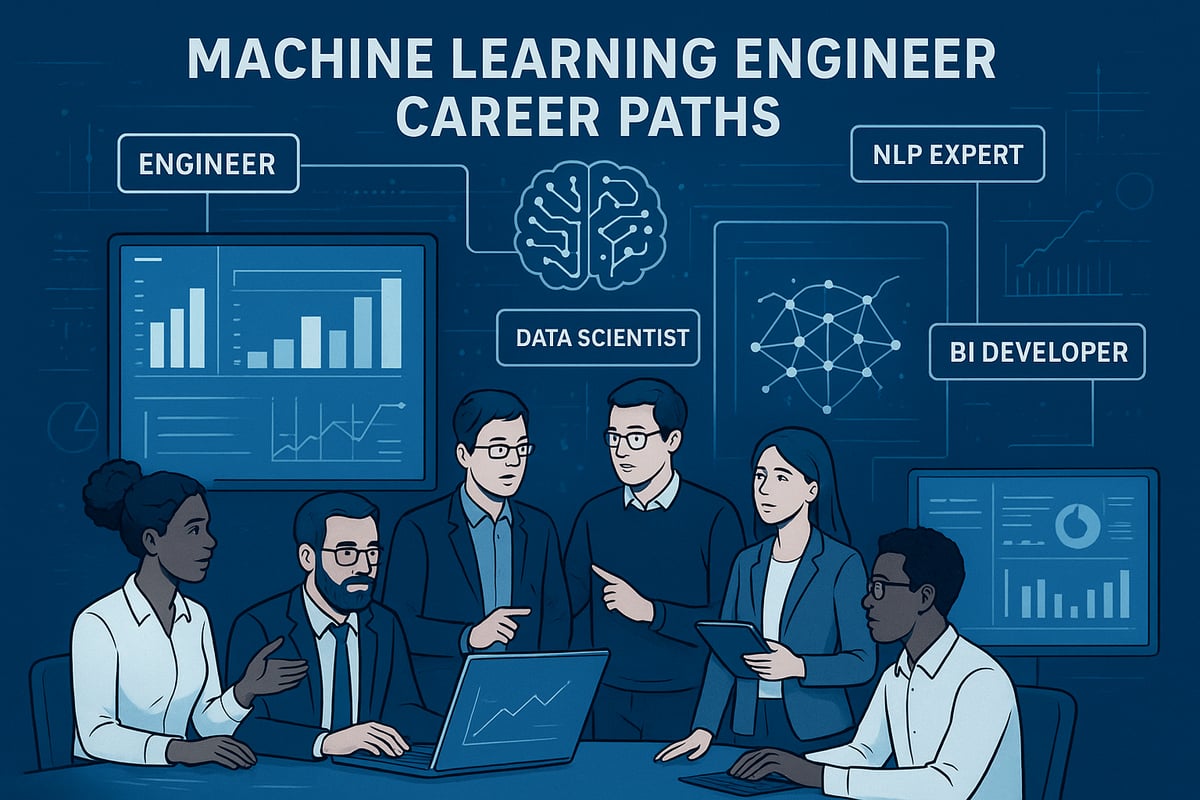
Machine Learning Engineer
A machine learning engineer builds, deploys, and optimizes machine learning models to solve complex business problems. This role is at the core of AI projects, focusing on end-to-end model development, from data preparation to monitoring production performance.
Machine learning engineers are highly sought after, with a median salary of $168,730. Compensation can be even higher at leading tech firms, as seen in Microsoft AI Compensation Packages, where AI professionals command premium pay. For example, engineers at Pinterest continuously improve content recommendation algorithms, directly impacting user experience.
Key responsibilities include:
- Collaborating with data and product teams
- Designing scalable pipelines
- Ensuring model reliability in production
Advancement opportunities lead to senior, lead, or principal machine learning engineer roles.
Data Scientist
A data scientist interprets and models complex datasets, often working closely with a machine learning engineer to develop robust algorithms. This role bridges the gap between raw data and actionable insights, leveraging statistical techniques and domain knowledge.
Data scientists share many skills with machine learning engineers, especially in algorithm development and data analysis. The median salary for data scientists is $165,029, reflecting high demand across industries. For instance, data scientists at Spotify analyze user listening patterns to drive personalization.
Transitioning between data science and machine learning engineer positions is common, allowing professionals to expand their technical and analytical expertise.
NLP Scientist & Computational Linguist
NLP scientists and computational linguists specialize in natural language processing, enabling machines to understand and generate human language. These experts are pivotal in developing chatbots, voice assistants, and large language models.
A machine learning engineer interested in linguistics and AI can move into this specialization. Median salaries for NLP scientists reach $180,727, making this one of the most lucrative paths. For example, professionals in this field contribute to advancements in Siri and Alexa, shaping the future of conversational AI.
Key skills include deep learning, language modeling, and computational linguistics. Growth is rapid as generative text and voice applications expand.
Business Intelligence (BI) Developer and Software Engineer
BI developers and software engineers play essential roles in supporting machine learning workflows. BI developers analyze business data, uncover trends, and present insights that inform strategic decisions. Software engineers build scalable systems to deploy and maintain AI solutions.
A machine learning engineer may collaborate with these professionals or transition into these roles to broaden their impact. Median salaries are $126,174 for BI developers and $162,927 for software engineers. At financial firms, BI developers optimize trading strategies, while software engineers ensure robust system integration for machine learning models.
These paths offer cross-functional collaboration and exposure to business operations.
Emerging and Hybrid Roles
The evolution of AI has created new hybrid roles, offering innovative directions for a machine learning engineer. MLOps engineers manage the full machine learning lifecycle, ensuring models are deployed, monitored, and updated efficiently. AI product managers bridge technical and business teams, guiding product vision and implementation.
Research scientists focus on advancing machine learning theory and algorithms. For example, MLOps engineers at healthcare startups ensure compliance and reliability in clinical models. Hybrid skill sets combining AI expertise with domain knowledge are increasingly valuable in 2026.
These emerging roles provide unique opportunities for growth, leadership, and specialization within the machine learning engineer career landscape.
Machine Learning Engineer Job Outlook and Industry Trends for 2026
The job outlook for a machine learning engineer in 2026 remains exceptionally strong. As organizations across industries continue to adopt artificial intelligence, demand for skilled professionals is on the rise. Companies are seeking talent who can bridge the gap between data science and production systems, making this a prime time to enter or advance in the field.
Market Demand and Salary Trends
The market for machine learning engineer roles is expanding rapidly as AI becomes central to business operations. In 2025, thousands of open positions were reported on LinkedIn, reflecting the urgent need for expertise. Salaries remain highly competitive, with the median total pay reaching $168,730 according to Glassdoor.
Tech giants and startups alike are ramping up hiring, especially in regions like the United States and Canada, which lead global job creation. The machine learning engineer role is now seen as essential for organizations looking to stay ahead in automation and data-driven decision-making.
The following table summarizes salary benchmarks and job openings:
| Year | Median Salary (USD) | Open Roles (LinkedIn) |
|---|---|---|
| 2025 | $168,730 | 2,800+ |
With attractive compensation and robust demand, pursuing a career as a machine learning engineer offers significant financial and professional rewards.
Industry Adoption and Applications
Multiple sectors are investing heavily in machine learning engineer talent. Healthcare, finance, automotive, retail, and entertainment are among the top industries hiring for these skills. Machine learning engineer roles support critical applications, from autonomous vehicles to personalized medicine.
For example, in healthcare, machine learning engineers help develop diagnostic tools that improve patient outcomes. In automotive, their expertise drives advancements in self-driving technology. Businesses increasingly rely on AI-driven automation to boost efficiency and gain a competitive edge.
There is also a growing emphasis on explainable AI and ethical practices. As remote and hybrid work opportunities expand, machine learning engineer roles are becoming more accessible worldwide.
Skills and Qualifications in Demand
Employers are seeking machine learning engineer candidates with a blend of technical expertise and soft skills. The most sought-after technical abilities include:
- Deep learning and neural networks
- Natural language processing (NLP)
- MLOps and cloud-based machine learning
- Programming proficiency (Python, R)
- Data engineering and visualization
Equally important are soft skills such as communication, teamwork, and adaptability. Businesses value professionals who can translate complex concepts into practical solutions and collaborate across departments.
Continuous learning is essential, as the field evolves rapidly. Employers look for machine learning engineer candidates with a passion for upskilling and a keen sense of business acumen.
Challenges and Opportunities
The machine learning engineer landscape presents both challenges and exciting opportunities. Talent shortages remain a concern, with competition for top professionals intensifying. Navigating evolving regulatory and ethical standards is another key challenge for organizations deploying AI solutions.
Robust model governance and security are critical as the impact of AI grows. For professionals, this environment offers pathways for career advancement and specialization. Upskilling can set you apart and prepare you for emerging roles.
Common challenges include:
- Keeping pace with technological change
- Adapting to new compliance requirements
- Balancing innovation with ethical considerations
Opportunities abound for those who stay adaptable and proactive.
Future-Proofing Your Career
To future-proof your machine learning engineer career, prioritize lifelong learning and adaptability. Pursue certifications, advanced degrees, and stay connected with professional networks. Embrace new tools, frameworks, and methodologies as they emerge.
Transitioning to leadership or hybrid roles, such as AI product manager or research scientist, is increasingly common. Preparing for the next wave of AI innovation in 2026 and beyond will ensure long-term success.
Focus on building a diverse skill set and staying informed about industry trends. The machine learning engineer career path offers both stability and the excitement of driving the future of technology.
As you look ahead to building a rewarding machine learning engineering career, having trusted support can make all the difference. Whether you’re just starting out or ready to take your next big step, finding opportunities with reputable employers and ensuring your skills stand out is crucial in this competitive field. That’s where platforms like Augmnt come in—they connect you with verified AI roles and simplify the hiring process by prioritizing transparency and skill validation. If you want to see how this works in practice and explore how Augmnt can help you reach your career goals, Request a Demo.