
List of IT Recruitment Agencies: Top Partners for 2026
Finding the right technology professionals has become increasingly complex as businesses compete for limited AI and IT talent. A comprehensive list of IT recruitment agencies provides hiring managers with options ranging from traditional staffing firms to AI-powered marketplaces that specialize in technical roles. With the IT recruitment market projected to reach USD 416.26 billion by 2035, understanding which agencies align with your specific hiring needs has never been more critical for building competitive technical teams.
Understanding the IT Recruitment Agency Landscape
The technology staffing industry has evolved significantly beyond traditional resume forwarding services. Modern IT recruitment agencies now offer specialized services including skills verification, technical assessments, and compliance management tailored specifically for technology roles.
Types of IT Recruitment Agencies
Different agency models serve distinct hiring needs and organizational structures. Understanding these categories helps businesses select partners that align with their recruitment strategies.
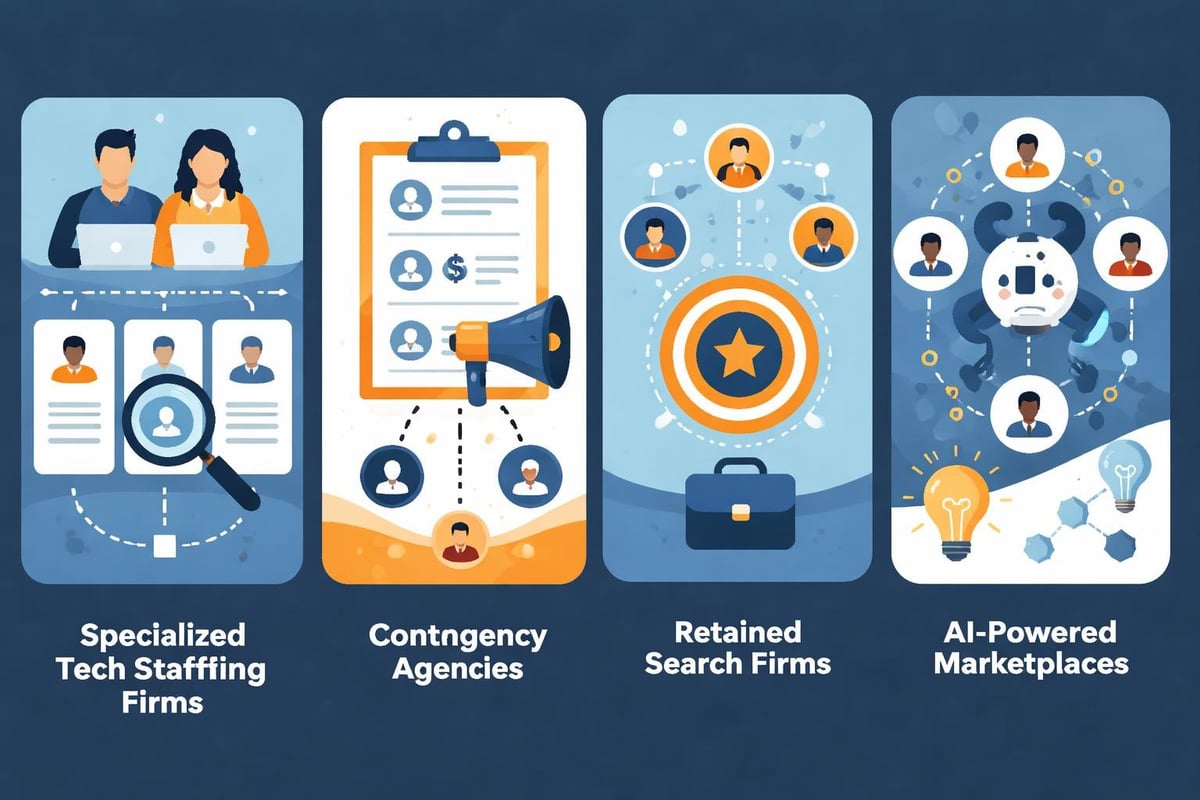
Specialized Tech Staffing Firms focus exclusively on IT and technology placements. These agencies maintain deep networks within specific technical communities and understand niche skill requirements. They typically employ recruiters with technical backgrounds who can evaluate candidate qualifications beyond resume keywords.
Contingency Recruitment Agencies work on a success-based model, receiving payment only when a candidate is hired. This approach works well for standard IT positions but may result in quantity over quality for highly specialized roles.
Retained Search Firms operate on an exclusive basis, receiving upfront payments to conduct comprehensive searches for senior technical leadership positions. These agencies invest significant resources in candidate research and market mapping.
Contract Staffing Specialists focus on temporary and contract-to-hire placements, addressing project-based needs and seasonal demand fluctuations. This model has grown substantially as remote-first hiring strategies expand geographic talent pools.
Geographic and Specialty Considerations
When building a list of IT recruitment agencies, geographic coverage and technical specializations become critical selection criteria. Some agencies excel in specific metropolitan tech hubs, while others maintain national or global networks.
Niche specialization has become increasingly valuable as technology roles fragment into distinct categories. Agencies focusing exclusively on AI/ML engineers, cybersecurity professionals, cloud architects, or data scientists often deliver higher-quality candidates than generalist firms attempting to cover all technical disciplines.
Leading National IT Recruitment Agencies
Several established agencies have built strong reputations for technology placements across multiple markets and specializations. These firms typically offer comprehensive services including permanent placement, contract staffing, and workforce solutions.
Enterprise-Scale Technology Staffing
Large national agencies provide consistent service delivery across geographic regions and maintain extensive candidate databases. Their scale enables them to handle high-volume hiring needs while supporting specialized searches through dedicated practice groups.
| Agency Type | Best For | Typical Time to Fill | Cost Structure |
|---|---|---|---|
| National Generalist | Volume hiring, multiple locations | 30-45 days | 20-25% of salary |
| Tech-Focused National | Specialized IT roles, consistent quality | 25-35 days | 22-28% of salary |
| Boutique Specialist | Niche skills, senior positions | 35-50 days | 25-30% of salary |
| Contract Specialists | Project-based, temporary needs | 15-25 days | Markup on hourly rate |
These agencies invest heavily in recruiter training and candidate relationship management systems. However, their broad focus sometimes limits their depth in emerging technology areas where specialized knowledge provides competitive advantages.
Regional Technology Recruitment Specialists
Regional agencies often develop stronger relationships within local technology communities and understand market-specific compensation trends. They attend local tech meetups, sponsor community events, and maintain active presence in regional developer ecosystems.
For businesses building teams in specific tech hubs like Austin, Seattle, or Raleigh-Durham, regional specialists frequently outperform national agencies through superior market intelligence and established candidate relationships.
Specialized AI and Emerging Technology Recruiters
The rapid growth of artificial intelligence has created demand for recruitment partners who understand AI-specific skill requirements and can differentiate between genuine expertise and resume inflation.
AI-Focused Recruitment Firms
A comprehensive list of IT recruitment agencies should include firms specializing exclusively in artificial intelligence, machine learning, and data science placements. These agencies employ technical recruiters who understand the distinctions between different AI frameworks, model architectures, and deployment methodologies.
- Deep learning and neural network specialists
- Natural language processing experts
- Computer vision engineers
- MLOps and AI infrastructure professionals
- AI ethics and responsible AI specialists
The challenge with AI recruitment has intensified as AI skills shortages are exacerbated by surging salary demands, with AI-related costs expected to surge by 36% in 2026. Specialized recruiters help businesses navigate these market dynamics while identifying candidates with verified capabilities.

Cybersecurity Recruitment Specialists
With cybersecurity threats evolving continuously, agencies specializing in security placements have become essential partners for organizations building defensive capabilities. These firms understand certifications, clearance requirements, and the nuanced differences between security specializations.
Security recruitment specialists maintain relationships with professionals holding CISSP, CEH, OSCP, and other specialized certifications. They navigate the complex landscape of security clearances and compliance requirements that traditional IT recruiters often struggle to manage effectively.
AI-Powered Recruitment Platforms and Marketplaces
Technology has transformed recruitment itself, with AI-powered platforms offering alternatives to traditional agency relationships. These platforms leverage automation, data analytics, and verification systems to streamline technical hiring.
Intelligent Matching Systems
Modern recruitment technology uses algorithms to match candidate profiles with position requirements, reducing time-to-hire and improving initial screening quality. However, AI is already disrupting hiring in IT, but not enough businesses are prepared for its impact, with only 37% of hiring leaders feeling adequately prepared.
Platforms incorporating verification layers address the growing problem of resume fraud and credential inflation. For organizations building AI teams specifically, solutions like Augmnt ATS provide verified matching and candidate fraud detection, ensuring that presented candidates possess genuine qualifications rather than inflated claims.
Key Features of AI-Powered Platforms:
- Automated skill assessment and technical screening
- Resume fraud detection and credential verification
- Predictive analytics for candidate success likelihood
- Integrated communication and interview scheduling
- Real-time market intelligence and compensation benchmarking
Freelance and Contract Marketplaces
The rise of contract work and project-based hiring has spawned specialized marketplaces connecting businesses with independent technology professionals. These platforms suit specific hiring scenarios including short-term projects, specialized expertise gaps, and trial periods before permanent hiring.
Contract marketplaces typically offer faster placement timelines compared to traditional agencies but require stronger internal management capabilities to onboard and direct independent professionals effectively.
Building an Effective Agency Partnership Strategy
Rather than relying on a single recruitment source, successful technology hiring programs typically leverage a curated list of IT recruitment agencies selected for complementary strengths and specializations.
Multi-Tiered Recruitment Approach
Organizations with consistent hiring needs benefit from structuring agency relationships across different tiers based on role complexity, volume requirements, and strategic importance.
Tier 1: Strategic Partners handle critical hires, senior positions, and specialized roles requiring deep technical knowledge. These relationships operate on retained or preferred vendor agreements with dedicated recruiter assignments.
Tier 2: Volume Partners manage standard IT positions with clear requirements and established market availability. Contingency arrangements work well at this tier, with multiple agencies competing for placements.
Tier 3: Specialty and Overflow addresses niche requirements, geographic expansions, or capacity overflow during high-volume hiring periods. This tier includes boutique specialists and regional agencies with specific expertise.
| Partnership Tier | Relationship Type | Role Focus | Typical Agencies |
|---|---|---|---|
| Strategic | Retained/Preferred | Executive, specialized AI | 1-2 agencies |
| Volume | Contingency | Standard IT roles | 3-5 agencies |
| Specialty | Project-based | Niche skills, overflow | 5-8 agencies |
Performance Metrics and Agency Evaluation
Maintaining an effective list of IT recruitment agencies requires ongoing performance evaluation and relationship management. Key metrics help identify which partnerships deliver value and which require replacement or restructuring.
Quality Metrics:
- Interview-to-hire ratio
- 90-day retention rate
- Hiring manager satisfaction scores
- Candidate quality ratings
Efficiency Metrics:
- Average time-to-fill by role type
- Submittal-to-interview conversion rate
- Offer acceptance rate
- Cost-per-hire by agency
Regular quarterly business reviews with agency partners create opportunities to discuss performance trends, market intelligence, and process improvements. Agencies providing genuine insights into compensation trends, competitive hiring challenges, and emerging skill requirements deliver value beyond simple candidate submission.
Emerging Trends Reshaping IT Recruitment Agencies
The technology staffing landscape continues evolving as recruitment industry trends for 2026 reshape how agencies operate and deliver value to clients.
Skills-Based Hiring and Alternative Credentials
Traditional degree requirements have given way to skills-based evaluation as businesses recognize that technical capability matters more than educational pedigree. Forward-thinking agencies on any list of IT recruitment agencies now emphasize verified skills, portfolio evidence, and practical assessments over resume credentials.
This shift has created opportunities for bootcamp graduates, self-taught developers, and career changers to access technology roles previously restricted to computer science degree holders. Agencies adapting to this trend have expanded their sourcing strategies beyond traditional candidate pools.

Diversity, Inclusion, and Equitable Hiring
Organizations increasingly evaluate recruitment partners based on their commitment to diverse candidate slates and equitable hiring practices. Agencies demonstrating measurable diversity outcomes and implementing bias-reduction processes gain competitive advantages in vendor selection.
Diversity-Focused Practices:
- Structured interview frameworks reducing bias
- Blind resume screening removing identifying information
- Diverse interview panel requirements
- Partnership with organizations supporting underrepresented groups in technology
- Transparent compensation discussions establishing pay equity
Businesses building inclusive technical teams should specifically evaluate agency diversity metrics when compiling their list of IT recruitment agencies. Questions about candidate slate diversity, recruiter training on bias reduction, and partnership with diversity-focused organizations reveal agency commitment beyond marketing statements.
Remote-First and Geographic Flexibility
The normalization of remote work has fundamentally altered recruitment geography. Agencies that previously focused on specific metropolitan areas now source candidates nationally or globally, expanding both competition and opportunity.
This geographic flexibility requires agencies to understand remote work infrastructure, time zone management, and distributed team dynamics. The most effective partners help businesses navigate questions about remote versus hybrid arrangements, geographic compensation adjustments, and team collaboration strategies.
Evaluating Agency Capabilities for Specific Needs
No single agency excels across all dimensions, making careful evaluation essential when building a targeted list of IT recruitment agencies for specific organizational requirements.
Technical Assessment Capabilities
Agencies vary significantly in their ability to evaluate technical skills accurately. Some rely entirely on candidate self-reporting, while others implement structured technical screening processes.
Questions to assess agency technical evaluation:
- What technical screening processes do you use before candidate submission?
- Do your recruiters have technical backgrounds in relevant technologies?
- How do you verify claimed skills and project experience?
- What assessment tools or platforms do you utilize?
- How do you stay current with emerging technologies and frameworks?
Agencies offering weak technical screening create additional burden on internal teams who must conduct extensive evaluation of unqualified candidates. The cost of reviewing inappropriate submissions often exceeds the apparent savings from lower agency fees.
Candidate Experience and Employer Branding
How agencies represent your organization and treat candidates directly impacts employer brand and talent attraction. Poor candidate experiences from agency partners damage reputation and reduce offer acceptance rates.
Professional agencies provide candidates with comprehensive role information, prepare them thoroughly for interviews, maintain transparent communication throughout the process, and deliver respectful treatment regardless of hiring outcome. These practices contribute to positive candidate experiences even for those not ultimately hired.
Compliance and Risk Management
Technology hiring involves various compliance considerations including work authorization verification, background checks, reference validation, and in some cases security clearances. Agency capabilities in managing these requirements vary substantially.
For organizations in regulated industries or those hiring for sensitive positions, agency expertise in compliance management becomes a critical selection criterion when developing a list of IT recruitment agencies. Partners who understand specific regulatory requirements and maintain documented compliance processes reduce organizational risk.
Cost Considerations and Fee Structures
Understanding recruitment costs helps businesses evaluate agency proposals and structure economically efficient hiring programs across their list of IT recruitment agencies.
Standard Fee Models
Most IT recruitment agencies operate on percentage-of-salary fees for permanent placements, typically ranging from 20% to 30% based on role difficulty, exclusivity arrangements, and volume commitments. Contract placements use markup models, adding 40% to 80% to contractor pay rates depending on service level and administrative complexity.
| Fee Model | Typical Range | Best For | Payment Terms |
|---|---|---|---|
| Contingency Permanent | 20-25% | Standard IT roles | Due at hire |
| Retained Search | 25-30% | Executive, specialized | Split: 30/30/40 |
| Contract Markup | 40-80% over pay rate | Temporary staffing | Weekly/monthly |
| Project-Based | Fixed fee | Defined hiring projects | Milestone-based |
Volume Discounts and Preferred Vendor Agreements
Organizations with consistent hiring volume negotiate preferred vendor agreements establishing reduced fees, guaranteed service levels, and dedicated recruiter assignments. These arrangements typically require minimum hiring volume commitments but deliver cost savings and improved service quality.
Preferred vendor agreements should include clear performance metrics, termination clauses for underperformance, and regular business review requirements. The most effective agreements balance cost management with quality maintenance, avoiding purely price-driven arrangements that incentivize candidate volume over placement quality.
Hidden Costs and Total Cost of Hire
Agency fees represent only one component of total recruitment costs. Poor-quality agencies generate hidden expenses through wasted interview time, extended vacancies, early turnover, and damaged employer reputation.
Calculating true cost-per-hire requires factoring internal time investment in candidate review, interview scheduling and execution, offer negotiation, and onboarding. Agencies delivering pre-screened, qualified candidates reduce these internal costs substantially compared to those submitting high volumes of marginal applicants.
Managing Your IT Recruitment Agency Portfolio
Once you've established a working list of IT recruitment agencies, active management ensures optimal results and continuous improvement in hiring outcomes.
Clear Communication and Requirement Definition
Agency effectiveness depends heavily on how clearly businesses communicate position requirements, team dynamics, and cultural expectations. Vague job descriptions and unclear success criteria produce mismatched candidate submissions regardless of agency capability.
Elements of Effective Job Briefs:
- Specific technical skills with proficiency level expectations
- Project examples illustrating actual work
- Team structure and reporting relationships
- Growth opportunities and career progression
- Compensation range and total rewards package
- Timeline expectations and urgency level
Providing agencies with comprehensive role information, team context, and clear evaluation criteria dramatically improves submission quality and reduces time-to-hire. The investment in thorough briefing materials pays dividends through better-matched candidates and more efficient screening processes.
Feedback Loops and Continuous Improvement
Agencies improve performance when clients provide specific, timely feedback on submitted candidates. Generic rejections like "not a fit" offer no learning opportunity, while detailed feedback about specific skill gaps or experience mismatches helps recruiters refine their screening.
Establishing structured feedback processes creates accountability and continuous improvement. Simple rating systems combined with brief explanatory comments give agencies actionable information for improving future submissions.
Relationship Management and Strategic Partnership
The most productive agency relationships extend beyond transactional candidate submissions to include market intelligence sharing, hiring strategy consultation, and proactive talent pool development.
Strategic agency partners provide value through:
- Regular market updates on compensation trends and candidate availability
- Proactive identification of passive candidates before active searches
- Consultation on role positioning and requirement optimization
- Competitive intelligence about hiring activity in your market
- Advisory support on offer structuring and negotiation strategies
Treating top-performing agencies as strategic partners rather than vendors creates mutual investment in long-term success and preferential access to their strongest candidates.
Building and maintaining an effective list of IT recruitment agencies requires careful evaluation of specializations, capabilities, and cultural alignment with your hiring needs. As technology talent competition intensifies and hiring complexity increases, businesses benefit from diversified agency portfolios combining traditional expertise with modern verification capabilities. Augmnt provides an intelligent alternative by connecting businesses with verified AI professionals through comprehensive validation including resume fraud detection and skill verification, streamlining the recruitment process while ensuring candidate quality and authenticity.