Interview Fraud Guide 2026: Spotting And Preventing Scams
By 2026, interview fraud will touch 1 in 4 job seekers globally. Are you confident you can spot the scams before they cost your company?
Interview fraud refers to deceptive tactics used during the hiring process, such as deepfakes, fake credentials, or proxy interviews. The impact is growing rapidly, with 95% of organizations reporting deepfake incidents in 2025.
This guide empowers you with practical steps to identify and prevent these evolving threats in 2026, protecting your organization from costly mistakes.
You will discover why interview fraud is on the rise, common scam methods, red flags to watch for, advanced prevention strategies, and how to future-proof your hiring. Ready to secure your hiring process? Let’s begin.
The Surge of Interview Fraud: Why It’s Rising in 2026
The landscape of interview fraud has shifted dramatically since 2020. As remote work became the new norm, the hiring process underwent a rapid digital transformation. Today, nearly 80% of organizations use online interviews, creating new opportunities for both legitimate candidates and fraudsters.
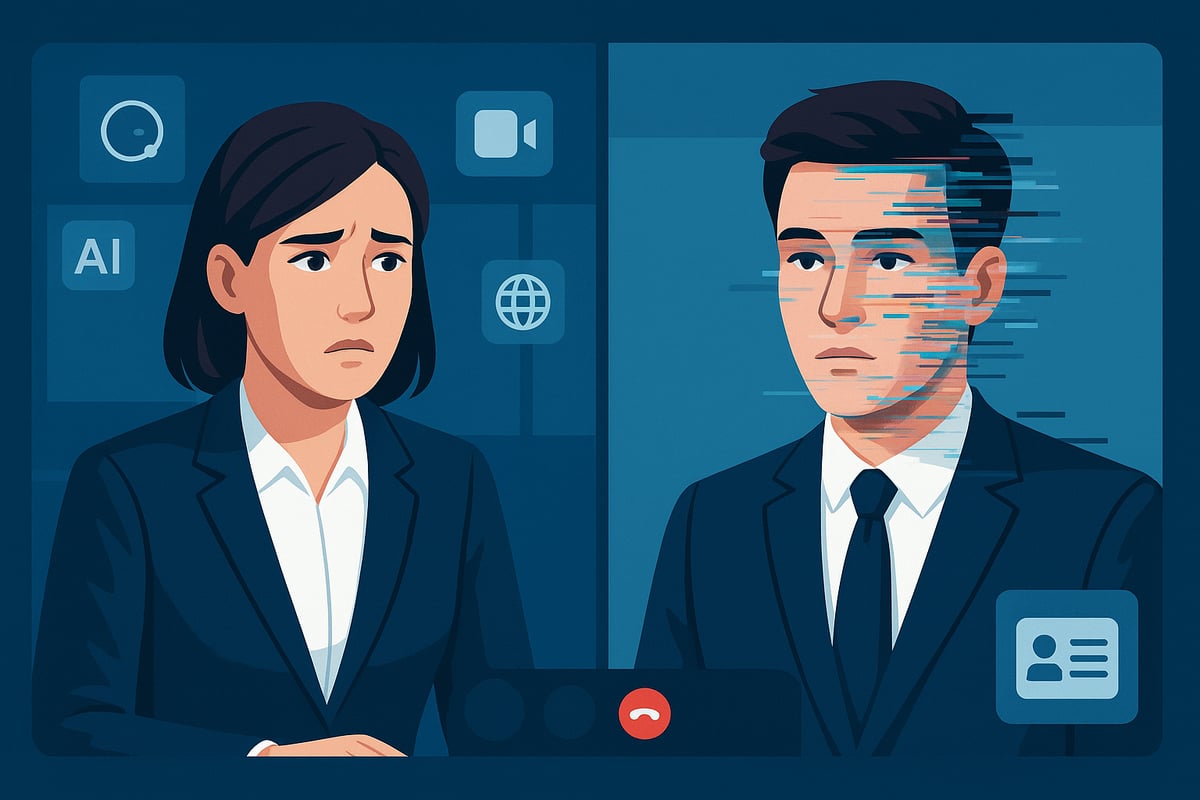
Remote Work: A Double-Edged Sword
Remote work has accelerated the rise of interview fraud. With video interviews replacing in-person meetings, verifying a candidate's true identity and skills has become more difficult. The convenience of online platforms, while beneficial, has made it easier for scammers to slip through the cracks.
Digital Literacy Gap
A concerning 30% of U.S. adults lack basic digital skills. This gap creates vulnerabilities on both sides of the hiring process. Recruiters may miss the subtle cues of deception, while job seekers are more likely to fall for fake job offers and phishing attempts.
Sophisticated Technology and Deepfakes
The rapid evolution of AI and deepfake technologies has supercharged interview fraud. Fraudsters now use AI tools to generate convincing resumes, alter documents, and even create real-time video or audio deepfakes. According to recent reports, 95% of organizations faced deepfake incidents in 2025. For a detailed look at how deepfake technology is being used to deceive employers, see Deepfake AI job applicants exploiting remote work.
Economic Pressures and Desperation
Economic uncertainty and global recessions have fueled desperation among job seekers. Some candidates turn to risky tactics, such as hiring proxies for interviews or using fraudulent credentials, to secure positions in a competitive market.
Global Reach and Volume
The internet has given interview fraud a global reach. Scammers can now target companies and candidates across borders with ease. The percentage of recruiters using video interviews jumped from 47% in 2019 to 78% in 2021, reflecting the scale of the challenge.
Financial and Operational Impact
The cost of interview fraud is significant. Companies report average losses of $28,000 per incident involving a proxy hire, factoring in legal fees, investigation, lost productivity, and compliance risks.
| Key Driver | Statistic/Impact |
|---|---|
| Remote Work | 60-80% of companies use online interviews |
| Digital Literacy Gap | 30% of U.S. adults lack basic digital skills |
| Deepfake Incidents | 95% of organizations affected in 2025 |
| Recruiter Adoption | 78% used video interviews in 2021 (up from 47% 2019) |
| Financial Loss | $28,000 average per proxy hire incident |
Examples of Interview Fraud in Action
Fake job listings, phishing scams, and proxy interviews are on the rise. Data from Crosschq and BarRaiser point to a sharp increase in these tactics, with some companies facing multiple incidents in a single hiring cycle.
As interview fraud continues to evolve, understanding these drivers and trends is crucial for organizations determined to protect their hiring processes in 2026.
Common Types of Interview Fraud & Scam Techniques
Interview fraud is evolving rapidly, with scammers employing a mix of old and new tactics to deceive employers. Understanding these techniques is essential for building robust defenses and staying one step ahead of fraudsters.
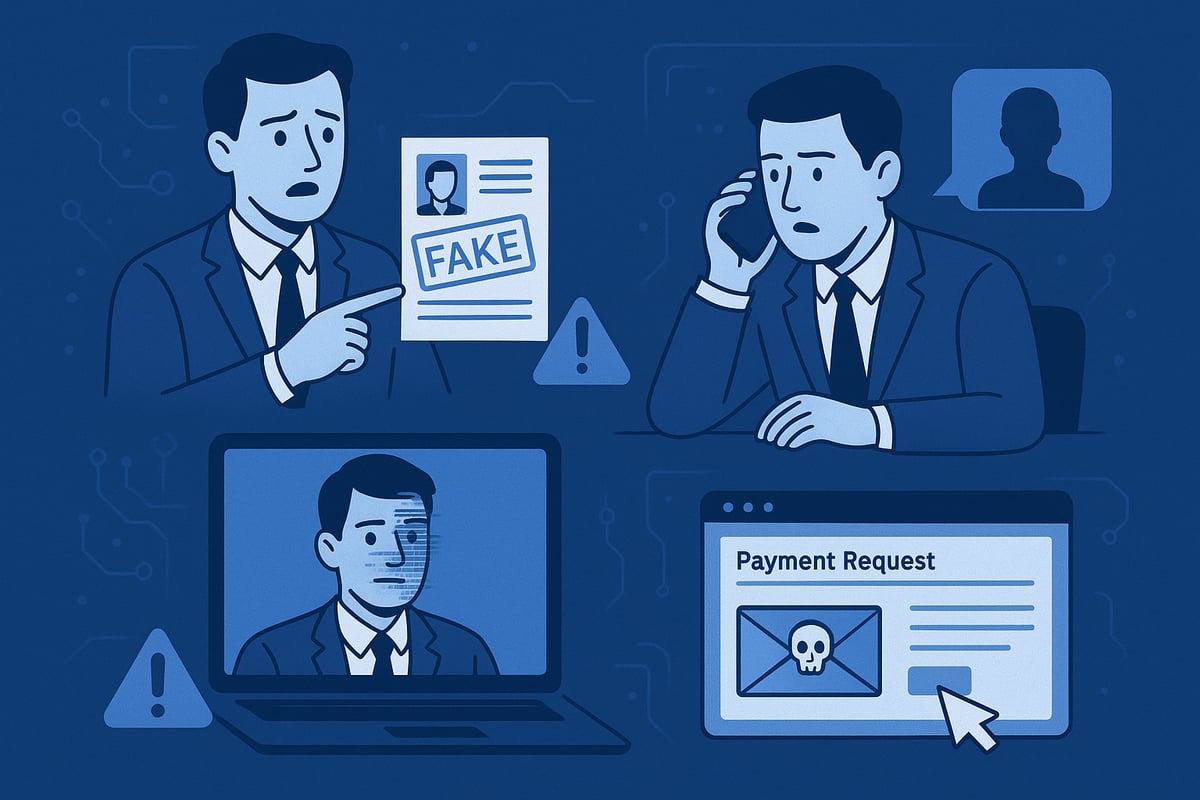
Falsified Qualifications and Document Fraud
One of the most widespread forms of interview fraud involves candidates fabricating or exaggerating their qualifications. This can range from fake diplomas and certificates to digitally altered work histories.
Today, AI-powered tools make it easier to create convincing fake documents. For example, some fraudsters use sophisticated software to alter government IDs or generate entirely new credentials. The persistence of document fraud is well documented, with hiring managers reporting a rise in forged academic records and employment histories.
Employers must remain vigilant, as advanced document fraud can slip through traditional verification processes. Cross-checking credentials and using digital validation platforms are now essential steps in combating this form of interview fraud.
Cheating, External Help, and Proxy Interviews
Cheating during interviews has taken on new forms in the digital age. Some candidates use unauthorized tools, such as hidden earpieces or messaging apps, to receive real-time assistance. Others hire proxies—individuals who attend interviews on their behalf, a scheme known as "bait-and-switch."
Typical signs of this type of interview fraud include inconsistent knowledge, fleeting glances off-camera, and a mismatch between interview performance and on-the-job abilities. According to Glider AI, candidate fraud surged by 92% during the pandemic, underscoring the urgency of addressing these tactics.
Employers can counteract these schemes by using multi-factor verification and requiring continuous camera use during virtual interviews. Recognizing behavioral cues is a crucial skill in detecting proxy and external help scams.
Deepfake and AI-Generated Responses
The emergence of deepfake technology has added a new layer of complexity to interview fraud. Fraudsters can now manipulate video and audio feeds in real time, making it nearly impossible to spot impostors without specialized tools.
AI chatbots, such as ChatGPT and Claude, are also used to generate interview answers that sound polished and convincing. In HYPR’s 2025 report, 95% of organizations experienced at least one deepfake incident in their hiring process.
Detecting deepfake and AI-generated responses requires advanced detection software capable of analyzing facial movements, voice patterns, and response timing. As interview fraud becomes more technologically sophisticated, employers must adopt equally advanced countermeasures.
Fake Interviews and Phishing Scams
Some scams flip the script by targeting candidates directly. Fraudsters pose as employers and conduct fake interviews to steal personal data or solicit payments. These phishing scams often involve requests for sensitive information, anonymous job descriptions, or demands for upfront fees.
Common warning signs include interview invitations from unverifiable sources and job offers contingent on payment for equipment or training. The financial impact of such interview fraud can be substantial, as highlighted in the Checkr report on hiring fraud, which details both direct and hidden costs to organizations.
Employers and job seekers alike should treat any request for payment as a red flag and verify all communications through official channels.
Identity Theft and Multiple Job Holding
Identity theft is a growing concern in the context of interview fraud. Scammers may use stolen identities to bypass background checks and secure positions they are not qualified for. This tactic not only undermines the integrity of the hiring process but also exposes companies to compliance and security risks.
Another trend is multiple job holding, where candidates use fraudulent credentials to secure several roles simultaneously. This can lead to conflicts of interest, reduced productivity, and reputational damage for employers.
Vigilant screening, comprehensive background checks, and ongoing monitoring are vital in detecting and preventing these sophisticated interview fraud techniques.
Spotting Interview Fraud: Red Flags and Warning Signs
Identifying interview fraud quickly is essential for protecting your organization. The right approach involves knowing what to look for at every stage of your hiring process. Below, we break down the most critical red flags that signal potential interview fraud, so you can act before costly mistakes occur.
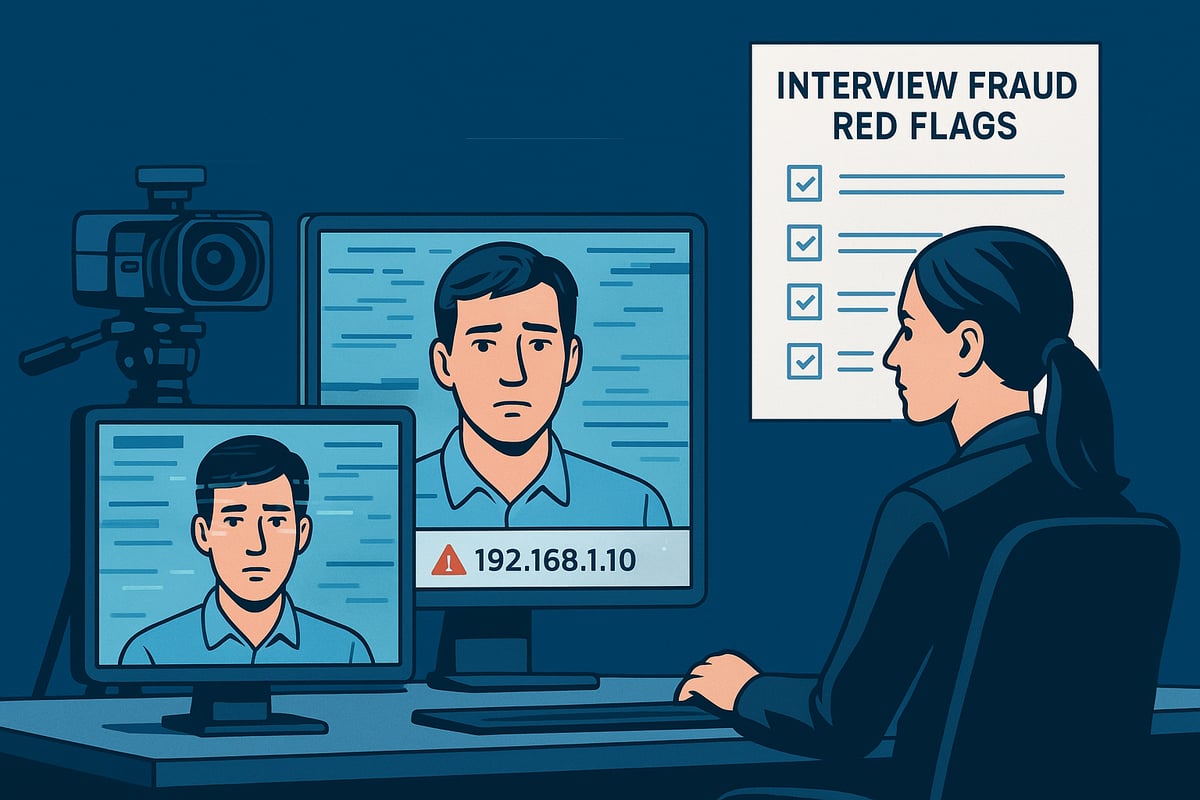
Technical Red Flags
Technical inconsistencies are often the first clues of interview fraud. Pay attention to:
- Audio and video quality that fluctuates without clear cause.
- Sudden technical glitches, like screen freezing or echoing.
- Unnatural facial movements, such as lips not syncing with speech.
- Noticeable delays in responses, which may suggest off-camera help or the use of deepfake technology.
If you spot multiple issues on this list, pause to investigate further. Consistent technical problems can be a strong indicator of interview fraud.
Behavioral Red Flags
Behavioral cues can reveal much about a candidate's authenticity during the interview process. Look for:
- Answers that sound overly polished or scripted, lacking genuine detail.
- Difficulty expanding on specific points or hesitancy when asked follow-up questions.
- Refusal to adjust the camera, show workspace, or perform simple gestures on request.
- Knowledge or skills that do not align with the resume or role requirements.
These behaviors often emerge when someone is attempting interview fraud, especially if the candidate cannot provide real-world examples.
Geographic and Environmental Red Flags
Geographic mismatches and environmental inconsistencies are common in interview fraud schemes. Be wary of:
- Claimed location not matching the candidate’s IP address or time zone.
- Reluctance to verify workspace or show surroundings when asked.
- Backgrounds that appear generic, artificial, or change between interviews.
A candidate who resists environmental checks may be hiding something. If you notice unexplained discrepancies, treat them as serious red flags for interview fraud.
Employer and Recruiter Red Flags
Interview fraud is not limited to candidates. Employers and recruiters can also raise concerns, particularly in scam scenarios. Watch out for:
- Requests for payment, such as training fees or equipment deposits.
- Job offers or interview invitations from unverifiable sources or anonymous email addresses.
- Vague job descriptions lacking company details or clear responsibilities.
Legitimate employers do not ask for money or personal financial information during recruitment. If you encounter these signs, you may be dealing with interview fraud.
Real-World Examples and Data
Recent studies highlight the scale of interview fraud. For example, Phenom observed a 50 to 200 percent increase in poser candidates, while average company losses per incident can reach $28,000. Hidden costs include time spent on investigations, compliance risks, and lost productivity.
Comprehensive solutions, like those offered by Preventing interview fraud with Augmnt, provide advanced detection and verification, helping organizations reduce exposure to scams and maintain hiring integrity.
Step-by-Step Guide: Preventing Interview Fraud in 2026
Interview fraud is evolving fast, but a proactive, layered strategy can keep your hiring process secure. Follow these steps to minimize risk, protect your brand, and ensure you hire genuine talent in 2026.
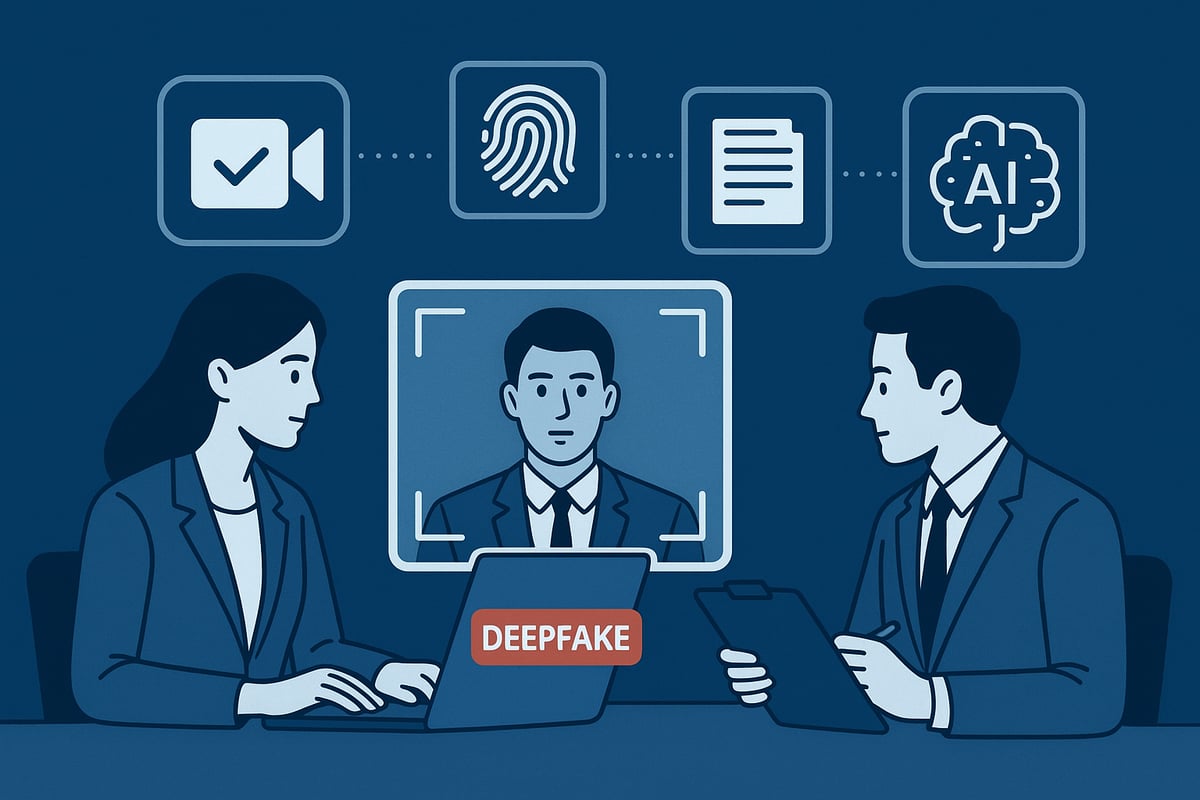
1. Multi-Stage Verification Processes
Start by building multiple, robust checkpoints into your hiring workflow. Require government-issued ID checks paired with live gesture verification, not just scanned documents. Mix up interview formats—conduct video, phone, and (when possible) in-person interviews to spot inconsistencies. Randomly schedule verification touchpoints throughout the process to deter those attempting interview fraud.
- Check ID authenticity with dynamic gestures.
- Alternate interview formats for cross-verification.
- Conduct random spot-checks during selection.
This layered approach makes it much harder for fraudsters to slip through undetected.
2. Advanced Reference and Background Checks
Traditional reference calls are no longer enough against sophisticated interview fraud. Leverage digital tools to verify references’ identities and look for patterns like shared IP addresses or coordinated responses. Cross-check all feedback for consistency, and validate employment dates and credentials using trusted third-party platforms.
- Use digital reference verification platforms.
- Authenticate references’ contact details.
- Compare reference narratives for alignment.
By elevating background checks, you close loopholes exploited by fraudsters.
3. Interview Process Enhancement
Enhance your interview process to expose signs of interview fraud. Always record interviews (with candidate consent) for post-interview review. Use structured, behavioral-based questions demanding detailed, personal examples. Involve multiple interviewers to compare observations and reduce bias. Require continuous camera use and conduct random workspace scans during remote interviews.
- Record interviews for quality assurance.
- Ask probing, scenario-based questions.
- Mandate camera use and workspace visibility.
These steps help reveal inconsistencies that often signal fraudulent activity.
4. Technology Integration and Monitoring
Integrate advanced technology to monitor for interview fraud in real time. Deploy fraud detection software within your applicant tracking system and video platforms. Use tools that monitor screen sharing, analyze environmental cues, and allow for secure, auditable sharing of recordings and notes. Real-time alerts help you act quickly if suspicious behavior is detected.
| Tool Type | Function |
|---|---|
| Fraud Detection | Real-time monitoring |
| Analytics | Track behavioral trends |
| Secure Sharing | Audit trails, compliance |
Technology integration makes your defenses smarter and more adaptive.
5. Pre- and Post-Interview Safeguards
Implement practical skills assessments that are challenging to fake. Compare candidate responses across different interview rounds to catch inconsistencies. Integrate data from background, reference, and skill verification tools for a holistic, 360-degree view. This comprehensive approach is crucial for stopping interview fraud before and after the interview.
- Require hands-on skill tests.
- Analyze answer consistency.
- Merge validation data for final review.
Holistic safeguards greatly reduce the risk of a bad hire.
6. Training and Awareness
Continuous training is essential to keep your hiring team ahead of interview fraud tactics. Regularly update staff on new scam methods and red flags. Refresh internal policies and procedures to address emerging risks. Cultivate a culture where every team member feels responsible for vigilance and verification in recruitment.
- Schedule ongoing fraud awareness training.
- Update procedures as threats evolve.
- Encourage open communication about fraud risks.
A well-informed team is your best line of defense.
The Role of Verified Talent Marketplaces in Fraud Prevention
AI-powered talent marketplaces, such as Augmnt, are transforming interview fraud prevention. These platforms combine AI and human checks to validate resumes, confirm skills, and verify work eligibility. Only thoroughly pre-verified, fraud-free candidates reach your shortlist, reducing time-to-hire and boosting confidence. For ongoing insights and strategies, see the Augmnt blog on hiring best practices.
- AI and human validation for every candidate.
- Curated shortlists with built-in accountability.
- North American compliance and tailored hiring support.
Partnering with verified talent marketplaces can future-proof your hiring against evolving scams.
Advanced Technologies and Tools for Interview Fraud Detection
In 2026, organizations are turning to advanced technologies to safeguard their hiring processes from interview fraud. The sophistication of scams is rising, making traditional methods insufficient. Leveraging AI, biometrics, and secure data protocols, companies can proactively detect and prevent fraud before it impacts business outcomes.
AI-Powered Detection Systems
Modern AI-powered systems are at the forefront of interview fraud detection. These platforms analyze candidate responses in real time, looking for patterns that suggest the use of chatbots or generative AI tools. For example, if answers are consistently structured or delivered with unnatural speed, the system flags them for review.
Some solutions provide recruiters with instant alerts and guidance, helping them adapt questions or probe deeper. According to a Gartner survey on AI trust in hiring, only 26% of applicants trust AI to fairly evaluate them, underscoring the need for transparent and balanced use of these tools.
Biometric and Behavioral Verification
Biometric verification technologies add another layer of security against interview fraud. Facial recognition ensures the same individual appears in every interview round. Voice pattern analysis can detect subtle differences, revealing if someone else is answering questions.
Behavioral biometrics, such as typing rhythm and mouse movement, provide unique digital signatures. These metrics help validate the candidate’s identity and spot inconsistencies that might indicate impersonation or external assistance.
Real-Time Environmental and Technical Monitoring
To counter remote interview fraud, real-time monitoring tools are essential. Live screen sharing allows recruiters to observe candidate activity and confirm there is no hidden assistance. Environmental scans, including 360-degree camera sweeps, verify that the candidate’s workspace matches their claims.
Secondary camera feeds can be integrated for additional verification, creating a comprehensive view of the environment and deterring fraudulent behavior during the interview process.
Device and Network Analysis
Device fingerprinting and IP address tracking are powerful tools for uncovering interview fraud. By analyzing the network and device used, organizations can detect mismatches between claimed and actual candidate locations.
For example, if a candidate states they are in one country but the IP address consistently points elsewhere, this is a significant red flag. Coordinated fraud attempts, such as multiple candidates using the same device, can also be identified quickly.
Blockchain and Immutable Credential Verification
Blockchain technology is emerging as a secure solution for credential verification in interview fraud prevention. Storing candidate degrees, certifications, and employment records on a blockchain ledger ensures that these documents are tamper-proof.
Industries with strict compliance requirements benefit from the transparency and traceability blockchain provides. Immutable records make it nearly impossible for candidates to falsify their qualifications or work histories.
Integration and Automation
Seamless integration with applicant tracking systems (ATS) and HR platforms enables automated alerts and comprehensive reporting. As analytics improve, organizations can track interview fraud trends, benchmark against industry data, and continually refine their detection protocols.
Ensuring privacy and compliance is critical when implementing these tools. Refer to the Augmnt privacy and compliance policy for details on protecting candidate data throughout the process.
Future-Proofing Your Hiring Process Against Evolving Scams
Modern hiring faces relentless threats from interview fraud. Staying ahead requires vigilance, adaptability, and a commitment to continuous improvement. Here’s how you can future-proof your hiring process and protect your organization from ever-evolving scams.
Adopting Emerging Technologies
To combat sophisticated interview fraud, organizations must invest in next-generation security tools. AI-powered detection algorithms can identify deepfakes and AI-generated responses, spotting impostors in real time. Advanced biometrics, such as facial recognition and voice pattern analysis, further strengthen identity verification.
Blockchain-based credentialing is gaining traction for its tamper-proof validation, especially in regulated industries. Recent incidents, including AI impersonation of high-profile officials, show that digital deception is only becoming more convincing. By integrating these technologies, companies can build a robust defense against interview fraud.
Continuous Process Improvement
Regularly reviewing and updating fraud detection procedures is crucial. Interview fraud tactics evolve rapidly, so it’s essential to adapt hiring protocols accordingly. Benchmark your process against industry standards and collaborate with peers to share intelligence on new threats.
Encourage feedback from hiring teams and candidates to identify weaknesses. Schedule periodic audits to ensure your interview fraud prevention measures remain effective. Continuous improvement builds resilience and maintains the integrity of your hiring process.
Legal and Compliance Considerations
Protecting your organization from interview fraud means adhering to strict legal and compliance standards. Always obtain explicit candidate consent for monitoring, recording, and verification activities. Maintain compliance with GDPR, SOC II, and other relevant frameworks to safeguard data privacy.
Detailed documentation and audit trails for verification steps are essential. These practices not only prevent legal complications but also build trust with candidates and stakeholders. Compliance is a foundational pillar in any effective interview fraud prevention strategy.
Training and Organizational Culture
Empower your hiring teams with ongoing education on the latest scam tactics and detection technologies. Regular training sessions foster a culture of vigilance, ensuring everyone can recognize and respond to interview fraud.
Promote transparency at every stage of recruitment. Encourage open communication and support for reporting suspicious activity. A culture that values verification and accountability is a critical defense against evolving threats.
Strategic Investment in Prevention
Interview fraud can result in substantial financial losses, from costly bad hires to legal fees and productivity setbacks. Investing in robust prevention strategies is a proactive way to mitigate these risks.
Consider partnering with experts who specialize in fraud-resistant hiring. Services like Contact Augmnt for fraud solutions provide tailored support, advanced tools, and actionable insights to reinforce your defenses. Strategic investment today is a safeguard for your organization’s future.
Staying Ahead of the Curve
The landscape of interview fraud is constantly shifting. Monitor industry research, participate in professional networks, and stay informed about emerging threats. Position your organization as a leader in ethical, fraud-resistant hiring practices.
By combining technology, process discipline, and a vigilant culture, you can stay one step ahead of interview fraud. Future-proofing your hiring ensures you attract genuine talent and build a workforce you can trust.
As we’ve explored, interview fraud is evolving rapidly, and the risks for businesses are higher than ever. With deepfakes, proxy interviews, and sophisticated scams on the rise, relying on intuition alone just isn’t enough. That’s why combining advanced technology with human insight is essential for staying ahead. If you’re ready to protect your organization and ensure every candidate is truly qualified, I invite you to see how Augmnt’s AI-powered platform streamlines hiring and keeps fraud at bay. Want to experience the difference firsthand? Request a Demo and discover how effortless secure hiring can be.