
Independent IT Consultant: Your Complete Guide for 2026
The technology landscape has transformed dramatically over the past few years, creating unprecedented opportunities for skilled professionals to break free from traditional employment models. An independent IT consultant operates at the intersection of technical expertise and business acumen, offering specialized services to organizations that need strategic technology guidance without the commitment of full-time hires. This career path has become increasingly attractive as companies recognize the value of on-demand expertise, particularly in rapidly evolving fields like artificial intelligence, cybersecurity, and cloud infrastructure.
The Rising Demand for Independent Technology Expertise
The shift toward flexible workforce models has accelerated the demand for independent IT consultants across industries. Organizations now recognize that maintaining large in-house technology teams for every specialized need is neither cost-effective nor strategically sound.
Companies are increasingly turning to independent professionals for project-based work, strategic initiatives, and gap-filling during transitions. This trend has been fueled by several factors:
- Budget flexibility that allows companies to scale expertise up or down based on project needs
- Access to specialized skills that may not be available within existing teams
- Fresh perspectives from professionals who work across multiple organizations and industries
- Reduced overhead costs compared to full-time employee benefits and infrastructure
The artificial intelligence revolution has particularly amplified this need. Businesses require experts who can navigate AI implementation, data strategy, and automation without committing to permanent headcount expansion.

Market Dynamics Shaping Consulting Opportunities
The consulting market has matured significantly, with platforms and marketplaces emerging to connect skilled professionals with organizations seeking expertise. This evolution has reduced traditional barriers to entry while simultaneously raising the bar for quality and verification.
According to best practices for independent consultant success, maintaining a robust pipeline and continuously expanding professional networks are critical factors that separate thriving consultants from those who struggle. The landscape rewards specialists who can demonstrate verifiable expertise and deliver measurable results.
Essential Skills Beyond Technical Expertise
While technical proficiency forms the foundation of any IT consulting practice, success as an independent IT consultant requires a broader skill set that encompasses business development, communication, and project management capabilities.
Client Communication and Relationship Management
The ability to translate complex technical concepts into business value represents one of the most critical skills for consultants. Executives and decision-makers need to understand how proposed solutions impact their bottom line, competitive position, and operational efficiency.
Effective consultants master these communication competencies:
- Active listening to uncover underlying business challenges beyond stated technical requirements
- Executive-level presentations that connect technology investments to business outcomes
- Documentation practices that ensure transparency and knowledge transfer
- Expectation management through realistic timelines and clear milestone definitions
- Conflict resolution when project scope or requirements evolve unexpectedly
Building long-term client relationships extends beyond individual project delivery. An independent IT consultant who cultivates trust becomes a strategic advisor, earning repeat engagements and valuable referrals that fuel sustainable business growth.
Business Development and Marketing Acumen
Technical excellence alone does not guarantee a steady stream of clients. Successful consultants develop SEO best practices and online visibility strategies to attract inbound opportunities while simultaneously nurturing their professional networks.
The most effective marketing approaches include:
- Maintaining an updated professional profile on relevant platforms
- Publishing thought leadership content that demonstrates expertise
- Speaking at industry conferences and local business events
- Participating in online communities where potential clients seek advice
- Leveraging past client successes through case studies and testimonials
Establishing Your Independent Practice
The transition from employment to independent consulting requires careful planning and strategic positioning. Many professionals underestimate the business infrastructure needed to operate successfully on their own.
Defining Your Market Position
Generic "IT consultant" positioning rarely succeeds in today's competitive market. The fundamentals of IT consultant success emphasize the importance of differentiation through specialization and unique value propositions.
Consider these positioning strategies:
| Positioning Approach | Example Focus Areas | Ideal Client Profile |
|---|---|---|
| Industry Specialist | Healthcare IT, Financial Services Technology | Organizations in specific regulated industries |
| Technology Expert | Cloud Architecture, AI/ML Implementation | Companies adopting emerging technologies |
| Transformation Consultant | Digital Transformation, Legacy Modernization | Enterprises undergoing major technology shifts |
| Security Specialist | Penetration Testing, Compliance Consulting | Organizations with stringent security requirements |
An independent IT consultant who clearly articulates their niche and ideal client profile can command premium rates while reducing competition for engagements.

Building Credibility and Trust Signals
New independent consultants face a credibility gap that established firms do not encounter. Prospective clients need assurance that an independent professional can deliver results comparable to larger organizations.
Effective credibility builders include:
- Professional certifications relevant to your specialization (AWS, Azure, CISSP, PMP)
- Verified testimonials from previous clients or colleagues
- Portfolio documentation showcasing completed projects and measurable outcomes
- Industry contributions such as published articles, presentations, or open-source projects
- Professional liability insurance that protects both consultant and client
For businesses looking to hire independent IT consultants, platforms like Augmnt provide verified matching and candidate fraud detection, ensuring that only qualified professionals with legitimate credentials are presented for consideration.
Operational Best Practices for Sustainable Success
Running an independent consulting practice involves more than delivering excellent technical work. The operational foundation determines whether consultants thrive or burn out within their first few years.
Project Scoping and Contract Management
Clear project boundaries protect both consultant and client from scope creep and misaligned expectations. The IT consulting services best practices framework emphasizes transparent communication and well-defined deliverables as cornerstones of successful engagements.
Essential contract elements include:
- Detailed scope of work with specific deliverables and success criteria
- Timeline with milestone-based payment schedules
- Change management process for handling scope modifications
- Intellectual property ownership and confidentiality provisions
- Termination clauses and dispute resolution mechanisms
An independent IT consultant who invests time in thorough project scoping avoids the costly mistakes that erode profitability and damage client relationships.
Time Management and Productivity Systems
The freedom of independent consulting comes with the responsibility of self-management. Without corporate structure, consultants must create their own systems for tracking time, managing multiple clients, and maintaining productivity.
Effective consultants implement:
- Time tracking tools that capture billable hours and identify productivity patterns
- Project management platforms for organizing deliverables across multiple engagements
- Communication protocols that establish availability boundaries with clients
- Regular scheduling blocks for business development, administration, and skill development
- Financial management systems for invoicing, expense tracking, and tax preparation
Maintaining Work-Life Integration
The flexibility that attracts many professionals to independent consulting can paradoxically lead to overwork and burnout. Work-life balance for independent consultants requires intentional boundary-setting and sustainable practices.
Consider these balance strategies:
- Establishing core working hours and communicating them to clients
- Taking regular time off between engagements to recharge
- Setting revenue targets that allow for downtime without financial stress
- Diversifying client base to avoid over-dependence on single relationships
- Investing in health, relationships, and personal development alongside business growth
Pricing Strategies and Financial Management
Determining appropriate rates represents one of the most challenging aspects of independent consulting. Many professionals either undervalue their expertise or price themselves out of market opportunities.
Rate-Setting Methodologies
An independent IT consultant can approach pricing through several frameworks, each with distinct advantages depending on the engagement type and client sophistication.
| Pricing Model | Best For | Considerations |
|---|---|---|
| Hourly Rate | Short-term projects, variable scope | Caps earning potential, requires detailed time tracking |
| Project-Based | Defined deliverables, fixed scope | Rewards efficiency, risk of scope creep |
| Retainer | Ongoing advisory relationships | Provides income stability, requires boundary management |
| Value-Based | High-impact strategic initiatives | Commands premium rates, requires outcome measurement |
Market research, competitor analysis, and honest assessment of your experience level should inform initial rate-setting. Most consultants increase rates annually and adjust based on demand signals and specialized expertise development.
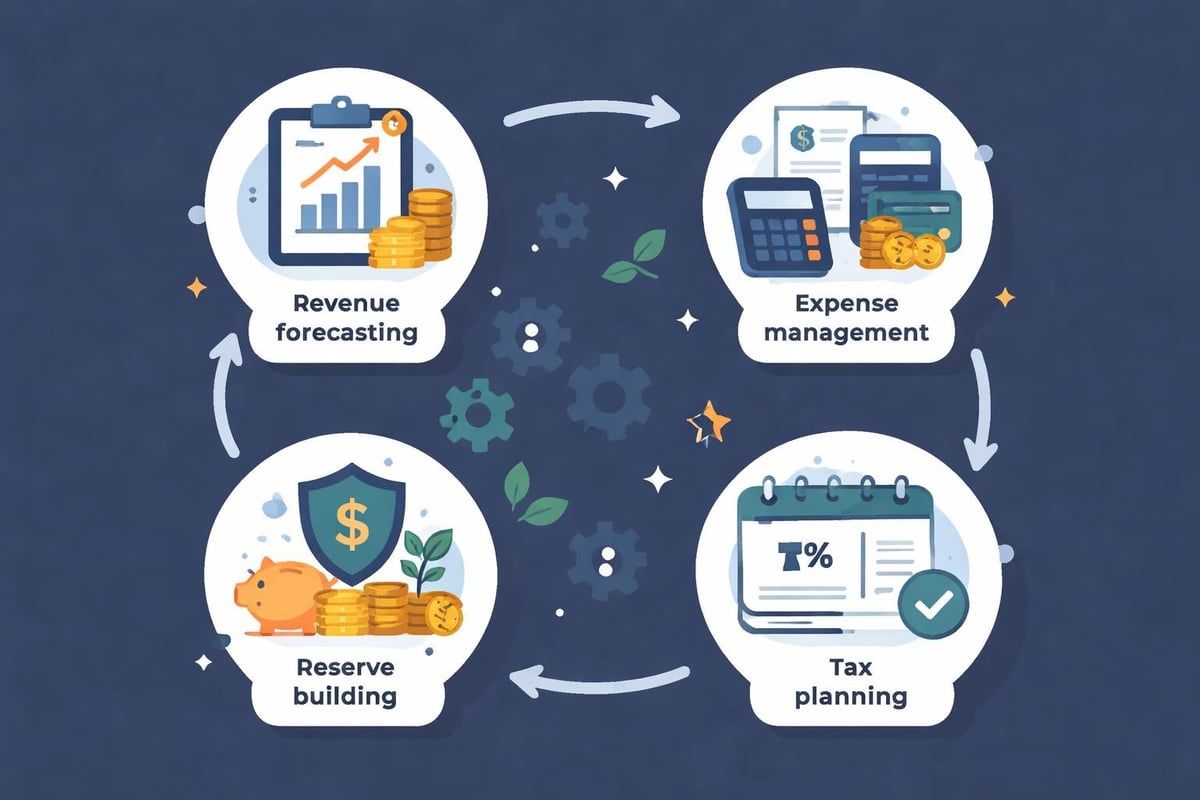
Financial Planning for Variable Income
Unlike salaried employment, independent consulting generates irregular income streams that require disciplined financial management. Successful consultants separate business and personal finances while maintaining reserves for slow periods.
Critical financial practices include:
- Maintaining 3-6 months of operating expenses in reserve
- Setting aside quarterly tax payments to avoid year-end surprises
- Investing in business development during high-revenue periods
- Tracking key metrics like utilization rate and average project value
- Planning for health insurance, retirement, and other benefits independently
Leveraging Technology and Platforms
Modern independent IT consultants benefit from an ecosystem of platforms, tools, and marketplaces that streamline client acquisition, project delivery, and business operations.
Client Acquisition Channels
Finding consistent, high-quality clients remains the top challenge for most independent consultants. A multi-channel approach reduces dependency on any single source while building sustainable pipeline momentum.
Effective acquisition channels include:
- Professional networks and referrals from past clients and colleagues
- Talent marketplaces that connect verified professionals with vetted opportunities
- Content marketing through blogs, podcasts, or video channels demonstrating expertise
- Direct outreach to companies in your target market experiencing relevant challenges
- Partnership networks with complementary service providers who refer overflow work
For companies seeking to hire verified AI professionals, specialized marketplaces eliminate the traditional friction in consultant discovery and vetting processes.
Essential Tools and Infrastructure
The right technology stack enables an independent IT consultant to operate with the professionalism and efficiency of larger firms. Strategic tool selection balances capability with cost-effectiveness.
Core technology categories include:
- Communication platforms for video calls, messaging, and screen sharing
- Proposal and contract software that streamlines engagement initiation
- Cloud storage and collaboration tools for document sharing and version control
- Accounting and invoicing systems designed for service businesses
- CRM platforms for tracking client relationships and business development activities
Professional Development and Skill Evolution
The technology landscape evolves continuously, requiring independent consultants to maintain relevant expertise while expanding into emerging domains. Stagnation represents the greatest threat to long-term consulting success.
Continuous Learning Strategies
An independent IT consultant must allocate time and resources to skill development despite the pressure to maximize billable hours. This investment pays dividends through expanded service offerings and premium rate justification.
Learning approaches include:
- Certification programs in emerging technologies or methodologies
- Online courses and bootcamps for structured skill acquisition
- Conference attendance for networking and trend awareness
- Peer learning groups with other consultants facing similar challenges
- Client projects that stretch capabilities into new domains
The benefits of being an independent consultant include the freedom to shape your own professional development path rather than conforming to corporate training programs.
Staying Current with Industry Trends
Beyond specific technical skills, successful consultants maintain awareness of broader industry trends, business challenges, and emerging opportunities. This contextual knowledge enables strategic advising that extends beyond tactical implementation.
Staying informed requires:
- Regular consumption of industry publications and research reports
- Participation in professional associations and special interest groups
- Experimentation with new technologies before they reach mainstream adoption
- Engagement with thought leaders and innovators in your specialization
- Analysis of how macroeconomic trends impact technology investment patterns
Navigating Common Challenges and Pitfalls
Every independent IT consultant encounters obstacles that test their resilience and adaptability. Anticipating these challenges enables proactive mitigation rather than reactive crisis management.
Client Relationship Difficulties
Even with excellent technical delivery, consultant-client relationships sometimes deteriorate due to miscommunication, changing priorities, or unrealistic expectations. The dos and don'ts for IT consultants provide guidance on maintaining professional boundaries while navigating difficult situations.
Warning signs of relationship strain include:
- Scope requests without corresponding budget discussions
- Delayed payment or disputes over invoiced amounts
- Reduced responsiveness from key stakeholders
- Last-minute deadline changes without consultation
- Attribution of external factors to consultant performance
Addressing issues early through direct, professional communication often prevents relationship breakdown and project failure.
Income Volatility and Pipeline Gaps
Even experienced consultants face periods of reduced demand or project gaps between engagements. Building financial reserves provides breathing room, but sustainable practices focus on pipeline management and diversification.
Pipeline management tactics:
- Maintaining active business development even during busy project periods
- Cultivating relationships before immediate need arises
- Diversifying client base across industries and company sizes
- Creating passive income through products, courses, or affiliate relationships
- Establishing retainer relationships that provide baseline recurring revenue
Administrative Burden and Non-Billable Time
Independent consultants often underestimate the time required for business operations, marketing, and professional development. These non-billable activities are essential but reduce the percentage of time available for revenue-generating work.
Successful consultants systematically address administrative burden through:
- Automation tools that handle routine tasks like invoicing and expense tracking
- Templates and standardized processes for proposals, contracts, and deliverables
- Outsourcing of specialized functions like accounting, legal review, or content creation
- Time blocking that protects specific hours for business development and administration
- Realistic utilization targets that account for non-billable necessities
Building Long-Term Career Sustainability
The path from initial independent IT consultant engagements to established practice with sustainable income requires strategic thinking beyond individual projects. Long-term success emerges from intentional positioning, relationship cultivation, and continuous adaptation.
Evolving Service Offerings
As consultants gain experience and market insight, service evolution becomes necessary to maintain competitive differentiation and capture higher-value opportunities. This might involve expanding from tactical implementation to strategic advisory, developing proprietary methodologies, or packaging expertise into scalable offerings.
Successful consultants periodically assess:
- Which services generate the highest revenue relative to time investment
- Where market demand is shifting based on client conversations and industry trends
- What unique capabilities have emerged from cumulative project experience
- How service packaging could improve client outcomes and consultant profitability
- Whether partnership or hiring could expand capacity without sacrificing independence
Exit Strategy and Business Transition
Whether planning to eventually rejoin corporate employment, build an agency, or sell the practice, an independent IT consultant benefits from considering long-term trajectory. These considerations influence current decisions about branding, client contracts, and intellectual property.
For those looking to transition into consulting, understanding how to become an independent IT consultant provides valuable insights into differentiation strategies and niche definition that support sustainable practices from the start.
The consulting journey offers remarkable freedom and earning potential for those who approach it with professionalism, strategic thinking, and commitment to continuous improvement. Success requires balancing technical excellence with business acumen, client service with self-care, and present demands with future positioning.
Building a thriving independent IT consulting practice demands expertise, credibility, and consistent client access. Whether you're an established consultant seeking verified opportunities or a business looking to engage specialized talent, the right platform makes all the difference. Augmnt connects verified AI and technology professionals with businesses through intelligent matching and comprehensive candidate validation, ensuring quality engagements that benefit both consultants and organizations. Explore how Augmnt can streamline your path to sustainable consulting success or help you find the perfect expert for your next critical initiative.