7 Smart Ways to Hire Data Engineer in 2026
The race to hire data engineer talent is fiercer than ever as we approach 2026. With a persistent talent shortage and evolving technical demands, companies face intense competition in the tech hiring market.
This article delivers practical, up-to-date strategies to help you hire data engineer professionals who can drive your business forward. You will discover seven smart ways to find, screen, and onboard the best candidates.
Ready to transform your hiring approach? Explore proven solutions that address today’s challenges and secure the skilled data engineers your organization needs.
Understanding the 2026 Data Engineer Talent Landscape
The landscape to hire data engineer talent in 2026 is rapidly transforming. Companies face a mix of new opportunities and persistent challenges. To remain competitive, it is essential to understand how roles, expectations, and risks are evolving.
The Evolving Role of Data Engineers in 2026
By 2026, the scope for those who hire data engineer professionals has shifted dramatically. Data engineers are no longer just pipeline builders. Their responsibilities now span cloud integration, AI-driven automation, and real-time analytics. Specialization is increasing, with titles like ML data engineer and cloud data architect becoming standard.
According to recent surveys, demand in this field has surged over 20%. New technologies have made expertise in platforms like AWS and Azure, as well as AI toolkits, essential. For a deeper look at these trends and skill requirements, review the Data Engineering Trends for 2026.
Key Hiring Challenges and Market Trends
The push to hire data engineer talent comes amid a persistent shortage of qualified candidates. Remote and hybrid work models have expanded the global talent pool, but they also introduce new complexities. Companies must now navigate compliance, time zone differences, and effective onboarding across borders.
Resume fraud and skill misrepresentation are growing issues. Many recruiters report encountering inaccurate credentials, which leads to wasted time and resources. On average, it takes 24 to 48 hours to receive first candidate lists, but final placements can take weeks, reflecting the competitive nature of the market.
What Companies Seek in Data Engineers Today
Organizations that aim to hire data engineer specialists prioritize both technical and soft skills. Core competencies include Python, SQL, cloud platforms like AWS and Azure, ETL tools, and expertise in data warehousing. However, technical skills are not enough.
Employers also value strong communication, business acumen, and adaptability. Data engineers now come from a range of industries including finance, healthcare, and retail, bringing diverse perspectives to the table. This broad expertise is crucial for solving complex business challenges and collaborating across departments.
The Cost of a Bad Hire in Data Engineering
A misstep when you hire data engineer talent can be costly. Project delays, security vulnerabilities, and wasted resources are common risks. For example, one company struggled for months after hiring an unverified candidate, resulting in missed deadlines and increased costs.
Competitors emphasize the value of using pre-screened, verified professionals to reduce these risks. A single bad hire can undermine team morale, disrupt workflows, and even jeopardize sensitive data. Investing in a thorough hiring process is key to protecting your organization’s long-term success.
7 Smart Ways to Hire Data Engineer in 2026
In 2026, companies that want to hire data engineer talent must use smart, targeted strategies to succeed. The competition for skilled professionals is fierce, and outdated methods simply do not deliver results. Below are seven actionable ways to hire data engineer candidates more effectively, ensuring your business attracts, secures, and retains top performers.
1. Define Role Requirements with Precision
To hire data engineer professionals who excel, start by crafting job descriptions that reflect the realities of 2026. The market has shifted—roles now demand cloud expertise, AI integration skills, and the ability to manage real-time data pipelines.
Involve your technical leads to distinguish between must-have and nice-to-have skills. For example, specify if experience with AWS Glue or Apache Kafka is essential for your projects. Many companies now use job description templates from platforms specializing in tech recruitment. This support helps clarify expectations and reduces mis-hires by up to 30 percent.
Outline the types of projects candidates will handle, such as cloud migration or building real-time analytics dashboards. Clear descriptions attract the right data engineers and deter those who lack the required expertise.
Remember, soft skills matter too. Communication, adaptability, and business acumen are as critical as technical proficiency. Detail the cultural values and collaboration styles your team embraces. This holistic approach ensures that when you hire data engineer talent, you find individuals who contribute to both project success and team cohesion.
2. Leverage Specialized Talent Marketplaces
The fastest and most reliable way to hire data engineer talent in a tight market is through specialized talent marketplaces. Platforms like Toptal and Insight Global focus on tech roles, offering access to a global pool of pre-vetted professionals.
These marketplaces provide features such as advanced candidate screening, fraud detection, and curated shortlists delivered within 24 to 48 hours. By using these platforms, you significantly reduce the time and risk involved in sourcing candidates.
Statistics show that verification-driven platforms increase placement success rates while decreasing time-to-hire. For instance, companies using such marketplaces report a 40 percent reduction in mis-hires. The global reach ensures you are not limited to local talent, enabling you to hire data engineer professionals with niche skills from anywhere.
However, consider the trade-offs. While these solutions offer speed and quality, costs may be higher compared to traditional channels. Still, the investment often pays off in project efficiency and lower turnover. For organizations seeking secure, reliable hiring processes, Augmnt data engineering solutions stands out for its focus on verified, fraud-free candidates.
3. Implement Rigorous Screening and Verification Processes
A robust screening process is critical when you hire data engineer candidates. With resume fraud and skills misrepresentation on the rise, companies can no longer rely on interviews alone.
Start with multi-stage technical assessments, including live coding sessions and scenario-based problem solving. Many organizations now use AI-powered tools to detect inconsistencies in resumes and verify credentials. Behavioral interviews help evaluate soft skills and cultural fit.
Background and reference checks are non-negotiable. Leading staffing agencies have adopted workflows that combine automated skill validation with personal references, reducing the risk of bad hires by up to 40 percent. Integrate platforms for technical testing, such as HackerRank or Codility, to validate real-world capabilities.
For example, a typical screening process might look like this:
def screening_workflow(candidate):
    if technical_test(candidate) and live_coding(candidate):
        if fraud_detection(candidate.resume) and reference_check(candidate):
            return "Advance to offer"
    return "Reject"
By following these steps, you ensure every hire data engineer decision is based on verified, measurable skills and trustworthiness.
4. Tap into Remote and Global Talent Pools
The shift to remote work has transformed how companies hire data engineer talent. No longer restricted by geography, organizations now access a worldwide pool of skilled professionals.
To maximize this advantage, develop clear strategies for sourcing international candidates. Use platforms that facilitate global placements and handle compliance, such as work eligibility and tax regulations. Tools like Deel or Remote.com streamline onboarding and payroll for distributed teams.
Remote data engineer roles attract two to three times more applicants than on-site positions. However, new challenges arise, including time zone coordination, communication barriers, and data security. Address these by setting clear expectations, using collaboration tools, and implementing robust security policies.
When you hire data engineer professionals from diverse regions, you increase innovation and access to specialized skills. Proactively manage distributed teams to foster inclusion and maintain productivity.
5. Prioritize Candidate Experience and Employer Branding
A strong employer brand and positive candidate journey make it easier to hire data engineer talent. Candidates today expect transparency, prompt communication, and insight into company culture.
Respond quickly—many competitors provide candidate lists within 24 to 48 hours. Streamline your interview process to reduce friction and keep top candidates engaged. Showcase your tech stack, growth opportunities, and team culture in job postings and outreach.
Companies with a compelling employer brand report higher acceptance rates and attract higher-quality applicants. Personalized outreach, such as tailored interview guides or welcome messages, shows candidates they are valued.
When you hire data engineer professionals, a seamless and respectful process sets the tone for future collaboration and retention. Remember, candidates are evaluating you as much as you are evaluating them.
6. Offer Competitive Compensation and Flexible Work Arrangements
To hire data engineer talent in 2026, you must offer more than just a competitive salary. Market reports indicate salaries have risen due to demand, with experienced data engineers often commanding six-figure packages.
However, flexibility is now a top priority. Many candidates value remote or hybrid work options, flexible schedules, and creative benefits just as much as pay. Consider offering perks like professional development stipends, wellness programs, or equity options.
Regularly benchmark your compensation packages against industry standards. The table below summarizes common offerings:
| Benefit | Prevalence (%) | Importance to Candidates |
|---|---|---|
| Remote Work | 92 | High |
| Flexible Hours | 88 | High |
| Learning Budget | 75 | Medium |
| Equity/Bonuses | 68 | Medium |
Companies that refresh their offerings stay ahead in the race to hire data engineer professionals. Flexible payment structures and transparent benefits packages make your roles more attractive to top talent.
7. Streamline Onboarding and Retention Strategies
Your efforts to hire data engineer talent should not stop at the offer letter. Effective onboarding is crucial for retention and long-term success.
Fast, structured onboarding—sometimes completed in as little as one to three days for consultants—helps new hires become productive quickly. Assign mentors and provide continuous learning opportunities to support professional growth.
Establish clear career paths and regular feedback cycles. Companies with strong onboarding retain over 80 percent of new data engineers after one year. Integrate new hires into remote or hybrid teams with virtual meetups and collaborative projects.
Retention begins with the first impression. When you hire data engineer professionals, invest in their onboarding and career development to build a loyal, high-performing team.
How to Evaluate Data Engineering Candidates Effectively
Evaluating candidates thoroughly is essential when you hire data engineer talent. With the competition for skilled professionals rising, organizations must make every interview count. A structured approach ensures you identify both technical expertise and cultural fit, reducing the risk of costly mis-hires.
Assessing Technical and Soft Skills
Technical assessment is the backbone when you hire data engineer professionals. Start with real-world problem-solving tasks that mirror on-the-job challenges. Use live coding sessions and project portfolio reviews to gauge depth of experience.
Incorporate case studies to observe analytical thinking and business understanding. Many hiring teams also assign take-home technical tests. These provide insight into candidates’ practical skills and time management.
Soft skills matter just as much. During interviews, ask scenario-based questions to evaluate communication, adaptability, and teamwork. According to Data engineering hiring insights, blending technical and soft skill assessment leads to more successful placements.
Avoiding Resume Fraud and Candidate Misrepresentation
As you hire data engineer candidates, vigilance against fraud is vital. Resume misrepresentation, including fake credentials and bait-and-switch tactics, is increasingly common in tech hiring.
Use AI-powered fraud detection tools to screen for inconsistencies in work history or education. Multi-step verification—such as cross-checking LinkedIn profiles and requiring code samples—exposes red flags early. Look for mismatched job dates, vague project details, or skill sets that do not align with previous roles.
Establish a standard checklist to flag potential fraud, and always verify certifications with issuing authorities. This approach protects your investment and ensures the person you hire is genuinely qualified.
Cultural Fit and Team Compatibility
Long-term success when you hire data engineer talent depends on more than technical skills. Cultural fit drives collaboration, engagement, and retention. Begin with structured interview questions about work style, values, and preferred team dynamics.
Assessment tools, like personality inventories or culture-fit surveys, help quantify alignment with your organization. Encourage candidates to describe how they handle conflict or adapt to new processes. Successful placements often result from shared values and a common approach to problem-solving.
Showcase your company’s culture during interviews to attract candidates who will thrive in your environment. A strong match boosts engagement and reduces turnover.
Reference and Background Checks: Best Practices
Before you hire data engineer professionals, complete thorough reference and background checks. Reach out to previous managers or colleagues to confirm employment history, technical contributions, and attitude on the job.
Ask targeted questions, such as:
- How did the candidate handle high-pressure situations?
- What impact did they have on team projects?
- Would you rehire them for a similar role?
Follow competitor-verified processes to ensure all claims are accurate. Background checks should include education, certifications, and right-to-work status. This final verification step safeguards your hiring decision and helps you build a reliable, high-performing team.
The Role of Technology and AI in Data Engineer Hiring
Technology and artificial intelligence are rapidly transforming how companies hire data engineer talent. As competition intensifies, organizations are turning to advanced digital tools to find, assess, and retain the right professionals. The following sections explore how AI and integrated platforms streamline the hiring journey, enable smarter decisions, and shape the future of recruitment.
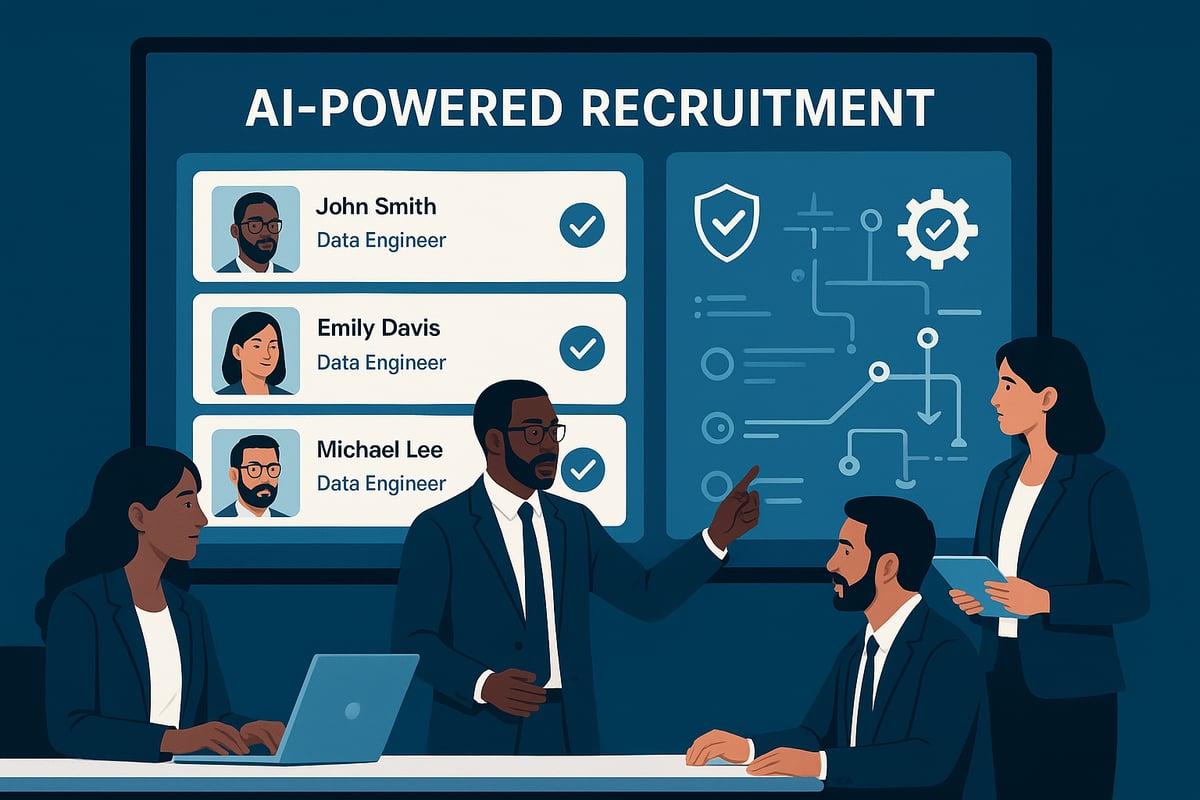
AI-Powered Candidate Sourcing and Screening
AI-driven platforms have revolutionized how companies hire data engineer professionals. These smart systems automatically match candidates to open roles using advanced algorithms that evaluate skills, experience, and cultural fit. Key features include automated resume screening, real-time fraud detection, and technical skill validation.
For example, leading platforms can filter thousands of applications in minutes, flag inconsistencies, and rank top matches for hiring teams. This approach reduces manual effort and accelerates the process. According to recent Data Engineering Statistics 2025, organizations using AI screening tools have cut their time-to-hire by up to 40 percent and significantly lowered hiring costs.
By leveraging these tools, businesses ensure only the most qualified candidates move forward. This not only improves hiring outcomes but also builds trust in the recruitment process.
Integrating ATS and Hiring Platforms
Seamless integration between applicant tracking systems (ATS) and sourcing platforms is now essential for companies looking to hire data engineer talent efficiently. When these systems work together, they automate repetitive tasks, reduce manual data entry, and ensure candidate information flows smoothly from sourcing to onboarding.
Integrated platforms enable recruiters to manage job postings, track candidate progress, and schedule interviews all in one place. This reduces errors, speeds up decision-making, and enhances the candidate experience. Leading competitors highlight that ATS compatibility can decrease administrative workload and help teams focus on more strategic hiring tasks.
Ultimately, integrated systems provide a single source of truth for all recruitment activities. This level of organization is especially important when managing multiple data engineering roles across different departments.
Data-Driven Decision Making in Hiring
Modern hiring teams use analytics and data insights to make better decisions throughout the process to hire data engineer professionals. By tracking key metrics like funnel conversion rates, diversity statistics, and retention outcomes, organizations gain a clear understanding of what works and where to improve.
For instance, some companies use dashboards to compare the performance of different sourcing channels or assess the quality of technical assessments. Feedback loops and performance scoring systems help refine interview questions and evaluation criteria over time.
Data-driven hiring not only increases efficiency but also promotes fairness and transparency. This empowers companies to continually refine their strategies and stay ahead in a competitive market.
Future Trends: What’s Next for Data Engineer Recruitment
The future of hiring will be shaped by ongoing advances in automation, skills-based evaluation, and continuous verification. As platforms evolve, reputation-based systems and candidate accountability will play a bigger role in ensuring quality placements.
Emerging trends highlighted in Data Engineer Hiring Trends 2026 include automated background checks, real-time skill assessments, and growing candidate expectations for transparency and flexibility. Companies that adopt these innovations will be best positioned to hire data engineer talent that drives business results.
Organizations must stay agile and open to new technologies to remain competitive in the ever-changing recruitment landscape.
How Verified Marketplaces Like Augmnt Transform Data Engineer Hiring
Finding top data engineering talent is more complex than ever. In 2026, companies that want to hire data engineer professionals need absolute confidence in skill verification, fraud prevention, and candidate quality.
Augmnt specializes in connecting businesses with verified AI and data engineering experts. This marketplace combines advanced AI screening with human insight, ensuring that every candidate meets strict standards. Augmnt’s process includes robust fraud detection, comprehensive skill and background checks, and a 100-point scoring system focused on US and Canadian talent.
The benefits are clear. Companies reduce time-to-hire, eliminate resume fraud, and increase retention rates. Augmnt also offers a free trial and dedicated customer success support, making it a reliable choice for those seeking a secure, efficient way to hire data engineer talent. To experience the difference, register to hire data engineers and streamline your next data engineering hire.
You’ve seen just how competitive and complex hiring top data engineers will be in 2026, especially with challenges like resume fraud and evolving skill sets. If you want to attract the right talent quickly and confidently, leveraging a marketplace that blends AI with human expertise makes all the difference. Augmnt’s platform streamlines your entire hiring process—from advanced screening and verification to fraud detection—so you spend less time worrying about candidate quality and more time building your team. Ready to experience a smarter, safer way to hire data engineers?
Start Free Trial