How to Hire Azure AI Consultants: A Strategic Guide
Organizations are increasingly adopting Microsoft Azure's artificial intelligence capabilities to transform their operations, but implementing these sophisticated solutions requires specialized expertise. The decision to hire Azure AI consultants represents a strategic investment that can determine whether your AI initiatives succeed or stall. With the right consultant, you can accelerate deployment timelines, optimize costs, and build solutions that deliver measurable business value. However, the complexity of Azure's AI ecosystem and the scarcity of qualified professionals make this hiring process particularly challenging for businesses across all industries.
Understanding Azure AI Consultant Capabilities
Azure AI consultants bring specialized knowledge across multiple technology domains. Their expertise spans Azure Machine Learning, Cognitive Services, Azure OpenAI Service, and the broader Azure ecosystem. These professionals design, develop, and deploy AI solutions that align with business objectives while maintaining security, compliance, and scalability standards.
When you hire Azure AI consultants, you're accessing professionals who understand both technical architecture and business strategy. They evaluate existing infrastructure, identify opportunities for AI integration, and create roadmaps for implementation. Their work includes data pipeline construction, model training and optimization, API integration, and monitoring system deployment.
Technical Proficiencies Required
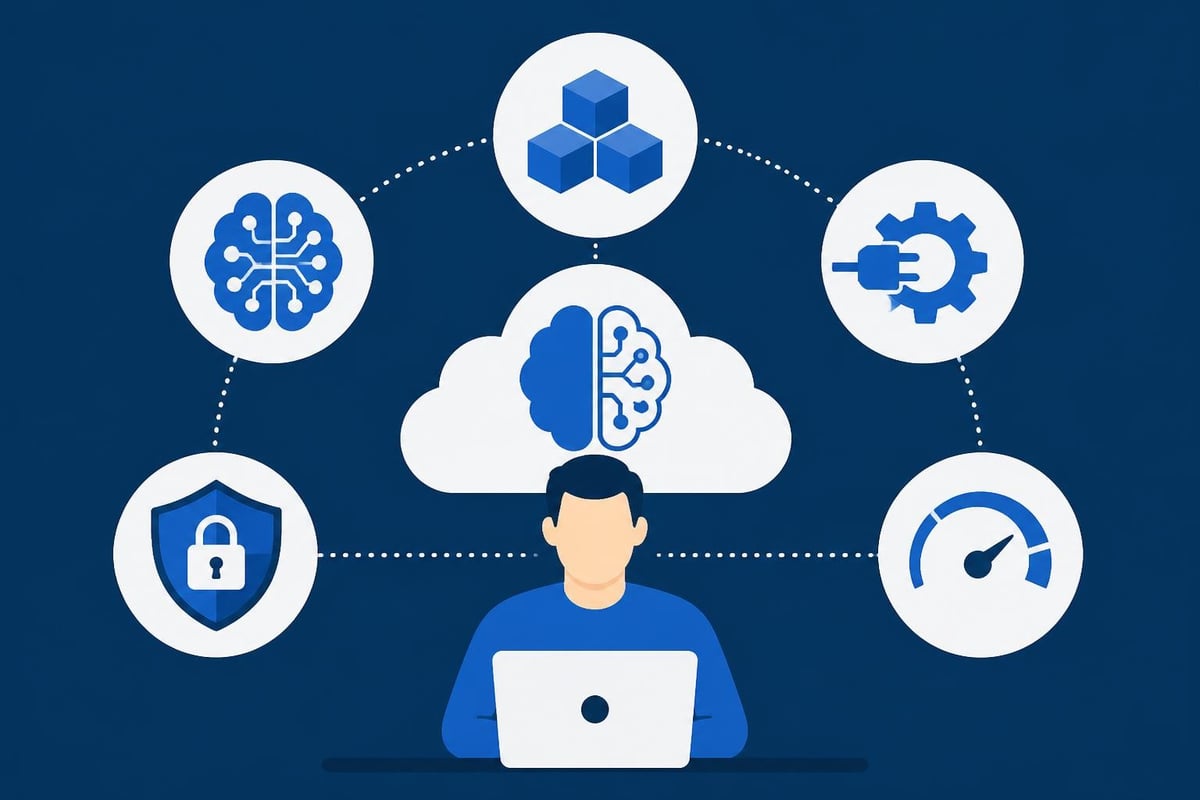
Azure AI consultants must demonstrate competency across several technical areas. These include proficiency in Python, R, or other programming languages used in machine learning development. They need experience with frameworks like TensorFlow, PyTorch, and scikit-learn, along with deep understanding of Azure-specific services.
Critical technical skills include:
- Azure Machine Learning workspace configuration and management
- Cognitive Services integration (Vision, Language, Speech, Decision)
- Azure OpenAI Service deployment and prompt engineering
- Data engineering with Azure Synapse Analytics and Azure Data Factory
- MLOps implementation for continuous integration and deployment
- Security configuration following AI security best practices
Consultants should also understand infrastructure as code using Terraform or ARM templates, containerization with Docker and Kubernetes, and monitoring solutions through Azure Monitor and Application Insights. This technical breadth ensures they can handle the full lifecycle of AI solution development.
Identifying Your Azure AI Consulting Needs
Before you hire Azure AI consultants, clearly define your project requirements and organizational objectives. Different initiatives require different expertise levels and engagement models. A proof-of-concept project demands different skills than a full-scale production deployment.
Project Scope Assessment
Start by categorizing your needs into specific project types. Are you building custom machine learning models, integrating pre-built Cognitive Services, or implementing generative AI solutions with Azure OpenAI? Each path requires distinct skill sets and experience levels.
| Project Type | Primary Skills Needed | Typical Duration | Complexity Level |
|---|---|---|---|
| ML Model Development | Data science, algorithm expertise, model training | 3-6 months | High |
| Cognitive Services Integration | API integration, application development | 1-3 months | Medium |
| Azure OpenAI Implementation | Prompt engineering, RAG architecture, LLM optimization | 2-4 months | Medium-High |
| MLOps Setup | DevOps, CI/CD, monitoring, governance | 2-5 months | High |
| AI Strategy Consulting | Business analysis, technical architecture, roadmapping | 1-2 months | Medium |
Consider whether you need ongoing support or a one-time engagement. Long-term partnerships suit organizations building AI capabilities over time, while project-based contracts work well for specific deliverables. Your choice influences the type of consultant you should target.
Budget and Resource Planning
Consultant rates vary significantly based on experience, location, and specialization. Senior Azure AI consultants with extensive production deployment experience command premium rates, while mid-level professionals offer strong value for standard implementations. Factor in not just hourly or project rates, but also potential Azure infrastructure costs, which can escalate with compute-intensive workloads.
Budget considerations should account for the full project lifecycle. Initial development represents only part of the investment. Ongoing maintenance, model retraining, monitoring, and optimization require sustained resources. Understanding these financial commitments helps you hire Azure AI consultants whose engagement models align with your budget constraints.
Sourcing Qualified Azure AI Consultants
Finding qualified candidates requires a multi-channel approach. Traditional recruiting methods often fall short when seeking specialized AI talent, making it essential to explore diverse sourcing strategies.
The challenge intensifies because many professionals claim Azure AI expertise without substantial hands-on experience. Resume fraud and skill misrepresentation are persistent issues in the technology sector. This reality makes verification processes critical when evaluating candidates.
Marketplace Platforms and Networks
Specialized talent marketplaces offer streamlined access to pre-vetted professionals. Platforms that focus specifically on AI talent often provide more qualified candidates than general freelance websites. These marketplaces typically implement verification processes that validate both technical skills and professional credentials.
For organizations prioritizing candidate quality and fraud prevention, platforms like Augmnt provide intelligent matching between businesses and verified AI professionals. Their comprehensive candidate validation includes resume fraud detection and skill verification, reducing the risk of hiring underqualified consultants.
Professional networks and Azure-focused communities also yield strong candidates. Microsoft MVP programs, Azure user groups, and AI-focused conferences connect you with practitioners actively engaged in the ecosystem. These professionals often possess current knowledge of emerging Azure AI capabilities.
Microsoft Partner Ecosystem
Microsoft maintains a partner network of consulting firms specializing in Azure solutions. Gold and silver partners have demonstrated competencies through certifications and successful project deliveries. While partnering with established firms provides reliability, individual consultants from these organizations may vary in expertise.
Evaluate individual consultant backgrounds rather than relying solely on company credentials. A firm's partnership status doesn't guarantee every consultant possesses the specific skills your project requires. Request detailed profiles and conduct technical assessments regardless of organizational affiliation.
Vetting Technical Competency
Technical assessment represents the most critical phase when you hire Azure AI consultants. Standard interviews rarely provide sufficient insight into practical capabilities. Implement structured evaluation processes that test real-world problem-solving abilities.
Certification Verification
Microsoft offers role-based certifications that validate Azure expertise. The Azure AI Engineer Associate certification demonstrates foundational knowledge, while the Azure Data Scientist Associate certification confirms machine learning competency. These credentials provide baseline assurance but shouldn't be the sole evaluation criteria.
Relevant Azure certifications include:
- Microsoft Certified: Azure AI Engineer Associate
- Microsoft Certified: Azure Data Scientist Associate
- Microsoft Certified: Azure Solutions Architect Expert
- Microsoft Certified: DevOps Engineer Expert
- Specialty certifications in specific Azure AI services
Verify certifications directly through Microsoft's credential verification system. Some candidates misrepresent certification status or list expired credentials. Independent verification eliminates this risk and confirms current knowledge.
Practical Skills Assessment
Design technical challenges that mirror your actual project requirements. Rather than abstract algorithm questions, present scenarios involving Azure service selection, architecture design, and implementation planning. Assess how consultants approach well-architected considerations for AI workloads including reliability, security, and cost optimization.
Request code samples from previous Azure AI projects, ensuring you review actual work rather than theoretical examples. Analyze code quality, documentation practices, and adherence to best practices. This review reveals attention to detail and professional standards that impact long-term project success.
Consider implementing practical exercises where candidates solve specific problems using Azure AI services. Time-boxed assessments show how consultants work under realistic conditions. Observe their approach to debugging, resource optimization, and documentation.
Evaluating Business Alignment
Technical skills alone don't ensure successful engagements. Consultants must understand your business context, communicate effectively with stakeholders, and align solutions with organizational objectives.
Communication and Collaboration Skills
Azure AI consultants bridge technical and business domains. They must translate complex technical concepts into business language for executives and explain business requirements in technical terms for development teams. Assess communication skills through discussions about past projects, focusing on how they handled stakeholder management and expectation setting.
Evaluate their approach to collaboration and knowledge transfer. Consultants should build internal capabilities rather than creating dependencies. Ask about documentation practices, training methodologies, and how they ensure teams can maintain solutions after engagement completion.
Industry Experience
While Azure expertise transfers across industries, domain knowledge accelerates project success. Consultants familiar with your sector understand common challenges, regulatory requirements, and industry-specific use cases. Financial services experience proves valuable for fraud detection systems, while healthcare background helps with compliance-sensitive medical AI applications.
| Industry | Relevant AI Applications | Specific Considerations |
|---|---|---|
| Healthcare | Diagnostic imaging, patient risk prediction, clinical documentation | HIPAA compliance, PHI handling, FDA regulations |
| Financial Services | Fraud detection, credit scoring, algorithmic trading | PCI DSS, fair lending laws, model explainability |
| Retail | Demand forecasting, personalization, inventory optimization | Real-time processing, seasonal patterns, customer privacy |
| Manufacturing | Predictive maintenance, quality control, supply chain optimization | IoT integration, edge computing, operational resilience |
Don't require exact industry matches, but prioritize consultants who demonstrate transferable experience with similar technical challenges or regulatory frameworks.
Structuring Engagement Models
The consultant engagement structure significantly impacts project outcomes. Different models suit different organizational needs, project scopes, and risk tolerances.
Fixed-Price Projects
Fixed-price engagements work well for clearly defined deliverables with minimal scope uncertainty. When requirements are specific and unlikely to change, this model provides budget predictability and transfers delivery risk to the consultant.
However, AI projects often involve experimentation and iteration. Model performance depends on data quality and business metric alignment, factors that may require mid-project adjustments. Fixed-price contracts can create inflexibility that hampers optimal solution development.
Time and Materials Arrangements
Hourly or daily rate structures offer flexibility for evolving requirements. This model suits exploratory projects, proof-of-concepts, and initiatives where optimal approaches emerge through iterative development. You maintain control over priorities and can adjust direction based on interim results.
The risk lies in potential budget overruns without proper governance. Implement milestone reviews, regular progress assessments, and clear deliverable expectations. Define success metrics upfront to ensure time investments align with value creation.
Retained Consulting Relationships
For organizations building sustained AI capabilities, retained relationships provide ongoing access to expertise. Monthly retainers secure consultant availability for architecture reviews, troubleshooting, optimization, and strategic guidance. This model works particularly well post-deployment when solutions require monitoring and continuous improvement.
Retained consultants develop deep understanding of your systems and business context, enabling more efficient problem-solving. They can advise on new Azure AI features, recommend optimization opportunities, and support internal team development.
Managing Consultant Relationships
Successful outcomes require active engagement management. Even highly skilled consultants need clear direction, regular feedback, and collaborative working relationships.
Setting Clear Expectations
Document detailed project requirements, success criteria, and deliverable specifications before work begins. Ambiguity creates misalignment that wastes time and budget. Define technical requirements, performance benchmarks, documentation standards, and knowledge transfer expectations.
Establish communication protocols including meeting cadences, reporting formats, and escalation procedures. Regular check-ins prevent small issues from becoming major problems. Weekly progress reviews work well for most projects, with daily standups during intensive development phases.
Knowledge Transfer Planning
Consultants eventually disengage, making knowledge transfer essential for long-term solution sustainability. Plan transfer activities throughout the engagement rather than treating them as final-phase tasks. Documentation, code reviews, and pair programming sessions build internal capabilities progressively.
Request comprehensive documentation covering architecture decisions, deployment procedures, troubleshooting guides, and maintenance protocols. Ensure internal teams can independently operate, monitor, and modify solutions. Consider implementing best practices for developing AI agents on Azure including proper prompt design and fault tolerance mechanisms that your team can maintain.
Ensuring Quality and Compliance
Quality assurance and compliance management protect your investment and mitigate operational risks. When you hire Azure AI consultants, establish clear standards for security, governance, and ethical AI implementation.
Security and Privacy Standards
Azure AI solutions often process sensitive data, making security architecture paramount. Consultants must implement proper authentication, authorization, and encryption practices. They should configure network isolation, enable Azure Private Link for services, and implement comprehensive monitoring.
Data privacy requirements vary by jurisdiction and industry. Ensure consultants understand relevant regulations like GDPR, CCPA, or HIPAA. Solutions should incorporate privacy-by-design principles including data minimization, purpose limitation, and user consent management.
Responsible AI Practices
AI systems can perpetuate biases or produce unintended consequences without proper governance. Consultants should incorporate responsible AI principles throughout development. This includes fairness testing, explainability mechanisms, transparency documentation, and accountability frameworks.
Following established responsible AI pattern catalogues helps systematize governance and engineering best practices. Implement model cards that document training data, performance metrics, intended uses, and limitations. These practices enhance stakeholder trust and reduce operational risks.
Measuring Consultant Performance
Performance measurement ensures consultants deliver promised value and helps identify issues requiring corrective action. Define metrics aligned with project objectives and business outcomes.
Technical Delivery Metrics
Track tangible deliverables against agreed timelines. Monitor code quality through automated testing coverage, documentation completeness, and adherence to coding standards. For machine learning projects, measure model performance against baseline requirements using relevant metrics like accuracy, precision, recall, or business-specific KPIs.
Evaluate scaling practices for AI workloads including compute efficiency, GPU utilization, and model loading optimization. Cost efficiency represents another critical metric. Consultants should optimize Azure resource usage, minimize unnecessary compute expenses, and implement cost monitoring.
Business Impact Assessment
Technical excellence means little without business value creation. Measure outcomes against initial project objectives. Did the solution improve operational efficiency, increase revenue, reduce costs, or enhance customer experience? Quantify impacts in business terms rather than purely technical metrics.
Assess solution reliability and production readiness. Monitor system uptime, error rates, and performance under load. Evaluate whether knowledge transfer enabled your team to operate the solution independently. Successful consultant engagements build internal capabilities rather than dependencies.
Scaling Your Azure AI Initiatives
Initial consultant engagements often represent the foundation for broader AI adoption. Plan for scaling both technical solutions and internal expertise.
Building Internal Capabilities
Use consultant engagements strategically to develop organizational AI competency. Assign internal team members to work alongside consultants, absorbing knowledge through practical collaboration. Encourage consultants to conduct training sessions, workshops, and code reviews that elevate team skills.
Consider whether you need to hire full-time Azure AI professionals as initiatives expand. Consultants can help establish foundations, but sustained innovation often requires dedicated internal resources. Platforms focused on hiring managers can help identify permanent talent as your needs evolve.
Expanding Solution Portfolios
Successful initial projects create momentum for additional AI initiatives. Document lessons learned, codify best practices, and establish reusable frameworks that accelerate future development. Consultants can help create templates, reference architectures, and starter kits tailored to your technology stack and business context.
Plan roadmaps that prioritize high-value use cases while building complementary capabilities. Each project should leverage learnings from previous implementations, creating compound efficiency gains. Strategic consultant partnerships support this evolution through consistent architecture approaches and knowledge continuity.
Successfully hiring Azure AI consultants requires careful planning, rigorous vetting, and active engagement management to ensure technical excellence and business value alignment. By implementing structured assessment processes, clear expectation setting, and comprehensive knowledge transfer, organizations can leverage consultant expertise to accelerate AI adoption while building sustainable internal capabilities. Augmnt simplifies this complex hiring process by intelligently connecting businesses with verified AI professionals through comprehensive candidate validation, including resume fraud detection and skill verification, ensuring you access qualified consultants who can transform your Azure AI initiatives into measurable business outcomes.