How to Hire AI Contractors: Complete Guide for 2026
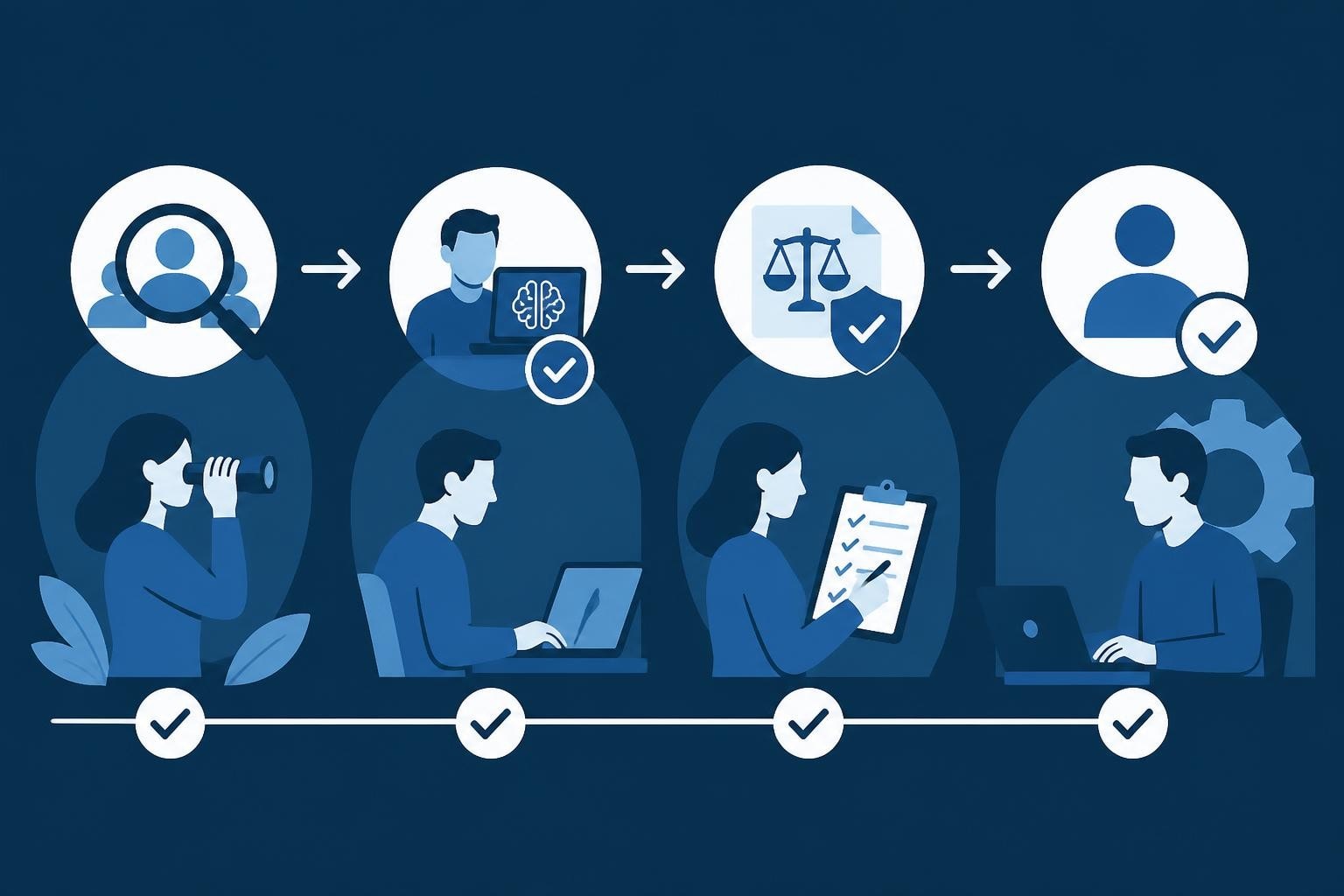
The demand for specialized AI talent has transformed how organizations approach their hiring strategies. As companies increasingly turn to flexible workforce models to access cutting-edge expertise, the need to hire ai contractors has become a strategic imperative. Unlike traditional employment, contractor relationships offer businesses the agility to scale AI initiatives rapidly while accessing specialized skills that may not exist within their permanent workforce. However, this hiring model introduces unique challenges, from verifying technical capabilities to navigating complex legal frameworks.
Understanding the AI Contractor Landscape
The AI contractor market has experienced unprecedented growth as businesses recognize the value of specialized, project-based expertise. These professionals range from machine learning engineers and data scientists to AI strategy consultants and natural language processing specialists.
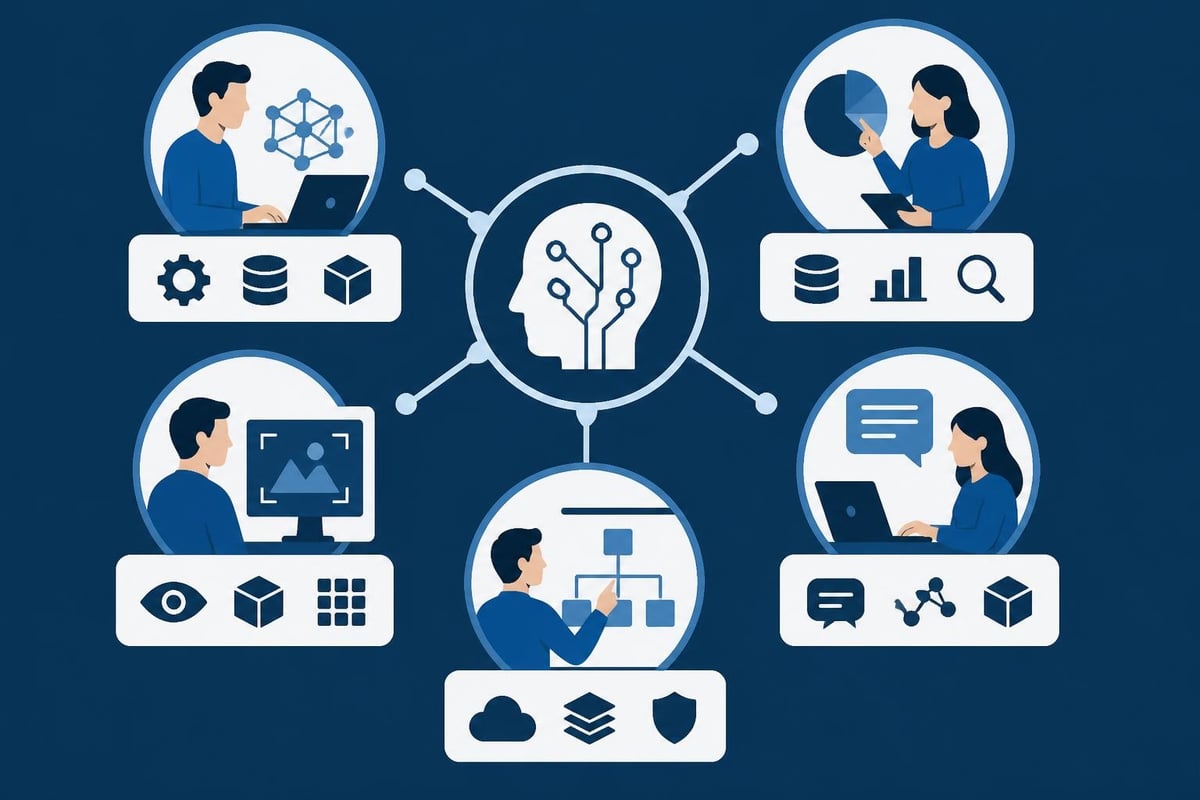
Key categories of AI contractors include:
- Machine learning engineers who build and deploy predictive models
- Data scientists specializing in algorithm development and optimization
- AI architects who design comprehensive AI system infrastructures
- Computer vision specialists for image and video analysis projects
- Natural language processing experts for conversational AI and text analysis
The shift toward contractor engagement reflects broader workforce trends. Companies no longer need to maintain full-time staff for every specialized function. Instead, they can hire ai contractors for specific initiatives, product launches, or time-limited projects. This approach provides access to diverse skill sets while maintaining budget flexibility.
Market Dynamics and Pricing
Contractor rates vary significantly based on expertise level, geographic location, and project complexity. Understanding these dynamics helps organizations budget appropriately and set realistic expectations.
| Contractor Type | Hourly Rate Range | Typical Project Duration |
|---|---|---|
| Junior ML Engineer | $75-$125 | 3-6 months |
| Senior Data Scientist | $150-$250 | 2-4 months |
| AI Architect | $200-$350 | 1-3 months |
| Computer Vision Specialist | $125-$225 | 2-5 months |
| NLP Expert | $150-$275 | 2-4 months |
These figures represent market averages for 2026, though actual rates depend on specific requirements and contractor credentials. Organizations must also account for project management overhead and potential knowledge transfer costs.
Defining Your AI Contractor Requirements
Before initiating the search to hire ai contractors, organizations must clearly articulate their needs. Vague requirements lead to mismatched candidates and project delays.
Start by documenting the technical scope. What specific AI capabilities does your project demand? Are you building a recommendation engine, implementing computer vision for quality control, or developing a chatbot? Each use case requires distinct expertise.
Technical Specifications
Define the required technical stack explicitly. Include programming languages (Python, R, Julia), frameworks (TensorFlow, PyTorch, scikit-learn), and cloud platforms (AWS, Google Cloud, Azure). Specify whether contractors need experience with specific tools like MLflow for experiment tracking or Kubeflow for ML pipeline orchestration.
Essential elements to document:
- Primary programming languages and proficiency levels required
- Frameworks and libraries critical to project success
- Cloud infrastructure and deployment environments
- Data volume and complexity considerations
- Integration requirements with existing systems
- Performance benchmarks and accuracy targets
Consider soft skills alongside technical capabilities. AI contractors often work with cross-functional teams, requiring strong communication abilities to explain complex concepts to non-technical stakeholders. Project management experience becomes valuable for longer engagements where contractors must coordinate with multiple departments.
Timeline expectations significantly impact contractor selection. A three-month proof-of-concept demands different expertise than a year-long product development cycle. Shorter projects favor contractors with immediately applicable experience, while longer engagements allow time for domain-specific learning.
Sourcing and Evaluating AI Contractor Candidates
Finding qualified AI contractors requires a multi-channel approach. Relying on a single source limits your candidate pool and may cause you to miss exceptional talent.
Traditional job boards capture some AI contractors, but specialized platforms yield better results. Professional networks and AI-focused communities attract practitioners actively engaged in the field. Consider leveraging platforms specifically designed to connect businesses with verified AI professionals, where candidate validation and fraud detection streamline the qualification process.
Screening Technical Competency
Resume verification poses significant challenges in AI hiring. Credential inflation and resume fraud have become increasingly sophisticated, making it difficult to distinguish genuinely qualified contractors from those misrepresenting their capabilities.
Implement a structured technical assessment process. Begin with portfolio review, examining actual projects and code samples. Quality contractors maintain GitHub repositories or published research demonstrating their work. Request specific examples relevant to your use case rather than accepting generic portfolios.
Effective screening stages include:
- Initial portfolio and credential review
- Technical screening calls focused on problem-solving approaches
- Hands-on coding challenges or case studies
- Architecture discussions for senior roles
- Reference checks with previous clients
Practical assessments reveal more than credentials alone. Design challenges that mirror actual project work. For a computer vision project, provide a sample dataset and ask candidates to develop a basic classification model. Evaluate not just the final accuracy but their approach to data preprocessing, model selection, and performance optimization.

Be wary of candidates who cannot explain their methodologies or discuss tradeoffs in their technical decisions. Authentic AI expertise involves understanding when to use specific algorithms, recognizing model limitations, and adapting approaches based on data characteristics.
Legal and Compliance Considerations
The decision to hire ai contractors introduces legal complexities that organizations must navigate carefully. Proper classification and contractual protections prevent costly disputes and regulatory penalties.
Worker classification remains a critical concern. The Department of Labor provides specific guidance on independent contractor classification, focusing on factors like degree of control, opportunity for profit or loss, and permanency of the relationship. Misclassification carries serious consequences, including back taxes, penalties, and potential lawsuits.
Contractual Protections
Comprehensive contracts protect both parties and establish clear expectations. Key legal considerations for hiring freelancers and consultants include scope definition, payment terms, and intellectual property ownership.
Essential contract provisions include:
- Detailed scope of work with specific deliverables
- Payment structure and schedule
- Intellectual property ownership and licensing rights
- Confidentiality and non-disclosure agreements
- Termination clauses and notice periods
- Liability limitations and indemnification
- Dispute resolution mechanisms
Intellectual property provisions deserve particular attention in AI projects. Clarify whether the contractor retains rights to pre-existing code or frameworks they bring to the project. Typically, clients should own all work product created specifically for their project, while contractors retain rights to general methodologies and tools they developed independently.
Data privacy and security requirements must align with applicable regulations. If contractors access customer data, contracts should specify compliance with GDPR, CCPA, or industry-specific regulations like HIPAA. Include provisions for data handling, storage, and deletion upon project completion.
AI-Specific Legal Risks
Using AI in employment decisions introduces unique legal risks that extend to contractor relationships. When contractors develop AI systems for hiring, ensure their work complies with anti-discrimination laws and maintains transparency in algorithmic decision-making.
| Legal Risk Area | Mitigation Strategy | Documentation Required |
|---|---|---|
| Worker Misclassification | Proper classification assessment | IRS Form SS-8 analysis |
| IP Ownership Disputes | Clear contract language | Work-for-hire agreements |
| Data Privacy Violations | Compliance protocols | Data processing agreements |
| Discrimination Claims | Bias testing and audits | Fairness assessment reports |
| Confidentiality Breaches | NDA enforcement | Signed confidentiality agreements |
Organizations working with AI contractors in regulated industries should consult employment law specialists familiar with AI implementation legal considerations. Proactive legal review prevents issues that could derail projects or expose companies to liability.
Managing AI Contractor Relationships
Effective management transforms contractor engagements from transactional arrangements into productive partnerships. Clear communication, defined processes, and appropriate oversight maximize value while respecting contractor autonomy.
Establish communication protocols from day one. Determine meeting cadence, preferred communication channels, and response time expectations. Regular check-ins maintain alignment without micromanaging, which contractors typically resist.
Onboarding and Integration
Successful onboarding accelerates contractor productivity. Provide comprehensive access to necessary tools, documentation, and resources. Nothing frustrates skilled contractors more than spending their first week waiting for system access or hunting for information.
Critical onboarding elements:
- System access and credentials for required platforms
- Technical documentation and architecture diagrams
- Code repositories and development environment setup
- Introduction to key stakeholders and team members
- Project context and business objectives
- Communication guidelines and escalation procedures
Knowledge transfer presents unique challenges with contractor relationships. Unlike permanent employees, contractors eventually leave, taking their expertise with them. Require comprehensive documentation throughout the project. This includes code comments, architecture decision records, and process documentation.
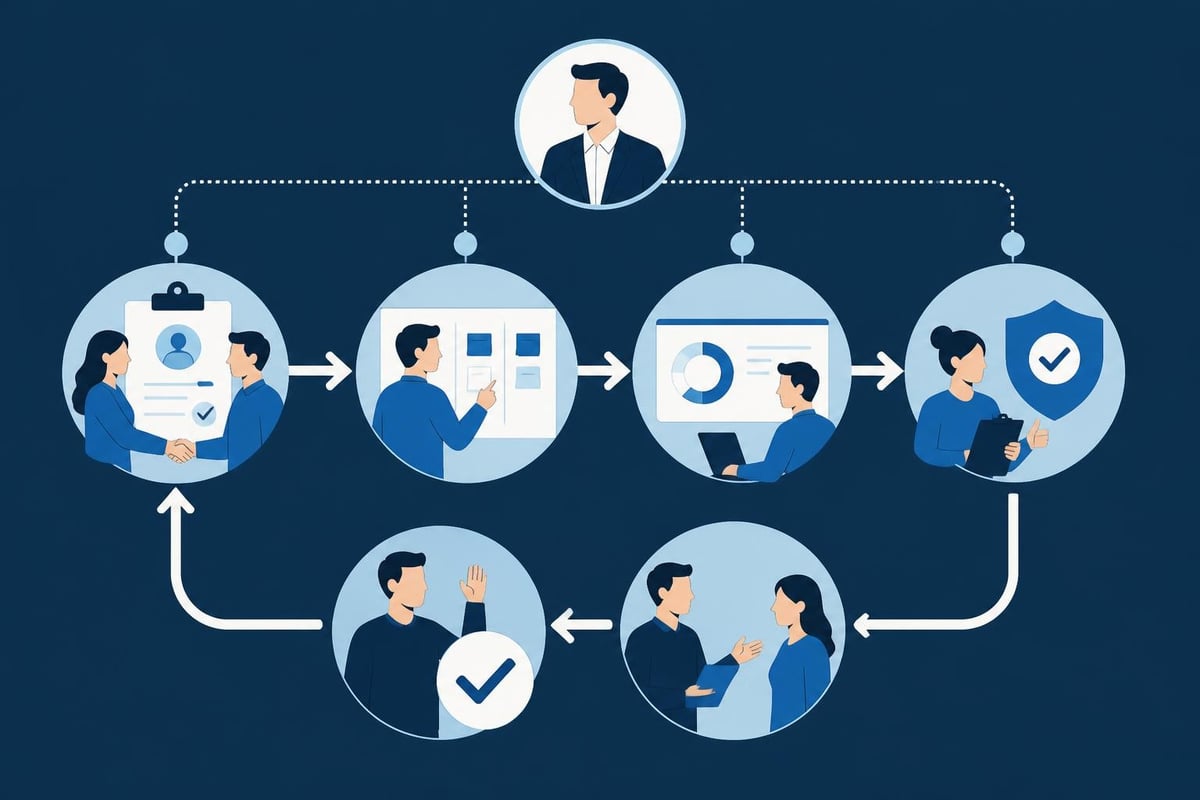
Performance monitoring for contractors differs from employee evaluation. Focus on deliverable quality and timeline adherence rather than hours worked. Contractors value outcome-based assessment that respects their professional judgment about how to accomplish objectives.
Addressing Performance Issues
When contractors underperform, address issues promptly and directly. Unlike employees who might improve with coaching, contractors are hired for existing expertise. Persistent quality issues may indicate a poor fit requiring contract termination.
Before ending an engagement, document specific performance gaps with examples. Review contract provisions regarding termination notice and final payment obligations. Professional separation maintains your reputation in the contractor community and preserves the possibility of future collaboration.
Building Long-Term Contractor Networks
Strategic organizations that hire ai contractors repeatedly develop preferred networks rather than starting from scratch for each project. These relationships provide predictable quality and reduce sourcing time.
Maintain databases of successful contractors with notes about their specific strengths, communication styles, and ideal project types. When new needs arise, you can quickly identify candidates with proven track records in your environment.
Benefits of contractor networks:
- Reduced time-to-hire for new projects
- Predictable quality based on past performance
- Institutional knowledge from previous engagements
- Negotiating leverage through repeat business
- Flexibility to scale teams quickly
Consider retainer arrangements with exceptional contractors. Monthly retainers guarantee availability for priority projects while providing contractors with income stability. This arrangement works well for ongoing AI maintenance and iterative improvement projects.
Cultivate relationships beyond active projects. Share relevant articles, invite contractors to company events, or provide referrals to other potential clients. These gestures build goodwill that pays dividends when you need rapid engagement.
Contractor Feedback and Development
Request feedback from contractors about your engagement process. They work with multiple clients and can identify inefficiencies in your onboarding, communication, or project management approaches. Contractors appreciate organizations that value their input and continuously improve.
| Relationship Element | Best Practice | Expected Outcome |
|---|---|---|
| Communication | Weekly sync meetings | Alignment on progress and blockers |
| Documentation | Required architecture and code docs | Knowledge retention and transfer |
| Payment | Net-15 or faster | Contractor satisfaction and retention |
| Scope Changes | Formal change request process | Clear expectations and fair compensation |
| Performance Review | Milestone-based assessments | Quality assurance and course correction |
Provide testimonials and recommendations for contractors who deliver excellent work. Many platforms that connect businesses with AI professionals use reputation systems where client feedback significantly impacts contractor visibility. Your endorsement helps contractors secure future work while signaling your appreciation.
Measuring Contractor Success and ROI
Quantifying the value contractors deliver justifies continued investment and informs future hiring decisions. Establish metrics before projects begin, ensuring contractors understand how success will be measured.
Technical metrics vary by project type. Model accuracy, inference speed, and resource efficiency matter for machine learning initiatives. Code quality, test coverage, and deployment success rate apply to implementation projects. Define specific targets rather than vague aspirations.
Business impact metrics connect technical work to organizational value. Does the AI system reduce operational costs? Increase conversion rates? Improve customer satisfaction? Linking contractor deliverables to business outcomes demonstrates ROI to stakeholders.
Comprehensive success metrics include:
- Technical performance against defined benchmarks
- Timeline adherence and milestone completion
- Budget compliance and cost-per-deliverable
- Code quality and maintainability scores
- Business metric improvements attributable to the project
- Knowledge transfer effectiveness
- Stakeholder satisfaction ratings
Compare contractor costs against alternatives. Would hiring permanent employees for the same work cost more or less when accounting for benefits, overhead, and ongoing salary obligations? Factor in the flexibility contractors provide for variable workloads.
Calculate total engagement costs including sourcing time, management overhead, and any productivity losses during knowledge transfer. These hidden costs sometimes make contractor arrangements less attractive than they initially appear.
Optimization Strategies
Analyze patterns across multiple contractor engagements. Do certain types of projects consistently deliver better ROI? Are specific contractor profiles more successful in your environment? Use these insights to refine your approach to hire ai contractors in future initiatives.
Document lessons learned after each major project. What went well? What would you change? Which contractor attributes proved most valuable? This organizational knowledge improves decision-making for subsequent engagements.
Consider transitioning successful contractors to permanent roles when appropriate. Contractors who excel in your environment and align with your culture make excellent full-time employees. The trial period nature of contractor work reduces hiring risk compared to traditional recruitment.
Future Trends in AI Contractor Hiring
The market to hire ai contractors continues evolving as AI technologies mature and adoption accelerates. Understanding emerging trends helps organizations stay competitive in accessing top talent.
Specialization deepens as AI applications proliferate. Generic "AI contractors" give way to hyper-specialists in areas like reinforcement learning for robotics, federated learning for privacy-preserving AI, or AI model optimization for edge devices. Organizations must precisely define requirements to find contractors with relevant niche expertise.
Remote work normalization expands the geographic talent pool. Organizations no longer limit searches to local markets, accessing global expertise instead. However, this creates time zone coordination challenges and necessitates asynchronous communication strategies.
Emerging contractor market trends:
- Increased focus on AI ethics and responsible AI specialists
- Growing demand for AI-to-production deployment experts
- Rise of AI strategy consultants beyond technical implementation
- Premium pricing for contractors with domain-specific AI experience
- Greater emphasis on explainable AI and model interpretability skills
Credential verification becomes more sophisticated in response to fraud concerns. AI hiring platforms implement comprehensive validation processes including skill assessments, project verification, and continuous credentialing. Organizations benefit from these improved screening mechanisms, reducing the burden of validating contractor qualifications independently.
Regulatory scrutiny of AI systems intensifies, particularly in high-stakes domains like healthcare, finance, and hiring. Contractors must demonstrate knowledge of legal compliance for AI implementation alongside technical skills. Organizations should prioritize contractors who understand regulatory frameworks applicable to their industry.
Successfully hiring AI contractors requires balancing technical assessment, legal compliance, and relationship management. Organizations that develop systematic approaches to sourcing, evaluating, and managing contractor relationships gain competitive advantages through rapid access to specialized expertise. As the AI talent marketplace evolves, platforms that provide verified candidates and streamlined hiring processes become invaluable partners. Augmnt connects businesses with pre-vetted AI professionals through intelligent matching and comprehensive fraud detection, eliminating the uncertainty from contractor hiring while accelerating your AI initiatives.