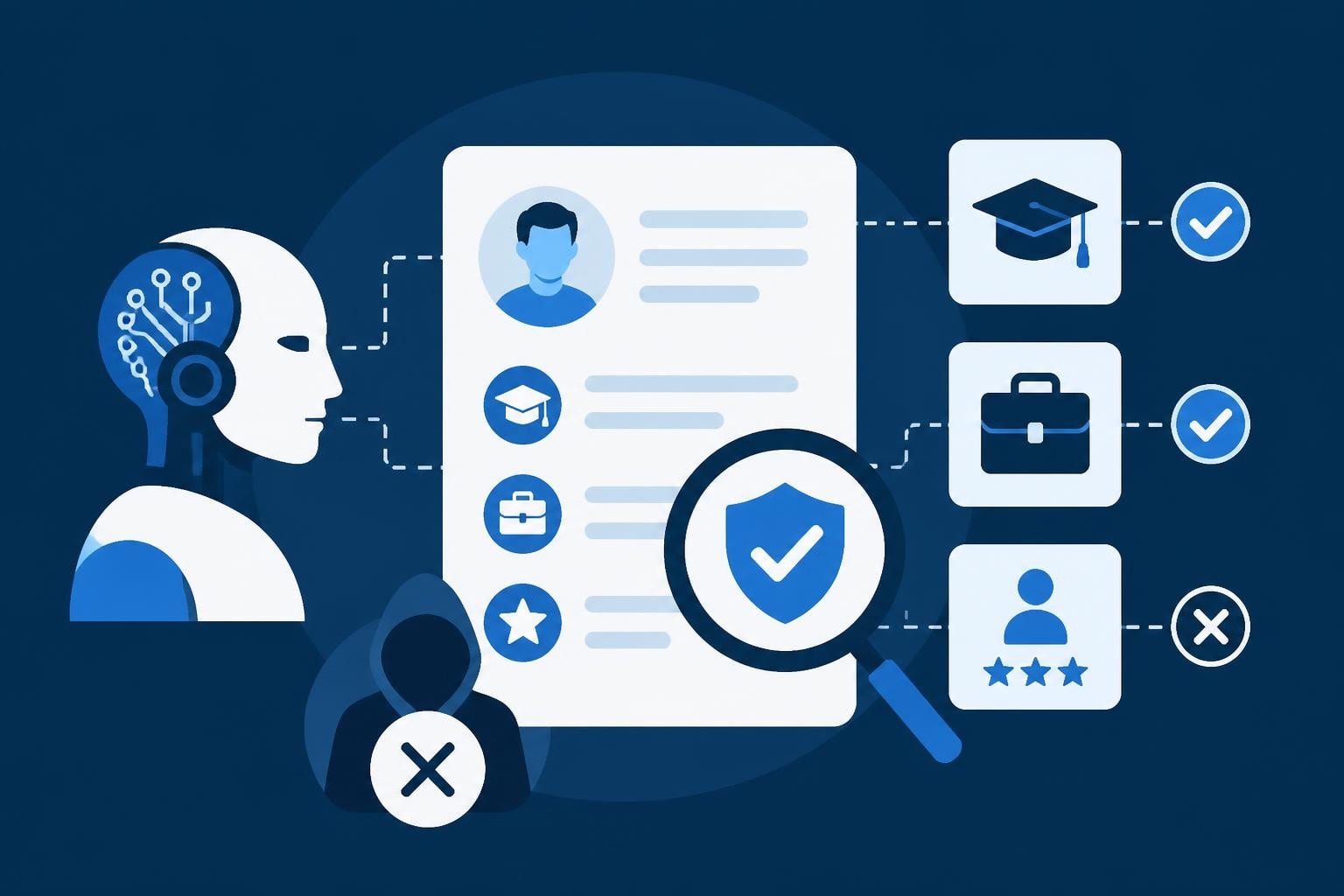
Fake Resume Detection: Protect Your Hiring Process
The cost of a bad hire extends far beyond wasted salary dollars. When companies unknowingly bring on candidates with fabricated credentials, they risk project failures, team disruption, and potential legal liability. As resume fraud becomes increasingly sophisticated in 2026, particularly with AI-generated content flooding application systems, organizations must implement robust verification processes. Fake resume detection has evolved from simple background checks into a comprehensive discipline combining technology, data analysis, and human expertise to protect hiring integrity.
The Growing Challenge of Resume Fraud
Resume fraud manifests in numerous forms, from minor embellishments to complete fabrications. Employment gaps concealed through date manipulation, inflated job titles, and entirely fictional work experiences represent just the surface of this problem. According to research on resume fraud patterns, the distinction between padding and outright fabrication has become critical for employers to understand.
The scale of this issue demands attention. Studies consistently show that a significant percentage of job applicants misrepresent their qualifications in some capacity. This creates a challenge for hiring teams already stretched thin by high application volumes.
Why Candidates Fabricate Credentials
Understanding motivation helps organizations develop better fake resume detection strategies. Candidates typically falsify information for several reasons:
- Competitive pressure in saturated job markets drives applicants to exaggerate achievements
- Skills gaps lead professionals to claim proficiency in technologies they've barely touched
- Career transitions prompt individuals to invent relevant experience they lack
- Length of unemployment causes desperate job seekers to eliminate gaps or create phantom positions
The accessibility of AI writing tools has lowered the barrier to creating convincing but fraudulent application materials. What once required careful crafting can now be generated in minutes, complete with plausible job descriptions and achievement metrics.
Traditional Red Flags and Detection Methods
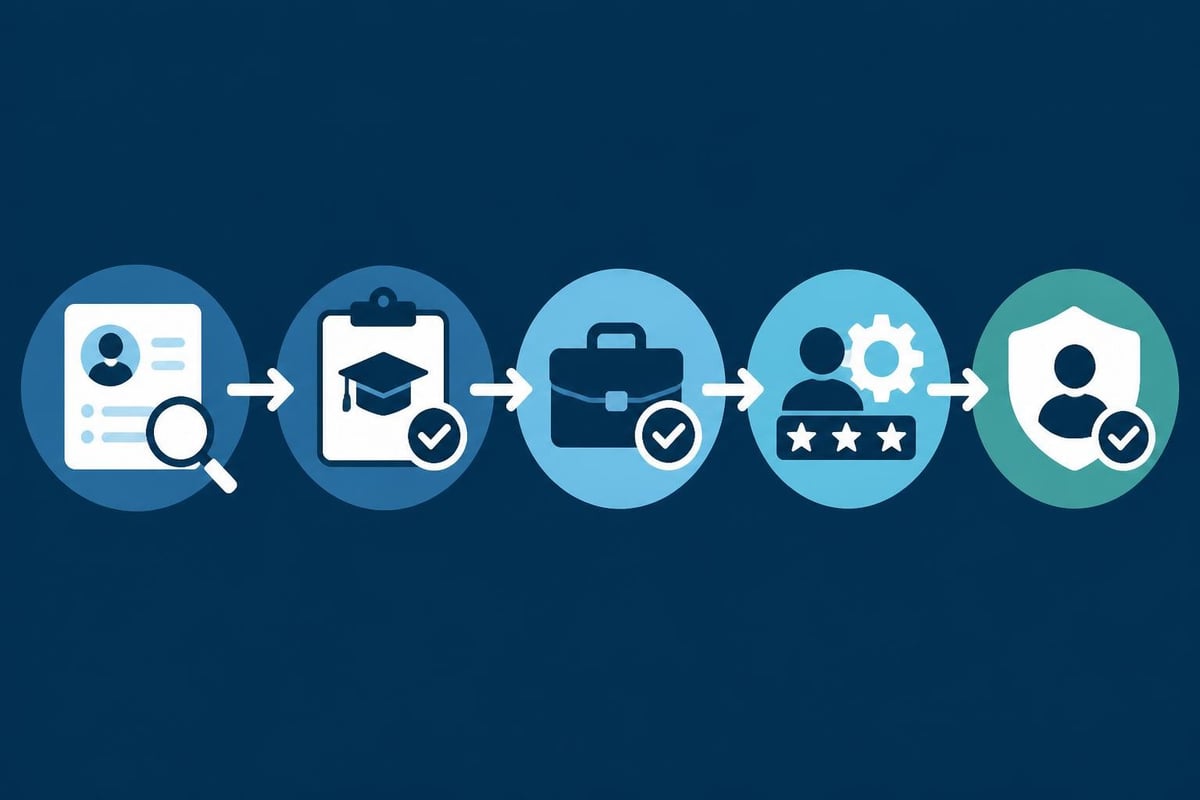
Before diving into advanced technological solutions, recruiters should recognize fundamental warning signs. Common red flags in resumes include vague job descriptions that lack specific responsibilities, unverifiable employers, and suspiciously perfect employment timelines without any career gaps.
Manual Verification Techniques
Human reviewers remain essential in the fake resume detection process. Experienced recruiters develop an intuition for inconsistencies that automated systems might miss.
Reference checking continues to serve as a cornerstone of verification, though it requires diligence. Candidates occasionally provide friends or family members as fake references, necessitating verification through official company channels rather than contact information provided by the applicant.
Employment timeline analysis reveals overlapping positions or suspicious gaps. Smart methods for spotting fake resumes emphasize the importance of checking for employment overlaps, which often indicate one of the positions is fabricated or the dates have been manipulated.
Direct employer verification remains powerful but time-consuming. Many organizations have moved toward centralized verification services, though these introduce delays in the hiring process.
| Verification Method | Effectiveness | Time Required | Cost |
|---|---|---|---|
| Reference Calls | Moderate | 2-4 hours | Low |
| Employer Verification | High | 3-7 days | Moderate |
| Education Confirmation | High | 5-10 days | Moderate |
| Skills Testing | Very High | 1-3 hours | Low-Moderate |
| Background Checks | High | 7-14 days | High |
AI-Powered Fake Resume Detection Systems
Artificial intelligence has transformed how organizations approach credential verification. Machine learning systems designed to detect falsified resumes leverage Natural Language Processing, deep learning algorithms, and pattern recognition to identify fraudulent applications at scale.
These systems analyze multiple dimensions simultaneously. They examine language patterns for consistency, cross-reference employment claims against public databases, and flag statistical anomalies that suggest fabrication. For organizations hiring AI professionals specifically, these tools prove particularly valuable given the technical sophistication of the candidate pool.
How AI Detection Works
Advanced fake resume detection platforms employ several complementary techniques:
- Natural Language Processing analyzes writing style consistency across different sections, identifying when content appears to come from multiple sources or shows characteristics of AI generation
- Data cross-referencing compares resume claims against LinkedIn profiles, professional certifications, and public records to identify discrepancies
- Pattern recognition flags unusual formatting, suspicious achievement metrics, or job descriptions that match templates found in fraudulent applications
- Anomaly detection identifies statistical outliers, such as progression rates that exceed industry norms or skill combinations that rarely coexist
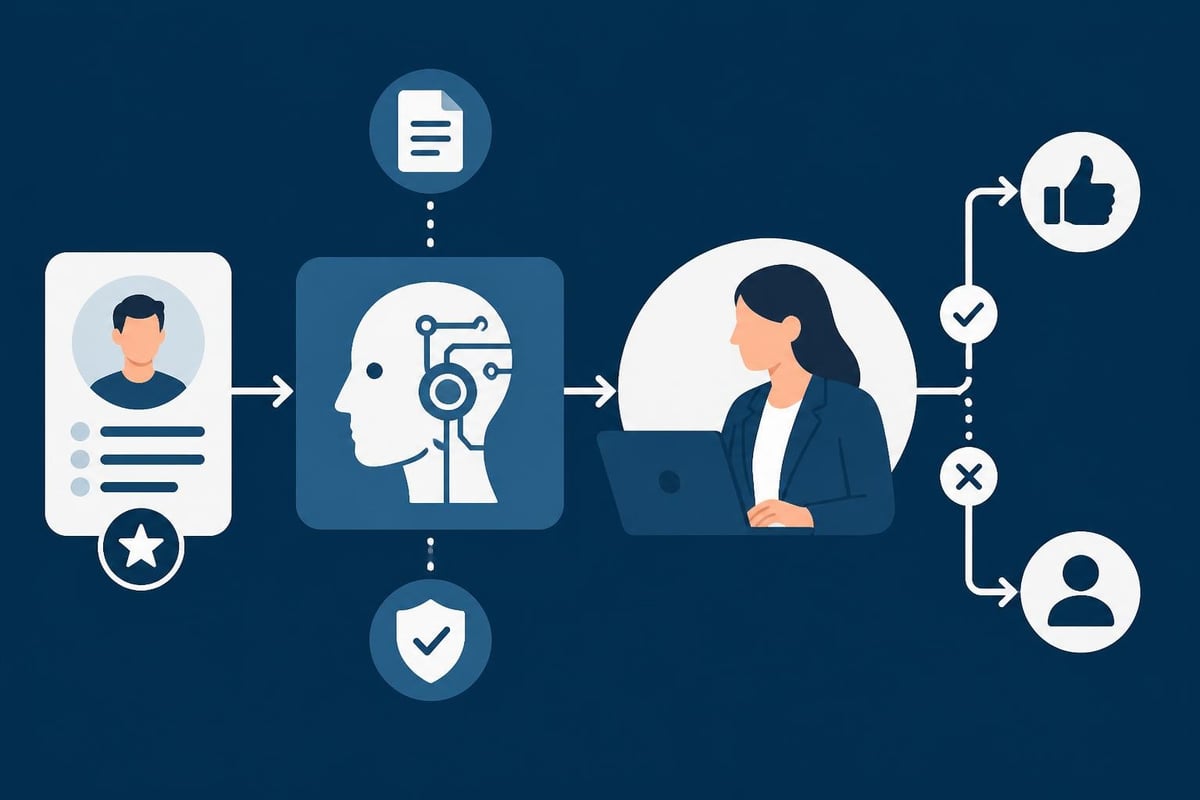
The Augmnt ATS integrates verified matching with candidate fraud detection, providing hiring teams with comprehensive validation before they invest time in interviews. This layered approach combines automated screening with human review to ensure accuracy while maintaining efficiency.
Limitations of Automated Systems
Despite their sophistication, AI systems aren't infallible. They can generate false positives, flagging legitimate candidates whose career paths don't fit conventional patterns. International candidates, career changers, and professionals with nontraditional backgrounds sometimes trigger alerts despite having authentic credentials.
This highlights the continuing need for human judgment in the verification process. Technology should augment human decision-making, not replace it entirely.
Skills Verification Beyond the Resume
Document verification represents only part of effective fake resume detection. Skills assessment provides crucial validation that candidates actually possess the competencies they claim.
Technical assessments for AI professionals might include coding challenges, algorithm design problems, or machine learning model evaluation. These practical tests reveal capability far more reliably than any resume statement.
Live interviews with technical experts offer another validation layer. When candidates must explain their past projects in detail, answer probing technical questions, and demonstrate problem-solving approaches, fabricated experience quickly becomes apparent.
Portfolio and Work Sample Analysis
For many AI roles, examining actual work products provides definitive proof of capability. Requesting candidates to walk through projects they've listed on their resume often exposes fraud immediately.
- Code repositories on GitHub or similar platforms show commit history and contribution patterns
- Published research papers can be verified through academic databases
- Case studies should include specific technical details the candidate can explain thoroughly
- Certifications must be validated directly with issuing organizations
The challenge lies in candidates who claim work they observed but didn't personally execute, or who present team accomplishments as individual achievements. Detailed questioning about methodology, obstacles encountered, and specific technical decisions helps distinguish actual contributors from observers.
Data Poisoning and Platform Vulnerabilities
An emerging concern in 2026 involves how fake resumes affect AI-powered recruitment platforms themselves. Research on fake resume attacks demonstrates how fraudulent applications can poison job matching algorithms, degrading platform performance and creating security vulnerabilities.
When matching algorithms learn from data that includes fabricated credentials, they develop skewed models of what constitutes a qualified candidate. This creates a vicious cycle where the system becomes less effective at identifying genuine talent while potentially recommending fraudulent applicants.
Protecting Platform Integrity
Organizations running their own applicant tracking systems or using ATS integrations must consider how fake resume detection protects not just individual hiring decisions but the overall quality of their talent database.
Regular data audits, continuous algorithm monitoring, and feedback loops that incorporate verification results help maintain system accuracy. When platforms identify fraudulent applications, that information should feed back into detection models to improve future screening.
Building a Comprehensive Verification Framework
Effective fake resume detection requires a systematic approach rather than ad-hoc checking. Organizations should establish clear verification protocols that apply consistently across all roles and levels.
Pre-screening automation handles initial filtering, flagging applications that exhibit common fraud indicators. This reduces the volume requiring human review while ensuring obvious fabrications don't consume recruiter time.
Tiered verification intensity matches scrutiny level to role criticality and seniority. Entry-level positions might receive basic verification, while executive or specialized AI roles undergo comprehensive multi-stage validation.
| Role Level | Verification Components | Timeline |
|---|---|---|
| Entry-Level | Education, basic employment, skills test | 5-7 days |
| Mid-Level | Full employment history, references, portfolio review | 10-14 days |
| Senior | Comprehensive background, executive references, project validation | 14-21 days |
| Executive | Enhanced due diligence, financial checks, reputation research | 21-30 days |
Third-party verification services provide specialized expertise for organizations lacking internal resources. These services maintain relationships with employers, educational institutions, and certification bodies that facilitate faster, more reliable confirmation.
Legal and Ethical Considerations
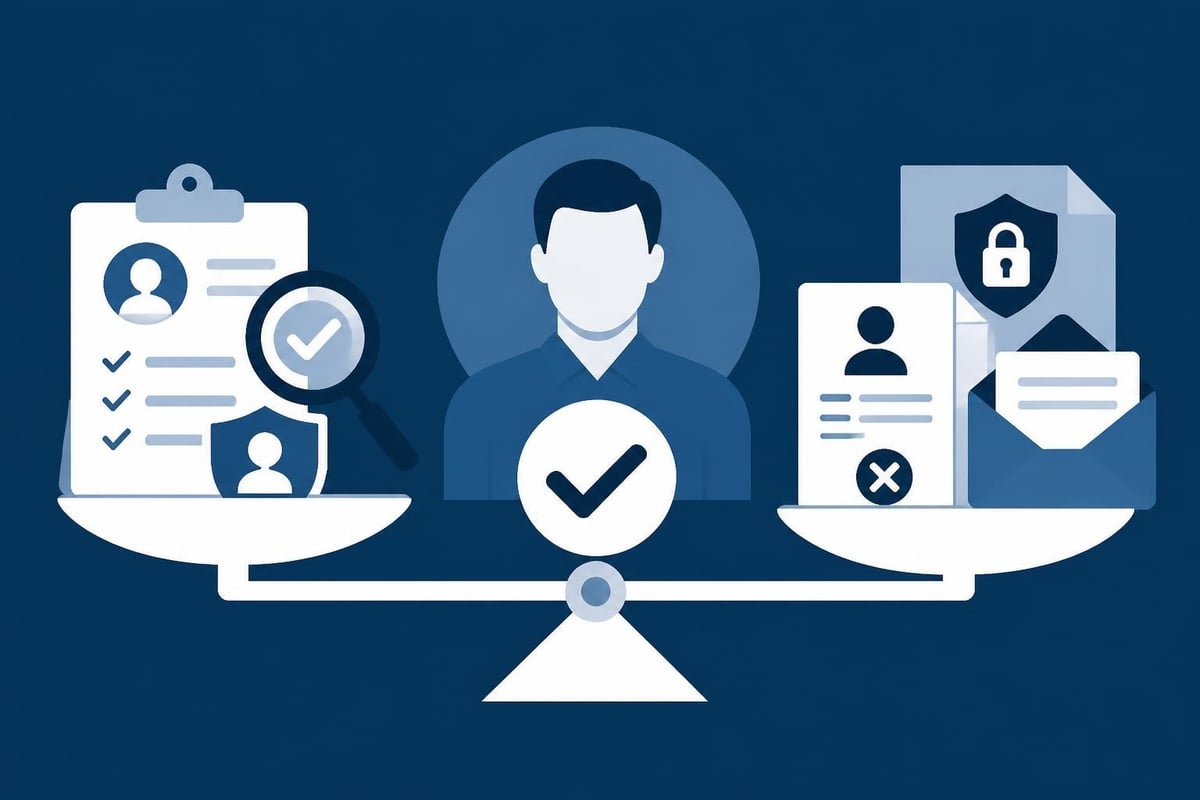
Fake resume detection must balance thoroughness with respect for candidate privacy and legal compliance. Different jurisdictions impose varying restrictions on what information employers can request and how they may use it.
Consent requirements mandate that candidates explicitly authorize background checks and verification activities. Failure to obtain proper consent can expose organizations to legal liability regardless of what fraud they uncover.
Adverse action procedures dictate how employers must handle situations where verification reveals discrepancies. Before rejecting a candidate based on background check results, companies typically must provide notice and opportunity to dispute findings.
Data protection regulations like GDPR in Europe and various state laws in the United States limit how verification information can be collected, stored, and shared. Organizations must ensure their fake resume detection processes comply with applicable privacy frameworks.
Future Trends in Credential Verification
The fake resume detection landscape continues evolving as both fraud techniques and verification technologies advance. Blockchain-based credential systems promise tamper-proof verification of education and certifications, though widespread adoption remains years away.
Continuous verification represents a shift from one-time pre-hire checks to ongoing monitoring. As professionals update their credentials and accumulate new experience, systems would automatically validate and update profiles. For hiring managers building long-term talent pipelines, this enables confidence that candidate information remains current and accurate.
AI recruitment software designed to detect fake resumes will likely incorporate increasingly sophisticated techniques as generative AI makes fraudulent content harder to distinguish from authentic materials. The arms race between detection and evasion will intensify.
Decentralized Identity Solutions
Digital identity systems that give individuals control over verified credentials while allowing selective sharing could transform verification. Rather than employers conducting independent checks, candidates would present cryptographically verified claims from authoritative sources.
These systems would reduce verification time and cost while improving accuracy. However, they require infrastructure development and widespread adoption across educational institutions, employers, and certification bodies.
Implementation Best Practices
Organizations developing or upgrading their fake resume detection capabilities should follow proven implementation principles.
Start with risk assessment to understand which positions face the highest fraud risk and would benefit most from enhanced verification. AI and technical roles often warrant more scrutiny given the specialized skills involved and the consequences of misrepresentation.
Document procedures clearly so all recruiters and hiring managers follow consistent processes. Inconsistent application of verification creates both legal risk and gaps that fraudulent candidates can exploit.
Train hiring teams on recognizing red flags, conducting effective verification interviews, and properly documenting findings. Even sophisticated systems require skilled users to maximize effectiveness.
Measure and refine by tracking metrics like false positive rates, time-to-verify, and fraud detection rates. Continuous improvement ensures processes remain effective as fraud techniques evolve.
Integration with existing recruitment workflows prevents verification from becoming a bottleneck. When fake resume detection occurs seamlessly within normal hiring stages, it adds protection without significantly extending time-to-hire.
Balancing Efficiency and Thoroughness
The tension between rapid hiring and comprehensive verification challenges every talent acquisition team. Extended verification timelines risk losing top candidates to faster-moving competitors, while insufficient checking invites costly hiring mistakes.
Technology helps resolve this tension by automating routine verification tasks and enabling parallel processing. Rather than sequential checks that extend timelines, modern systems initiate multiple verification streams simultaneously.
Candidate experience considerations matter even during verification. Transparent communication about what checks will occur and approximate timelines demonstrates professionalism while managing expectations. Candidates understand that thorough verification protects everyone's interests.
Provisional hiring with verification completion as a condition of continued employment offers another approach. This allows candidates to begin work while final confirmations process, though it introduces risk if fraud is discovered after onboarding begins.
Organizations must calibrate their approach based on role requirements, market competition for talent, and risk tolerance. No universal formula exists, but thoughtful strategy development prevents both under-verification and analysis paralysis.
Fake resume detection has become indispensable for organizations serious about building talented, trustworthy teams. By combining AI-powered screening with human expertise and comprehensive verification protocols, companies protect themselves from the significant costs associated with fraudulent credentials. Augmnt provides exactly this combination-an intelligent marketplace where verified AI professionals connect with businesses through a platform that ensures only qualified, fraud-free candidates reach your consideration. Request a demo to see how comprehensive validation can transform your hiring process.