Guide to Detect Fake Candidates: Essential Tips for 2026
In 2026, the rise of deepfakes and AI-generated identities has made hiring riskier than ever. Global studies show a dramatic increase in candidate fraud, putting companies at risk of costly mistakes.
This guide reveals how to detect fake candidates with proven strategies. You will learn about new fraud tactics, step-by-step detection frameworks, advanced verification, and key legal and ethical considerations.
Protect your team and reputation by mastering secure hiring today.
Understanding the Rise of Fake Candidates in 2026
The global hiring landscape in 2026 is being reshaped by a new threat: fake candidates. Today, organizations must detect fake candidates who use advanced technology, such as AI-generated personas and deepfakes, to bypass traditional hiring checks. These sophisticated deceptions are no longer rare, making it crucial for every employer to stay alert.
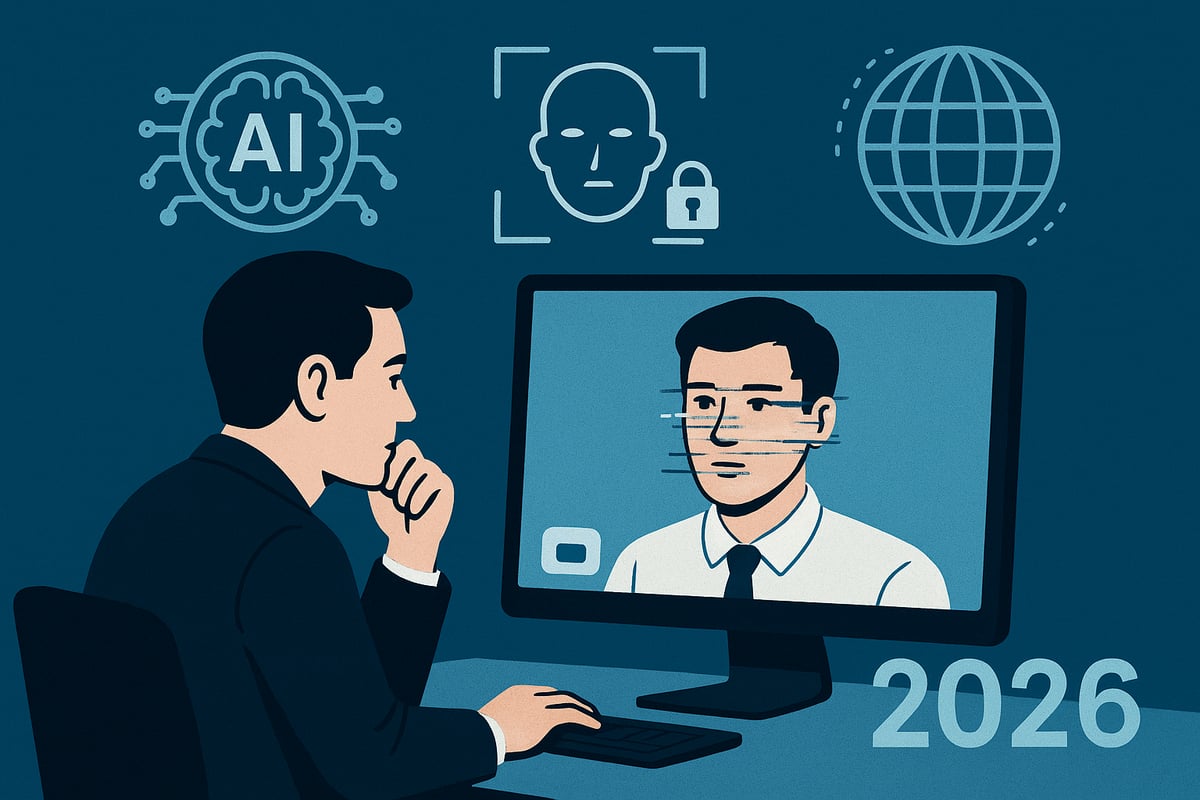
What exactly is a fake candidate in this context? In 2026, this term covers individuals who use AI tools to create fake identities, deepfake videos for interviews, or even employ proxy actors to pass assessments. It also includes identity thieves who steal real professionals’ credentials to land jobs. The need to detect fake candidates has never been more urgent.
Recent statistics reveal just how widespread this issue has become. According to Gartner predicts 1 in 4 candidate profiles will be fake by 2028, one in four job candidates around the world could be fake within the next two years. Already, 17% of hiring managers have personally encountered deepfake candidates during interviews. The numbers are even higher in sectors like tech, where 12.5% of software developer applicants have been identified as fraudulent.
What is driving this surge? Several factors have converged. First, the rapid expansion of remote work has opened doors for global applicants, giving fraudsters greater reach. Second, easy access to AI tools makes it simple for anyone to generate convincing fake documents, videos, or even entire online personas. Finally, the demand for talent in high-growth industries encourages some to take shortcuts, increasing the pressure on employers to detect fake candidates before making costly mistakes.
The consequences for businesses are severe. Fake candidates can cause security breaches, financial losses, and lasting reputational harm. In 2025, for example, North Korean impostors reportedly funneled about $6.8 million in revenue through fraudulent hires, exposing just how high the stakes can be. Failing to detect fake candidates early can also lead to weak project outcomes and team disruption, especially in sensitive roles.
Remote work has become a key enabler of this trend. Security experts warn that hiring teams often lack direct, in-person verification, making it easier for digital deception to slip through. Real-world cases show how fraudsters exploit virtual interviews, using deepfakes or proxies to mask their true identities. The tactics have evolved from simple resume embellishment to advanced digital trickery, challenging even the most experienced recruiters.
To keep up, organizations must update their strategies to detect fake candidates at every stage. This means understanding the latest methods fraudsters use, leveraging new technologies, and adopting a mindset of vigilance. Only by staying proactive can employers protect their teams and ensure genuine talent joins their ranks.
Step-by-Step Framework to Detect Fake Candidates
In today's hiring environment, organizations face escalating risks from sophisticated impersonators. To successfully detect fake candidates, a structured, multi-layered approach is required. Many HR professionals report significant difficulty identifying fraudulent applicants, underscoring the need for advanced detection frameworks (Few HR professionals can detect fake job candidate information, survey shows). By following the strategies below, you can minimize risk and secure genuine talent.
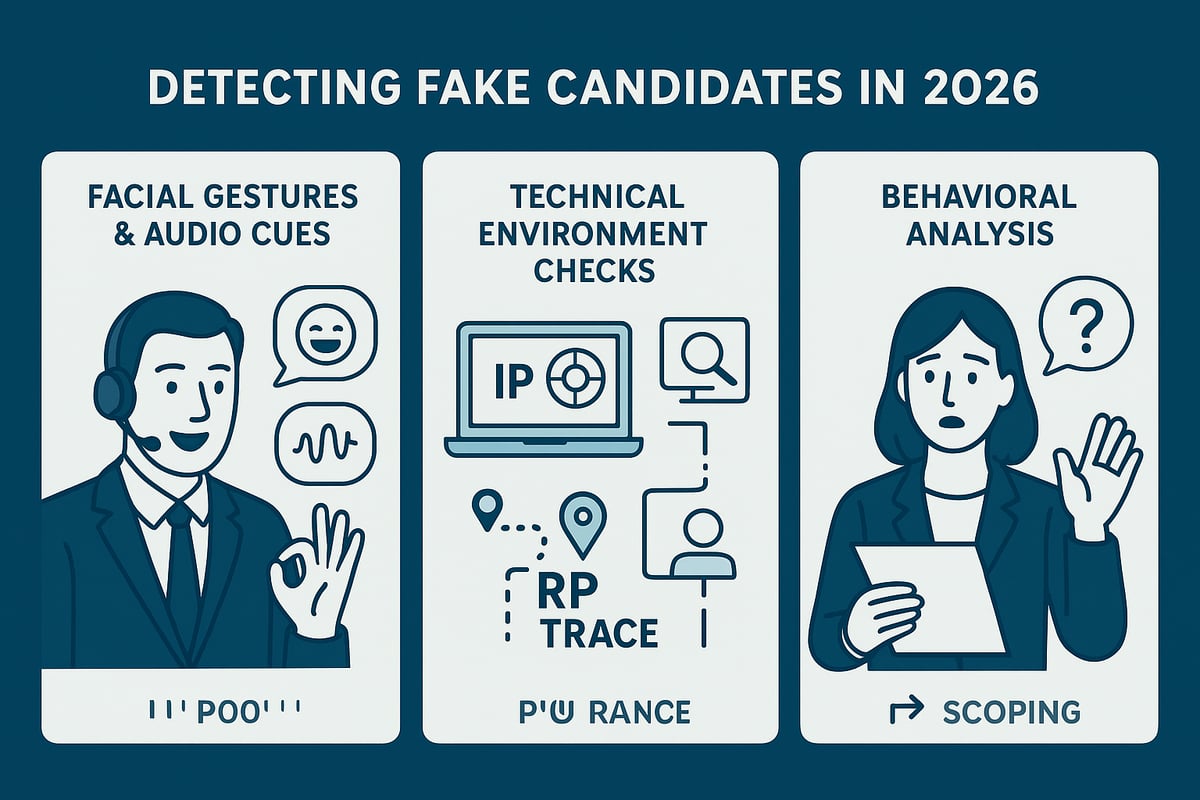
Visual and Audio Detection Techniques
The first line of defense to detect fake candidates is close observation during video interviews. Visual and audio cues are telltale signs that can reveal digital deception.
Facial Movement Analysis:
Look for unnatural facial expressions, delayed or mismatched speech, and deepfake glitches. A genuine candidate's micro-expressions and eye movements should sync naturally with their words.
Real-Time Verification Gestures:
Ask candidates to perform random, spontaneous gestures—such as turning their head, touching their ear, or covering part of their face. These actions are difficult for AI-generated avatars to replicate convincingly.
Audio Cues:
Pay attention to robotic voice patterns, inconsistent background noises, or mismatched lip sync. These can indicate the use of voice synthesis or deepfake tools.
Red Flags:
- Hesitation or refusal to adjust the camera
- Inconsistent video quality
- Reluctance to perform verification gestures
Live Scenario Example:
During a recent interview, a candidate failed a gesture test by hesitating to turn their head, resulting in a noticeable video artifact. This anomaly helped the recruiter detect fake candidates early in the process.
Data shows that 17% of hiring managers have encountered deepfakes in video interviews. By integrating these visual and audio checks, you strengthen your ability to detect fake candidates at the earliest stage.
Technical Environment Assessment
Beyond visual inspection, technical checks are essential to detect fake candidates who exploit remote work environments.
Connection Analysis:
Examine the candidate's IP address and device setup. A claimed location that does not match the IP address is a significant warning sign.
Screen-Sharing Requests:
Ask candidates to share their screen, revealing their desktop and active applications. Authentic candidates should have no issue with this request, while impostors may struggle or delay.
Camera and Lighting Checks:
Request adjustments to the camera angle or lighting to spot inconsistencies, such as artificial backgrounds or video overlays.
Software Audit:
Monitor for unauthorized tools running in the background. Unexpected software or browser plugins could indicate attempts to manipulate the interview.
Warning Signs:
- Frequent "technical difficulties"
- Refusal to share the workspace
- Sudden drops in video or audio quality
Example Scenario:
A candidate claimed to be based in London, but IP analysis revealed a connection from a different continent. By performing these checks, you can detect fake candidates before they progress further in the hiring process.
These technical assessments integrate seamlessly with your hiring workflow, ensuring that you detect fake candidates who might otherwise bypass traditional screening.
Behavioral and Response Pattern Recognition
The final layer to detect fake candidates involves analyzing how applicants interact and respond under pressure. Genuine candidates display consistent, nuanced behavior, while impostors often rely on scripts or external prompts.
Scripted vs. Authentic Responses:
Listen for overly polished but impersonal answers. Real candidates use personal anecdotes and specific details, while fake candidates stick to memorized scripts.
Delayed Reactions:
Notice any lag in responding to unexpected or follow-up questions. Proxy interviewers or AI-assisted candidates often need extra time to process or relay information.
Knowledge Depth:
Test adaptability with scenario-based questions or technical challenges. Authentic candidates can explain their thought process and adapt to new problems.
Consistency Checks:
Compare interview performance with claims on the resume. Inconsistencies between described experience and live answers are major red flags when you detect fake candidates.
Reference Patterns:
Analyze reference contacts for shared IP addresses or identical communication patterns, which may indicate collusion.
Example Scenario:
In a recent interview, a candidate could not provide specific examples when asked about past projects. This lack of detail signaled the need to detect fake candidates using deeper behavioral analysis.
By combining behavioral cues with technical and visual checks, organizations can effectively detect fake candidates and protect the integrity of their hiring process.
Advanced Verification Strategies for Fraud Prevention
In 2026, the challenge to detect fake candidates is more complex than ever. Traditional screening tools have become insufficient as fraudsters use advanced AI and deepfake technology to bypass basic checks. Organizations need layered, robust verification strategies to ensure only genuine applicants move forward. Below, we explore proven methods, from identity verification to integrating AI-driven solutions, to help you stay ahead.
Multi-Stage Identity and Credential Verification
A single stage of verification is no longer enough to detect fake candidates. Companies must implement a multi-layered process that combines digital and human oversight at every step. Start with government-issued ID checks paired with real-time gesture confirmation, such as asking candidates to turn their head or hold up fingers. This prevents the use of static images or deepfake videos.
Next, scrutinize online presence. Review LinkedIn and other professional profiles for engagement history, endorsements, and signs of AI generation. Genuine profiles show consistent activity, real connections, and organic interactions. Pre-interview reference and credential checks are also vital. Contact references directly and verify their authenticity, checking for patterns like duplicate contact details or shared IP addresses.
Skills assessments should be conducted in controlled environments with live proctoring. This helps detect fake candidates who might use proxies or AI tools to complete technical tests. AI-powered resume analysis can expose fabricated work history or exaggerated achievements, which are increasingly common as 86% of US hiring managers say AI makes it too easy to exaggerate skills on resumes.
Checklist for Multi-Stage Verification:
- Government ID with live gesture match
- Social media and LinkedIn authenticity review
- Pre-interview reference and credential validation
- Controlled, proctored skills assessments
- AI-powered resume and background analysis
This combination of steps is critical to detect fake candidates before they infiltrate your hiring pipeline.
In-Interview and Post-Interview Safeguards
Even with strong pre-screening, the interview process itself is a key battleground to detect fake candidates. Implement mandatory camera-on policies, requiring candidates to remain visible throughout interviews. Use multi-round interviews to compare consistency in responses, demeanor, and technical skills.
During interviews, request real-time technical demonstrations or problem-solving tasks. This approach makes it difficult for proxies or AI-driven impostors to maintain their cover. Comprehensive reference checks using digital platforms help validate employment history and spot anomalies, such as recycled reference contacts or shared digital fingerprints.
After interviews, employ IP and device fingerprinting to confirm candidate location and device integrity. Reviewing recorded interviews as a team can reveal subtle cues missed in real time, such as changes in voice tone, unnatural pauses, or inconsistent background details.
Key In-Interview/Post-Interview Safeguards:
- Consistent video presence and multi-round interviews
- Live technical demonstrations and scenario-based questions
- Digital reference validation and background checks
- IP and device fingerprinting for location confirmation
- Team-based review of interview recordings
These practices make it much harder for individuals to successfully detect fake candidates and slip through your hiring process.
How Augmnt Prevents Fake Candidates in the Hiring Process
Augmnt offers a specialized solution to detect fake candidates by combining advanced AI with expert oversight. Their platform scans resumes, skills, and backgrounds for signs of fraud, ensuring only authentic talent is presented to employers.
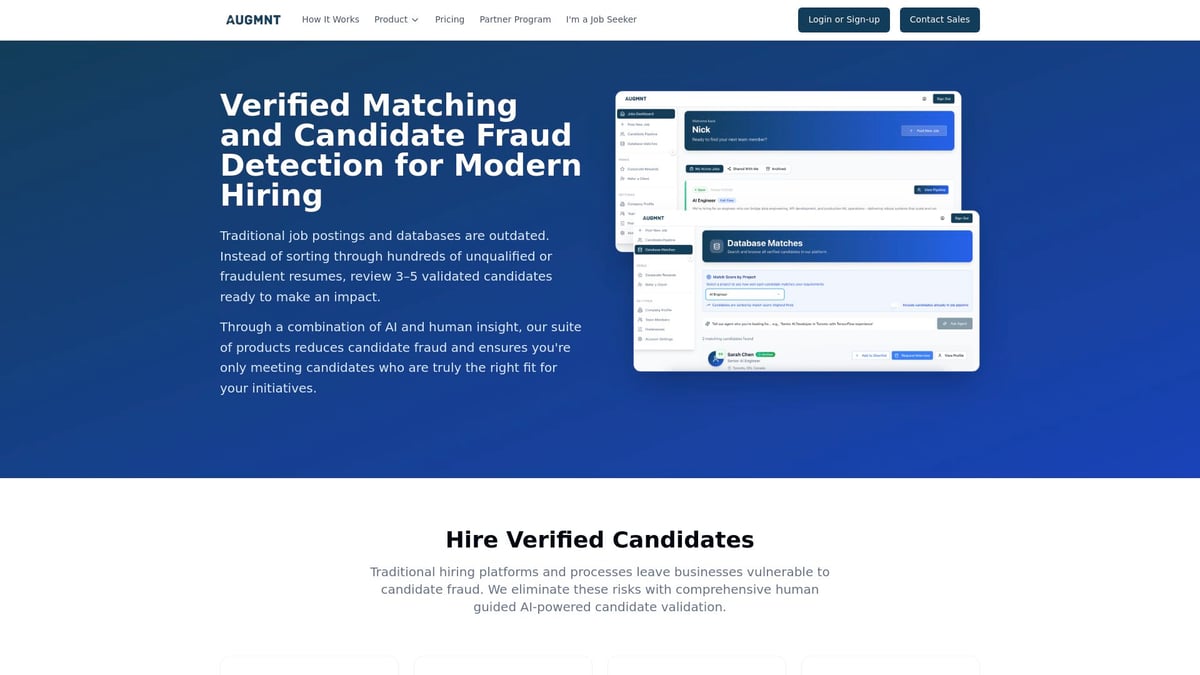
Through a marketplace model, Augmnt verifies each candidate before they reach your team. The process includes both automated checks and human review, providing unmatched reliability. Augmnt integrates seamlessly with applicant tracking systems and existing workflows, making adoption smooth and efficient.
Benefits of Using Augmnt:
- Saves time by filtering out fraudulent applications automatically
- Reduces hiring risks associated with deepfakes and AI-generated identities
- Enhances trust in remote and global hiring environments
- Particularly valuable for technology, AI, and remote-first businesses
With Augmnt’s combined human and AI approach, organizations can confidently detect fake candidates and protect their teams from costly hiring mistakes.
Key Red Flags: Immediate and Subtle Indicators of Fake Candidates
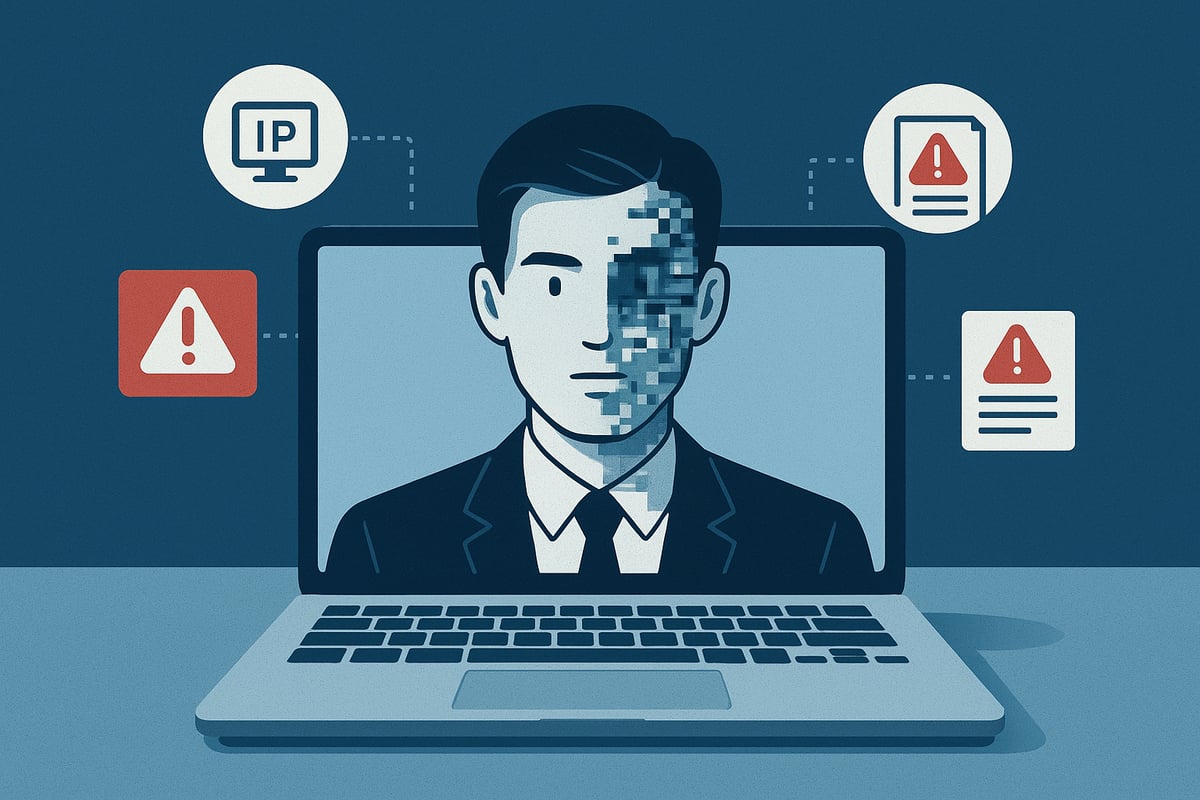
Spotting red flags early is crucial when you need to detect fake candidates in today’s hiring landscape. Both immediate and subtle indicators can help you separate genuine applicants from sophisticated impostors. With evolving digital deception tactics, understanding these warning signs is more important than ever.
Immediate Disqualifiers
Some warning signs require instant attention during remote interviews. Refusing to turn on video, avoiding verification gestures, or showing dramatic inconsistencies between a resume and live responses are urgent reasons to halt the process. Security leaders warn that deepfake technology is rapidly advancing, making these red flags more frequent. As reported in How deepfake AI job applicants are stealing remote work, fraudsters are using sophisticated tools to bypass traditional screening. Hiring teams must stay alert and act quickly to detect fake candidates before they reach sensitive roles.
- Refusal to turn on camera
- Inability or reluctance to perform verification gestures
- Obvious mismatches between resume claims and interview answers
Subtle Warning Signs
Not all indicators are obvious. Subtle red flags often appear as overly polished but impersonal answers. Candidates may dodge specific scenario questions or struggle with follow-ups that require real-world experience. When you detect fake candidates, look for inconsistencies in knowledge across related skills, or a lack of depth in technical discussions. These nuanced behaviors suggest the person may be relying on scripts or AI-generated responses instead of authentic expertise.
- Perfect yet generic answers
- Avoidance of detailed, experience-based stories
- Difficulty adapting to unexpected questions
Geographic and Reference Red Flags
Geographic mismatches are another common way to detect fake candidates. Watch for IP addresses that do not match declared locations, time zone discrepancies, or background elements in video calls that contradict claimed geography. Reference checks may reveal anomalies, such as multiple references sharing the same IP or digital footprint. These coordinated patterns often indicate organized fraud efforts targeting your hiring process.
- IP addresses inconsistent with claimed location
- Time zone differences that do not align with candidate’s story
- References with identical device information
Communication and Behavioral Patterns
Communication habits can also help you detect fake candidates. Unusual scheduling requests, evasive answers, or vague responses to process questions are early clues. Some impostors use stalling tactics or cite technical issues to avoid real-time verification. Consistent delays, reluctance to provide specifics, or a lack of engagement should prompt closer scrutiny.
- Repeated last-minute rescheduling
- Evasive responses to direct questions
- Frequent claims of technical difficulties
Real-World Example
Consider a recent case where a company’s reference check uncovered that all three references provided by a candidate originated from the same device and IP address. This discovery, coupled with inconsistencies in the interview, helped the team detect fake candidates before any sensitive company data was put at risk. In some startup sectors, up to 95% of resumes have been found to be impostors pretending to be Americans, highlighting just how sophisticated these schemes have become.
Remaining vigilant and consistently applying these red flag checks will help you detect fake candidates efficiently. A thorough, multi-layered approach is your best defense in today’s digital hiring environment.
Technology Solutions and Tools for Detecting Fake Candidates
The surge in digital deception has made it essential for organizations to use advanced technology solutions to detect fake candidates. Modern hiring teams need a combination of AI-powered tools, workflow integrations, and industry-specific systems to stay ahead of fraudsters. By adopting these solutions, companies can build trust, protect sensitive data, and secure their talent pipelines.
AI-Powered Detection Systems
Artificial intelligence is at the heart of efforts to detect fake candidates in real time. Modern platforms analyze video feeds for deepfake manipulation, monitor audio for synthetic voices, and flag inconsistencies that indicate fraud.
Key features include:
- Deepfake Analysis: AI scans video interviews for facial anomalies, unnatural expressions, and mismatched lip sync.
- Voice Authentication: Systems verify if the candidate's voice matches known patterns or reveal robotic, artificially generated speech.
- Behavioral Biometrics: Typing speed, mouse movement, and other interaction patterns are monitored to detect fake candidates using scripts or proxies.
- Automated Alerts: Instant notifications help recruiters act quickly when suspicious activity is detected.
| Feature | Purpose | Benefit |
|---|---|---|
| Deepfake Video Detection | Spots manipulated visuals | Blocks AI-driven impostors |
| Voice Authenticity | Confirms natural speech patterns | Prevents synthetic responses |
| Behavioral Biometrics | Tracks user interactions | Identifies proxies/scripts |
For example, a global tech firm recently used AI to detect fake candidates during remote interviews. The system flagged a candidate whose facial movements and voice did not align, leading to further investigation and disqualification.
Integration with Hiring Workflows
To reliably detect fake candidates, technology must seamlessly fit into existing hiring processes. Integration with Applicant Tracking Systems (ATS) ensures that fraud alerts and candidate validation are part of every stage.
Best practices include:
- ATS Integration: Fraud detection is embedded directly into the recruiter’s workflow, so suspicious applicants are flagged automatically.
- Automated Reporting: Organization-wide dashboards track attempts to detect fake candidates, helping HR teams spot trends and improve security.
- Reference Verification Platforms: These tools compare testimonial data and flag coordinated or suspicious patterns among references.
- Compliance Monitoring: Built-in checks ensure your methods to detect fake candidates follow legal and regulatory requirements.
For instance, a large multinational streamlined its recruiter response time by integrating AI fraud detection into its ATS. When the system detected fake candidates, automated reports allowed rapid action and reduced the risk of fraudulent hires.
Industry-Specific Solutions
Different sectors require customized tools to detect fake candidates effectively. The technology sector uses live coding assessments and real-time system architecture discussions to verify technical skills and authenticity.
In healthcare and finance, robust verification is critical. These industries rely on:
- Professional License Verification: Confirming certifications and regulatory compliance.
- Ethics and Regulatory Testing: Ensuring candidates understand industry standards.
- Scenario-Based Evaluations: Detect fake candidates by asking real-world, role-specific questions.
A healthcare provider recently adopted layered verification, including digital credential checks and live interviews, to detect fake candidates with fraudulent licenses. This approach led to a significant reduction in credential fraud and improved patient safety.
No matter the sector, using tailored technology helps organizations detect fake candidates before they become a risk. Investing in these solutions is now a necessity, not an option, for any business facing the challenges of remote and global hiring.
Legal and Ethical Considerations in Candidate Verification
The need to detect fake candidates has never been more critical, but it comes with significant legal and ethical responsibilities. While organizations aim to secure their hiring process, respecting candidate rights and maintaining compliance is equally essential.
Privacy and Consent
Before you detect fake candidates, secure explicit consent for all monitoring and verification activities. Inform candidates that interviews may be recorded and that their data could be analyzed for fraud prevention. Compliance with regulations such as GDPR is non-negotiable. Candidates must understand how their information will be used and stored.
Transparency
Transparency is a cornerstone when you detect fake candidates. Communicate your fraud detection protocols in job postings and interview invitations. Explain what data will be collected, how it will be used, and why these steps are necessary. This openness builds trust with candidates and reduces misunderstandings.
Documentation
Thorough documentation protects both your organization and applicants when you detect fake candidates. Keep clear records of all verification steps, decision rationales, and communications. If a candidate disputes a hiring decision, well-maintained documentation can be vital in legal proceedings.
| Legal Principle | Key Action | Purpose |
|---|---|---|
| Privacy & Consent | Obtain explicit agreement | Meet regulatory requirements |
| Transparency | Disclose verification protocols | Build trust |
| Documentation | Record all verification activities | Ensure legal protection |
Avoiding Discrimination
To fairly detect fake candidates, standardize your verification protocols. Apply the same procedures to every applicant, regardless of background or location. This approach minimizes bias and helps prevent claims of discrimination. Consistency is crucial for legal compliance and a positive employer reputation.
Legal Review and Audit Trails
When you detect fake candidates, prepare for the possibility of legal review. If fraud is confirmed, follow established processes for reporting and documentation. Maintain audit trails to show every step taken. For example, one organization faced legal scrutiny after failing to provide adequate records during a fraud dispute, highlighting the importance of detailed logs.
Continuous Improvement
As fraud tactics evolve, so must your methods to detect fake candidates. Regularly update verification protocols to meet new legal standards and address emerging threats. Engage legal counsel to ensure ongoing compliance. Continuous improvement not only strengthens security but also demonstrates a commitment to fairness.
Balancing Security with Fairness
Strive for a hiring process that is both secure and respectful. When you detect fake candidates, avoid invasive or overly burdensome procedures. Solicit feedback from candidates about their experience. Remember, a transparent and ethical approach enhances your company’s reputation and attracts genuine talent.
As we’ve explored, candidate fraud is becoming increasingly sophisticated—from AI-generated identities to deepfake interviews—and staying ahead is crucial for any business hiring in 2026. If you’re ready to take candidate verification to the next level and ensure your team is made up of genuine, skilled professionals, let’s make it simple. We can walk you through how Augmnt uses both AI and human insight to protect your hiring process, reduce risk, and save time. Curious how it works in practice? Request a Demo and see trusted hiring in action.