
Data and AI Consultancy: A Strategic Guide for 2026
Organizations across industries are recognizing that artificial intelligence implementation requires more than just purchasing software licenses or hiring a few data scientists. The complexity of modern AI systems, combined with the strategic importance of data quality and governance, has created a growing demand for specialized expertise. A data and AI consultancy provides the guidance, frameworks, and technical knowledge necessary to transform raw business challenges into measurable outcomes through intelligent automation and data-driven decision-making.
Understanding the Modern Data and AI Consultancy Landscape
The role of consultancy in the AI space has evolved dramatically over the past few years. Today's data and AI consultancy firms operate at the intersection of strategy, technology, and organizational change management. These specialized advisors help businesses navigate the complex journey from AI aspiration to implementation.
Key areas where consultancies add value include:
- Strategic roadmap development aligned with business objectives
- Data infrastructure assessment and modernization
- AI model selection, development, and deployment
- Change management and organizational alignment
- Regulatory compliance and ethical AI governance
The differentiation between general technology consultants and specialized AI consultancies lies in their depth of technical expertise and their understanding of the unique challenges surrounding machine learning operations. While traditional IT consultants might recommend software solutions, a data and AI consultancy digs deeper into the mathematical foundations, data pipelines, and organizational readiness required for success.
The Strategic Value Proposition
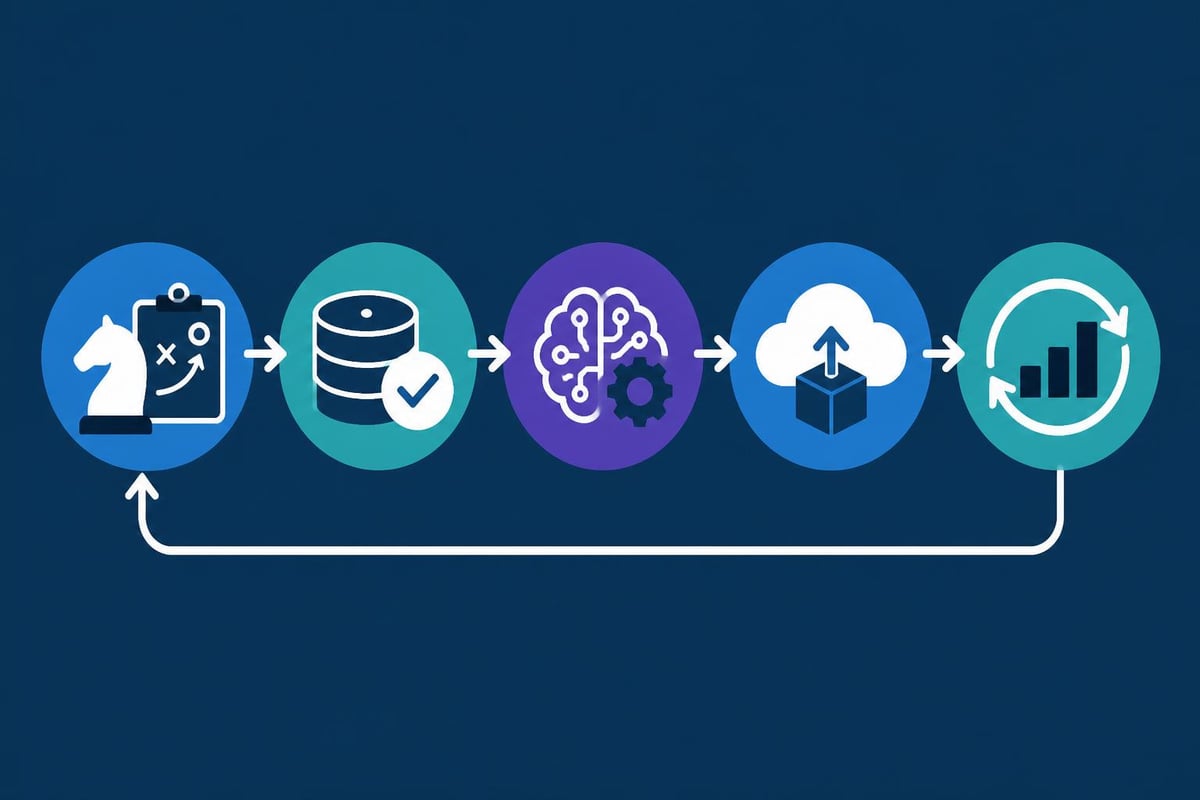
Organizations engaging with consultancies typically fall into one of three categories: those exploring AI possibilities, those stuck in pilot purgatory, or those seeking to scale existing initiatives. Each scenario requires different intervention strategies.
For companies in the exploration phase, consultancies conduct feasibility studies that map business processes to potential AI applications. This involves analyzing data availability, identifying high-impact use cases, and estimating resource requirements. The output typically includes a prioritized roadmap with clear ROI projections.
Companies struggling to move beyond pilots face a different challenge. Research shows that many AI projects fail to scale without proper data strategies, often due to data quality issues, inadequate infrastructure, or organizational resistance. A skilled consultancy addresses these barriers systematically.
Data Foundation: The Critical Success Factor
Every successful AI initiative rests on a solid data foundation. This fundamental truth drives much of what data and AI consultancy firms prioritize in their early engagement phases. Without clean, accessible, and well-governed data, even the most sophisticated algorithms will fail to deliver value.
Data Quality and Governance Frameworks
The importance of data quality cannot be overstated. According to industry research, AI and machine learning projects fail without good data, making data preparation and validation essential pre-deployment activities.
| Data Quality Dimension | Assessment Criteria | Impact on AI Performance |
|---|---|---|
| Accuracy | Error rates, validation checks | Model prediction reliability |
| Completeness | Missing value analysis | Feature engineering limitations |
| Consistency | Cross-system reconciliation | Training stability |
| Timeliness | Data freshness metrics | Real-time decision quality |
| Lineage | Source tracking, transformations | Auditability and compliance |
Establishing robust data governance structures involves defining ownership, access controls, quality standards, and lifecycle management policies. A data and AI consultancy typically implements governance frameworks that balance accessibility with security, ensuring teams can innovate while maintaining compliance.
Infrastructure Modernization
Legacy systems often lack the scalability, flexibility, and integration capabilities required for modern AI workloads. Consultancies assess existing infrastructure against future requirements, considering factors like:
- Compute capacity: GPU availability for model training, inference optimization
- Storage architecture: Data lakes versus warehouses, object storage strategies
- Integration patterns: API gateways, event streaming, batch processing
- Cloud strategy: Hybrid deployments, multi-cloud orchestration, edge computing
The modernization roadmap balances immediate needs with long-term flexibility. Rather than wholesale replacement, experienced consultancies often recommend phased migrations that minimize disruption while establishing proof points for stakeholder buy-in.
Implementation Frameworks and Methodologies
Moving from strategy to execution requires structured methodologies that manage complexity while maintaining momentum. Leading data and AI consultancy practices have developed frameworks that combine agile development principles with AI-specific considerations.
The Staged Deployment Approach
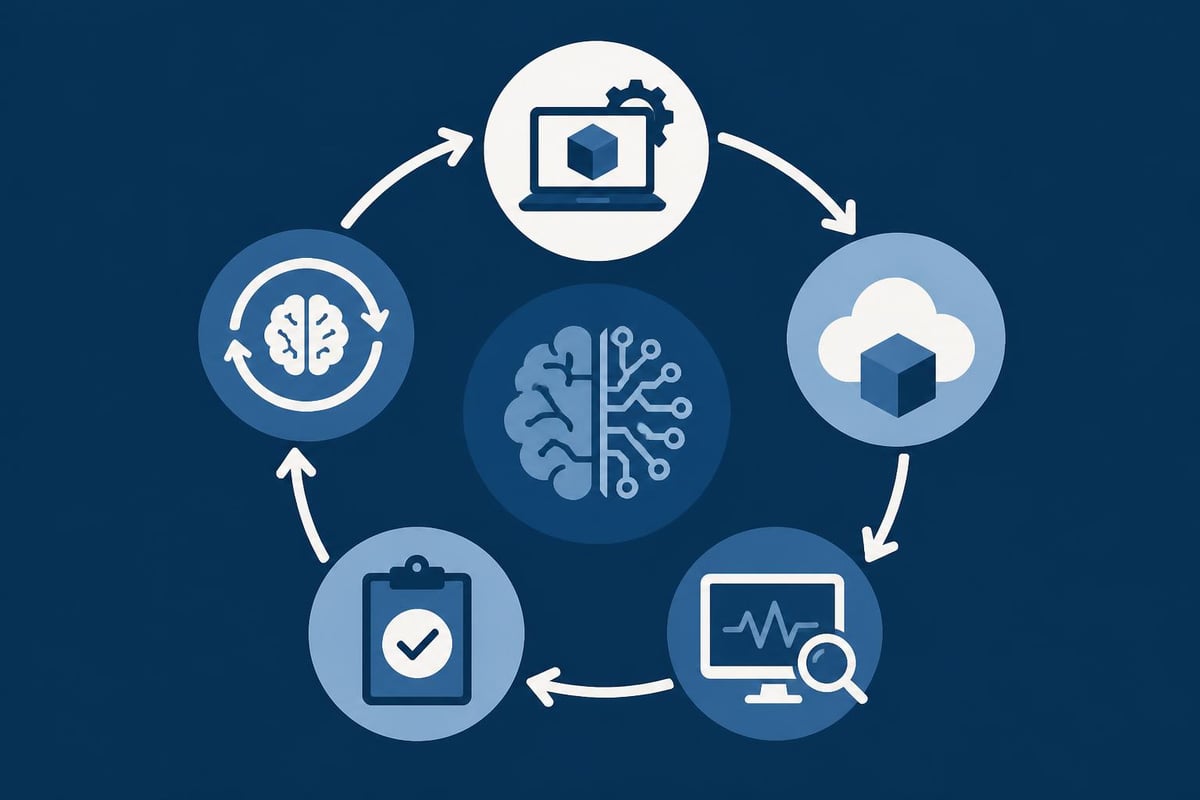
Successful AI implementations typically follow a staged progression:
- Discovery and scoping: Define business objectives, assess data readiness, identify quick wins
- Proof of concept: Validate technical feasibility with limited scope and controlled data sets
- Pilot deployment: Test with real users in production-like environments
- Scaling: Expand to additional use cases, departments, or customer segments
- Optimization: Continuous improvement through monitoring, retraining, and refinement
This approach allows organizations to turn AI pilots into scalable solutions by addressing technical and organizational challenges incrementally. Each stage includes defined success metrics and go/no-go decision points.
Talent and Capability Building
A critical but often overlooked aspect of consultancy engagements involves knowledge transfer and internal capability building. Organizations cannot rely indefinitely on external advisors. Sustainable AI programs require internal expertise.
Capability building strategies include:
- Embedded consulting arrangements where external experts work alongside internal teams
- Structured training programs tailored to different organizational roles
- Documentation and playbook development for repeatable processes
- Center of excellence establishment to evangelize best practices
When businesses need to expand their AI teams, platforms that connect them with verified AI professionals streamline the hiring process while ensuring candidate quality through comprehensive validation.
Navigating Common Implementation Challenges
Even with expert guidance, AI initiatives face predictable challenges. Understanding these obstacles and having mitigation strategies prepared separates successful implementations from failed experiments.
Technical Hurdles
Model performance gaps often emerge when moving from controlled development environments to messy production data. A data and AI consultancy addresses this through rigorous testing protocols, diverse training datasets, and continuous monitoring frameworks that detect performance degradation.
Integration complexities arise when AI systems must interact with existing applications, databases, and workflows. Consultants design integration architectures that handle data format conversions, latency requirements, and failure scenarios gracefully.
Scalability bottlenecks appear as usage grows. Initial architectures optimized for pilot scale may struggle under production loads. Experienced consultancies plan for scale from day one, implementing auto-scaling, load balancing, and resource optimization strategies.
Organizational and Cultural Barriers
Technology challenges often pale compared to human factors. Resistance to change, fear of job displacement, and skepticism about AI capabilities can derail promising initiatives.
| Challenge Type | Common Manifestations | Mitigation Strategies |
|---|---|---|
| Executive skepticism | Budget hesitation, unclear ROI | Pilot quick wins, quantified business cases |
| Middle management resistance | Resource allocation blocks | Inclusion in planning, clear benefits communication |
| End-user adoption | Workarounds, system avoidance | User-centered design, comprehensive training |
| Skills gaps | Inability to maintain systems | Hiring strategies, upskilling programs |
Change management must begin before technical work commences. A skilled data and AI consultancy facilitates stakeholder workshops, develops communication strategies, and creates feedback loops that turn potential resistors into advocates.
ROI Measurement and Value Realization
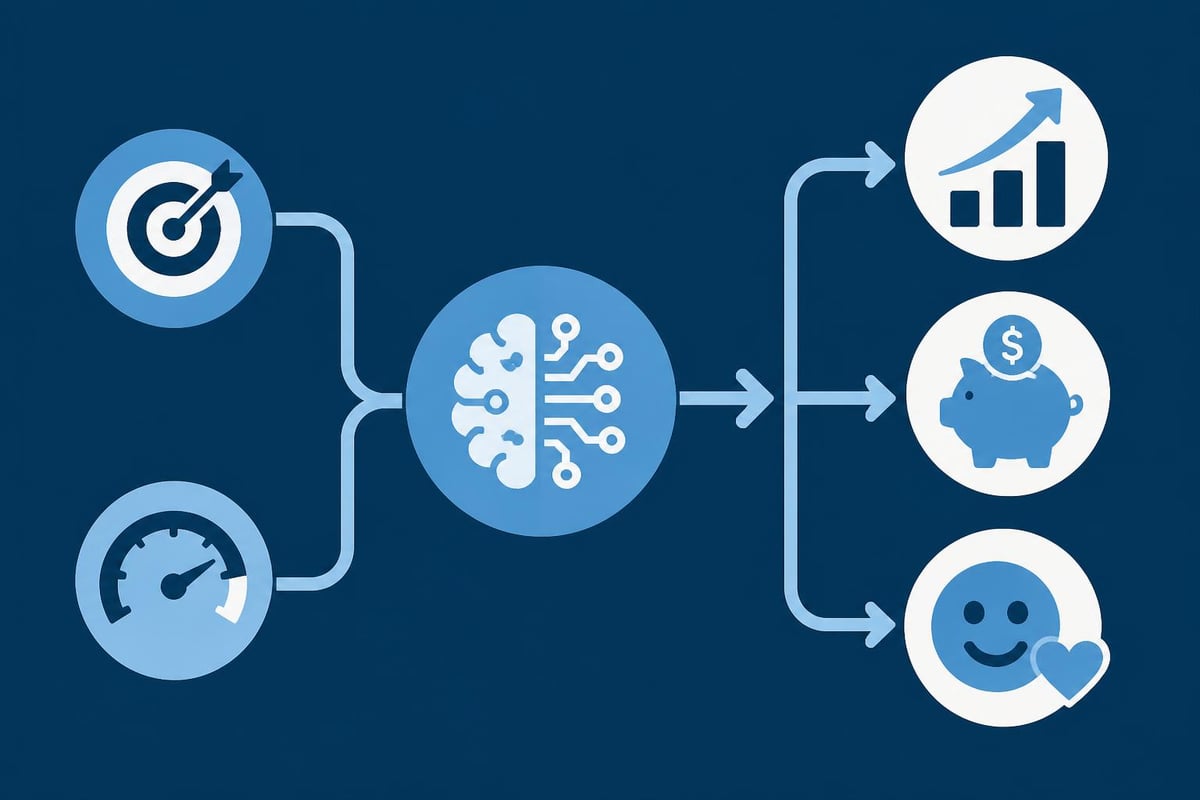
Demonstrating tangible business value remains paramount. Without clear ROI, AI initiatives lose funding and organizational support. Consultancies help establish measurement frameworks that connect AI investments to business outcomes.
Defining Success Metrics
Generic technology metrics like "model accuracy" or "processing speed" mean little to business leaders. Effective measurement frameworks translate technical performance into business language:
- Revenue impact: Increased sales conversion, reduced customer churn, dynamic pricing optimization
- Cost reduction: Process automation savings, reduced error rates, optimized resource allocation
- Risk mitigation: Fraud detection accuracy, compliance automation, predictive maintenance
- Customer experience: Reduced wait times, personalized interactions, faster issue resolution
A comprehensive data and AI consultancy establishes baseline measurements before implementation, enabling accurate before-and-after comparisons. They also account for indirect benefits like improved decision-making speed or enhanced employee satisfaction.
Continuous Optimization
AI systems require ongoing attention. Model performance degrades over time as real-world conditions drift from training data distributions. Consultancies implement monitoring dashboards that track key performance indicators and trigger retraining workflows when thresholds are crossed.
The optimization cycle includes:
- Performance monitoring: Real-time tracking of prediction quality and system health
- Feedback collection: User reports, edge case identification, bias detection
- Model retraining: Incorporating new data, adjusting hyperparameters, architectural updates
- A/B testing: Controlled experiments comparing model versions before full deployment
- Documentation: Recording changes, maintaining model lineage, ensuring reproducibility
This discipline separates AI systems that deliver sustained value from those that become obsolete weeks after launch.
Industry-Specific Applications and Case Studies
The application of AI varies dramatically across industries. What works in financial services may not translate to healthcare or manufacturing. Specialized consultancies bring domain expertise alongside technical capabilities.
Financial Services
Banks and insurance companies leverage AI for fraud detection, credit risk assessment, algorithmic trading, and customer service automation. The regulatory environment demands explainable AI models and robust audit trails. Real-world case studies demonstrate significant fraud reduction and operational efficiency gains when implemented properly.
Healthcare and Life Sciences
Diagnostic imaging analysis, drug discovery acceleration, patient risk stratification, and clinical trial optimization represent high-impact AI applications. Data privacy regulations like HIPAA add complexity. Consultancies navigate these requirements while delivering clinical value.
Manufacturing and Supply Chain
Predictive maintenance reduces unplanned downtime, while demand forecasting optimizes inventory levels. Computer vision systems automate quality inspection. The integration with industrial IoT sensors and legacy control systems requires specialized expertise.
Retail and E-commerce
Recommendation engines, dynamic pricing, inventory optimization, and customer lifetime value prediction drive competitive advantage. The challenge lies in processing high-velocity data streams and personalizing experiences at scale.
Emerging Trends Shaping Consultancy Services
The AI landscape evolves rapidly. Forward-thinking data and AI consultancy firms stay ahead of trends that will shape future engagements.
Generative AI Integration
Large language models and diffusion models are transforming content creation, code generation, and customer interaction workflows. However, concerns about data quality for autonomous AI systems highlight the need for careful implementation strategies.
Consultancies help organizations:
- Evaluate build versus buy decisions for generative capabilities
- Implement responsible AI frameworks addressing hallucinations and bias
- Design human-in-the-loop systems that balance automation with oversight
- Navigate intellectual property and liability considerations
Edge AI and Distributed Intelligence
Processing data at the edge rather than centralized cloud infrastructure reduces latency and enhances privacy. Applications in autonomous vehicles, smart manufacturing, and IoT devices require new deployment architectures and model optimization techniques.
AI Governance and Ethics
As AI systems impact consequential decisions, governance frameworks become critical. Organizations need policies addressing algorithmic bias, transparency, accountability, and fairness. Growing awareness of zero trust data governance strategies reflects increasing sophistication around AI risk management.
A responsible data and AI consultancy helps establish ethics review boards, implement bias detection tools, and create documentation standards that support regulatory compliance and public trust.
Selecting the Right Consultancy Partner
Not all consultancies deliver equal value. Choosing the right partner requires careful evaluation across multiple dimensions.
Evaluation Criteria
Technical depth: Assess actual hands-on experience with relevant technologies, not just familiarity with buzzwords. Request case studies with measurable outcomes and technical details.
Industry expertise: Domain knowledge accelerates delivery and improves solution quality. Consultants who understand your business context ask better questions and design more relevant solutions.
Implementation track record: Moving from PowerPoint to production separates theoretical consultants from practitioners. Request references from clients who have deployed systems at scale.
Talent quality: The individuals assigned to your project matter more than the firm's brand. Meet proposed team members and validate their credentials.
Knowledge transfer commitment: Consultancies that hoard knowledge create dependency. Choose partners committed to building internal capabilities alongside technical delivery.
Engagement Models
Different situations call for different consulting arrangements:
| Engagement Type | Best For | Typical Duration | Deliverables |
|---|---|---|---|
| Strategic advisory | Early exploration, roadmapping | 1-3 months | Strategy documents, business cases |
| Proof of concept | Technical validation | 2-4 months | Working prototype, feasibility assessment |
| Full implementation | End-to-end delivery | 6-18 months | Production systems, trained teams |
| Staff augmentation | Filling capability gaps | Ongoing | Embedded expertise, knowledge transfer |
| Managed services | Ongoing optimization | Continuous | Performance reports, system updates |
The most effective partnerships often combine multiple engagement types as initiatives mature.
Building Long-Term AI Capabilities
The ultimate goal extends beyond individual projects. Organizations need sustainable AI capabilities that support continuous innovation without perpetual consultancy dependence.
Creating Centers of Excellence
A well-structured AI center of excellence (CoE) serves as the organizational hub for:
- Standards and best practices: Documented methodologies, technology selection criteria, quality gates
- Shared infrastructure: Reusable data pipelines, model repositories, deployment frameworks
- Expertise development: Training programs, certification paths, community of practice
- Portfolio management: Project prioritization, resource allocation, ROI tracking
A data and AI consultancy can help establish the CoE structure, seed it with initial capabilities, and transition to a supporting role as internal teams mature. Organizations seeking to build their teams can explore opportunities through platforms that connect businesses with AI professionals.
Continuous Learning and Adaptation
AI technology advances rapidly. What represents cutting-edge practice today may be obsolete in two years. Sustainable capabilities require:
- Ongoing education: Conference attendance, certification programs, academic partnerships
- Experimentation culture: Time allocation for exploring new techniques and tools
- External networks: Relationships with vendors, researchers, and peer organizations
- Feedback mechanisms: Systematic capture and analysis of lessons learned
Organizations that view AI capability building as a journey rather than a destination achieve superior long-term results.
Quality Assurance and Risk Management
Ensuring AI systems perform reliably and safely requires rigorous quality assurance practices. Research on quality assurance challenges in AI systems highlights the complexity of validating machine learning outputs.
Testing and Validation Strategies
Traditional software testing approaches must be augmented for AI systems:
- Data validation: Ensuring training and production data meet quality standards
- Model testing: Unit tests for data processing, integration tests for pipelines, performance benchmarks
- Bias and fairness audits: Systematic evaluation of model decisions across demographic segments
- Adversarial testing: Probing for edge cases and potential manipulation vulnerabilities
- Monitoring and alerting: Real-time detection of performance degradation or anomalous behavior
Consultancies implement automated testing frameworks that validate models before deployment and continuously monitor production systems.
Managing AI-Specific Risks
AI introduces unique risk categories requiring specialized mitigation approaches:
Model drift occurs when the statistical properties of production data diverge from training data. Monitoring systems detect drift and trigger retraining workflows before performance suffers.
Explainability challenges arise with complex models like deep neural networks. Techniques like SHAP values, attention visualization, and counterfactual explanations help stakeholders understand model decisions.
Security vulnerabilities including model inversion attacks, data poisoning, and adversarial examples require defensive strategies beyond traditional cybersecurity measures.
Expert perspectives on AGI safety and governance inform frameworks for managing increasingly capable AI systems responsibly.
Successfully implementing AI requires more than technical expertise. It demands strategic vision, organizational alignment, and rigorous execution across data infrastructure, model development, and change management. Organizations that partner with experienced data and AI consultancy firms accelerate their journey while avoiding common pitfalls that derail well-intentioned initiatives. As you consider your AI strategy, having access to verified talent who can execute on these plans becomes equally critical. Augmnt connects businesses with validated AI professionals through intelligent matching and comprehensive fraud detection, ensuring you build teams capable of turning AI aspirations into measurable business outcomes.