Candidate Fraud: Protecting Your Business in 2026
The hiring landscape in 2026 has become increasingly complex, with businesses facing sophisticated deception tactics from applicants seeking to gain employment through dishonest means. Candidate fraud represents a significant challenge for organizations across industries, particularly in specialized fields like AI and technology where skills verification is critical. As companies invest substantial resources in recruitment, understanding and preventing fraudulent applications has become essential for maintaining hiring integrity and protecting business investments.
The Growing Scale of Candidate Fraud
The prevalence of dishonesty in job applications has reached alarming levels across the United States. Recent research indicates that over 64% of Americans have lied on their resumes, with younger professionals and those in creative industries showing the highest rates of deception. This widespread practice has created an environment where verifying candidate authenticity has become more challenging than ever.
What makes this trend particularly concerning is the success rate of fraudulent applicants. According to industry data, 60% of job seekers who committed resume fraud in 2024 successfully secured employment, demonstrating that current screening methods often fail to detect misrepresentations. This high success rate only encourages more candidates to engage in deceptive practices, creating a cycle that undermines trust in the hiring process.
The financial impact on businesses cannot be ignored. When candidate fraud goes undetected, companies face multiple costs: wasted recruitment resources, reduced team productivity, potential project failures, and the expense of repeating the hiring process. Organizations hiring for technical roles, particularly in AI and machine learning, face even greater risks when unqualified individuals misrepresent their capabilities.
Common Forms of Deception in Applications
Credential Fabrication
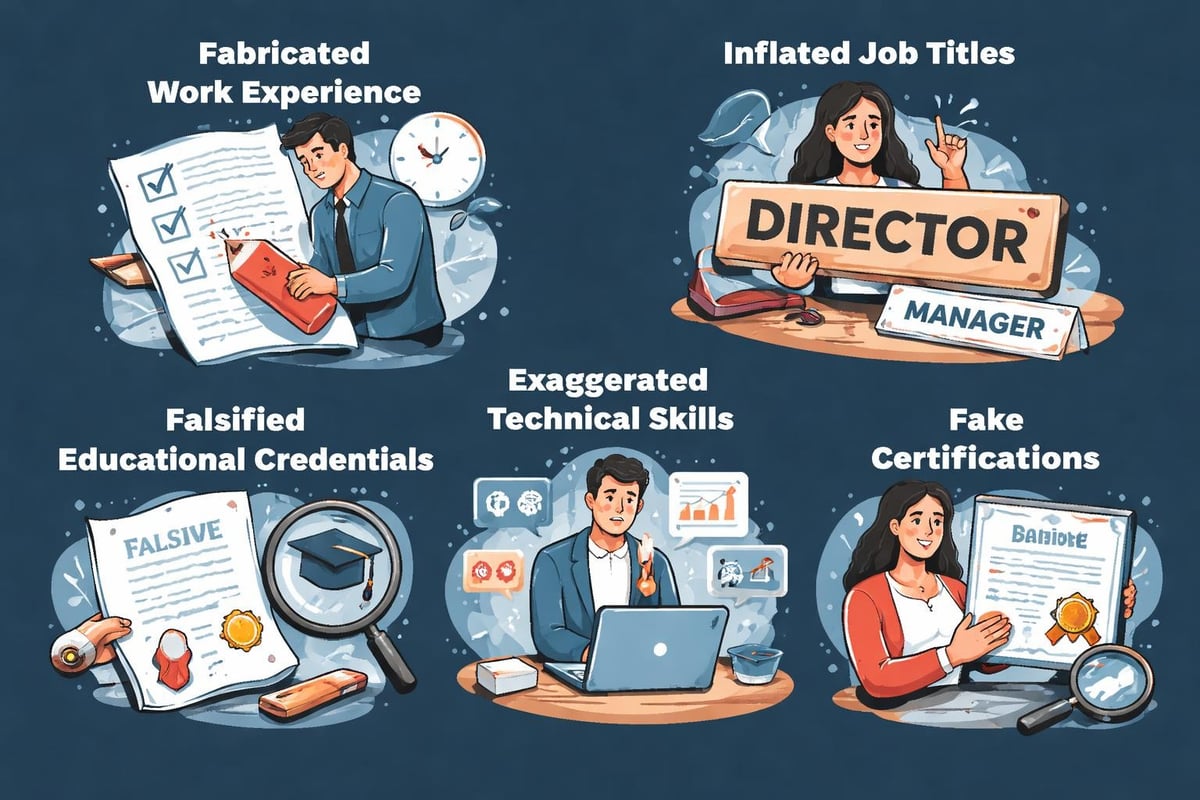
Educational credential fraud represents one of the most serious forms of candidate deception. Studies show that 28% of job applicants lie about their academic credentials, ranging from claiming degrees they never earned to fabricating attendance at prestigious institutions. In the AI industry, where specialized education often serves as a foundation for technical roles, this type of fraud can place unqualified individuals in critical positions.
Professional certifications face similar challenges. Candidates may claim certifications they never obtained, present expired credentials as current, or misrepresent the scope of their certified expertise. For AI professionals, certifications in machine learning frameworks, cloud platforms, or data science methodologies are frequently falsified.
Experience Misrepresentation
Work history manipulation takes various forms in modern applications:
- Extended employment dates to cover gaps or suggest longer tenure
- Inflated job titles that exaggerate responsibility levels
- Fabricated companies or roles that never existed
- Embellished project involvement claiming leadership on team efforts
- False performance metrics with unverifiable achievements
Research confirms that 55% of Americans have lied on their resumes, with exaggerated work experience and overstated skills being the most common falsehoods. These misrepresentations create significant challenges for employers trying to assess genuine candidate capabilities.
Skills Overstatement
Technical skills fraud has become increasingly sophisticated, particularly in AI and technology sectors. Candidates may claim proficiency in programming languages they barely understand, misrepresent their experience with specific frameworks, or fabricate contributions to open-source projects. The technical nature of AI roles makes skills verification especially critical, as gaps in knowledge can lead to project failures and security vulnerabilities.
AI-Enabled Fraud Tactics
Synthetic Identity Creation
The advancement of artificial intelligence has introduced new dimensions to candidate fraud. Generative AI tools now enable applicants to create convincing but entirely fabricated professional identities. This includes AI-generated profile photos, synthetic work portfolios, and even deepfake video interviews that misrepresent the actual candidate.
Employers admit that candidates faking identities with AI are outsmarting them, with fraudulent hires costing companies thousands of dollars in recruitment expenses and lost productivity. These sophisticated deception methods require equally advanced detection strategies.
Automated Application Enhancement
AI writing tools have made it easier than ever for candidates to present polished applications that may not reflect their actual abilities. While using AI assistance for resume formatting or grammar checking falls within acceptable bounds, some candidates use these tools to fabricate entire project descriptions, generate technical explanations for skills they don't possess, or create fictional case studies.
The challenge for employers lies in distinguishing between legitimate use of writing assistance and fundamental misrepresentation of qualifications. This gray area has expanded the scope of what constitutes candidate fraud in the digital age.
Detection Strategies and Verification Methods
Comprehensive Background Checks
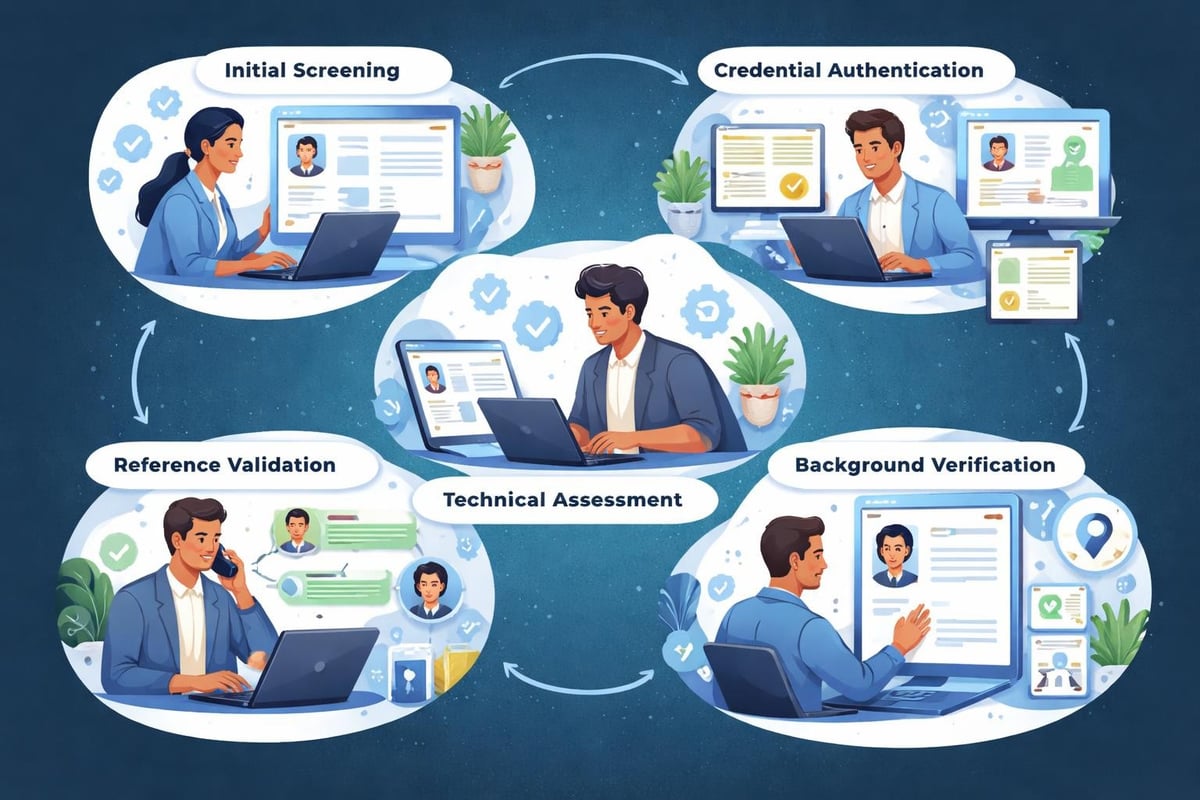
Effective fraud prevention begins with thorough background verification. Organizations should implement multi-layered screening processes that examine multiple aspects of candidate claims:
| Verification Type | Key Components | Detection Rate |
|---|---|---|
| Education | Degree verification, institution contact, transcript review | 85% |
| Employment | Direct employer contact, date confirmation, role verification | 78% |
| Certifications | Issuing body verification, credential validation, expiration check | 92% |
| References | Multiple contacts, behavioral questions, consistency checks | 65% |
The statistics reveal that 85% of employers have caught candidates lying on their resumes, with inflated skills being the most common falsehood detected through proper verification processes.
Technical Skills Assessment
For AI and technology positions, practical skills evaluation provides the most reliable fraud detection method. Rather than relying solely on claimed experience, organizations should implement:
- Live coding assessments that reveal actual programming capabilities
- Technical interviews with domain experts who can probe knowledge depth
- Project-based evaluations requiring candidates to solve real-world problems
- Collaborative exercises demonstrating teamwork and communication skills
- Portfolio reviews with detailed questioning about specific contributions
These methods help distinguish between candidates who genuinely possess technical expertise and those who have merely memorized terminology or used AI tools to fabricate knowledge.
Reference Verification Best Practices
Traditional reference checks often fail to detect fraud because candidates provide contacts who will corroborate their false claims. Enhanced reference verification requires:
- Contacting references through independently verified channels rather than provided contact information
- Asking specific behavioral questions that require detailed knowledge of the candidate's work
- Verifying the reference's actual relationship and authority to evaluate the candidate
- Cross-referencing information across multiple references for consistency
- Conducting reference checks at different organizational levels
Industry-Specific Vulnerabilities
AI and Technical Roles
The specialized nature of AI positions creates unique fraud vulnerabilities. Candidates may claim experience with specific machine learning frameworks, neural network architectures, or data processing pipelines they've never actually used. The rapid evolution of AI technology also creates opportunities for candidates to list emerging skills that are difficult for non-technical recruiters to verify.
Technical terminology can be particularly deceptive. A candidate might use industry jargon convincingly in written applications while lacking practical implementation experience. This gap between theoretical knowledge and applied skills represents a significant risk for organizations building AI capabilities.
Remote Work Complications
The shift toward remote work has introduced additional fraud challenges. Without in-person interactions, verifying candidate identity and detecting deceptive practices becomes more difficult. Some fraudulent tactics specific to remote hiring include:
- Using proxy test-takers for technical assessments
- Having more qualified individuals participate in video interviews
- Misrepresenting home office setups and technical infrastructure
- Fabricating reasons for avoiding camera use during interviews
- Creating artificial backgrounds that suggest professional environments
Building Fraud-Resistant Hiring Processes
Multi-Stage Validation
Creating a comprehensive verification framework requires coordination across multiple stages of the hiring process. Organizations should develop standardized protocols that apply consistent scrutiny to all candidates, regardless of initial impressions or urgent hiring needs.
Initial Application Screening:
- Automated resume parsing for inconsistencies
- Education and employment date validation
- LinkedIn profile cross-referencing
- Portfolio and work sample authentication
Interview Phase Verification:
- Live technical demonstrations
- Behavioral interview techniques
- Real-time problem-solving exercises
- Multiple interviewer perspectives
Final Validation:
- Comprehensive background checks
- Professional reference verification
- Criminal record screening where applicable
- Social media presence authentication
Technology Integration
Modern applicant tracking systems can incorporate fraud detection capabilities that flag potential discrepancies automatically. These systems analyze patterns across applications, compare candidate data against verified databases, and identify red flags that warrant additional investigation.

Cultural Considerations
Organizations must balance fraud prevention with respect for candidate privacy and cultural differences. Some legitimate variations in resume presentation stem from international formatting standards, translation issues, or cultural norms around self-promotion. Verification processes should distinguish between cultural differences and intentional deception.
Legal and Ethical Implications
Compliance Requirements
Background check processes must comply with federal and state regulations governing employment screening. The Fair Credit Reporting Act (FCRA) establishes requirements for how employers conduct and use background investigations. Organizations must obtain candidate consent, provide adverse action notices when appropriate, and maintain accurate records of verification activities.
State-level regulations add additional layers of compliance complexity. Some jurisdictions restrict the types of background information employers can consider, limit how far back criminal history checks can reach, or require specific disclosure protocols for credit checks.
Candidate Rights
While preventing candidate fraud protects business interests, verification processes must respect applicant rights. Organizations should:
- Clearly communicate what verification activities will occur
- Provide candidates opportunity to address discrepancies
- Maintain confidentiality of sensitive personal information
- Apply verification standards consistently across all applicants
- Document verification procedures and findings appropriately
Data Security
Verification processes involve collecting and storing sensitive candidate information, creating data security obligations. Organizations must implement appropriate safeguards to protect applicant data from breaches, limit access to authorized personnel only, and comply with relevant privacy regulations.
Cost-Benefit Analysis of Prevention
Investment in Verification
Comprehensive fraud prevention requires financial investment in background check services, skills assessment platforms, and specialized interviewing resources. Organizations must weigh these upfront costs against the potential expenses of fraudulent hires:
| Cost Category | Prevention Investment | Fraud Impact Cost |
|---|---|---|
| Screening Tools | $500-2,000 per hire | $0 (prevented) |
| Failed Hire | $0 (prevented) | $50,000-100,000+ |
| Team Productivity | $1,000-3,000 validation | $25,000-75,000 loss |
| Reputation Damage | Minimal | Substantial long-term impact |
The return on investment for fraud prevention becomes clear when considering that a single fraudulent hire in a technical role can cost organizations six months of salary plus recruitment expenses, training investment, and project delays.
Long-Term Benefits
Beyond immediate cost savings, robust verification processes provide strategic advantages. Organizations build reputations for hiring quality, attract genuinely qualified candidates who appreciate thorough vetting, and create cultures of accountability and trust. These benefits compound over time as teams comprise verified, capable professionals.
Building Verification Partnerships
Specialized verification services have emerged to help organizations combat sophisticated fraud. These providers offer:
- Direct university degree verification networks
- Professional certification validation services
- Employment history confirmation databases
- Technical skills assessment platforms
- Identity verification technology
Partnering with established verification providers allows organizations to access specialized expertise and technology without building comprehensive internal capabilities. For companies hiring AI talent specifically, working with platforms that specialize in technical verification ensures appropriate depth of skills assessment.
Organizations should evaluate verification partners based on their industry expertise, technology capabilities, compliance standards, and integration options with existing hiring systems. The right partnerships extend internal capabilities while maintaining hiring process efficiency.
Emerging Trends in Fraud Prevention
Blockchain Credential Verification
Distributed ledger technology offers promising solutions for credential authentication. Educational institutions and certification bodies are beginning to issue blockchain-verified credentials that employers can validate instantly without contacting issuing organizations. This technology eliminates opportunities for degree mills and falsified certificates while streamlining the verification process.
Behavioral Analytics
Advanced analytics now examine candidate behavior patterns throughout the application and interview process, identifying anomalies that suggest deception. These systems analyze response times, language patterns, behavioral consistency, and other subtle indicators that may reveal fraudulent intent.
Continuous Verification
Rather than treating verification as a one-time hiring event, forward-thinking organizations implement ongoing validation processes. Periodic credential renewals, continuous performance monitoring, and regular skills assessments ensure that employee capabilities remain aligned with role requirements throughout employment.
Protecting your organization from candidate fraud requires vigilance, robust verification processes, and the right technology partnerships. As deception tactics become more sophisticated, businesses need comprehensive solutions that combine human expertise with advanced validation technology. Augmnt addresses these challenges by providing verified AI professionals through a platform that leverages both artificial intelligence and human insight to ensure candidate authenticity, helping you build high-performing teams with confidence while eliminating fraud risks from your recruitment process.