Automated Candidate Sourcing: A Complete 2026 Guide
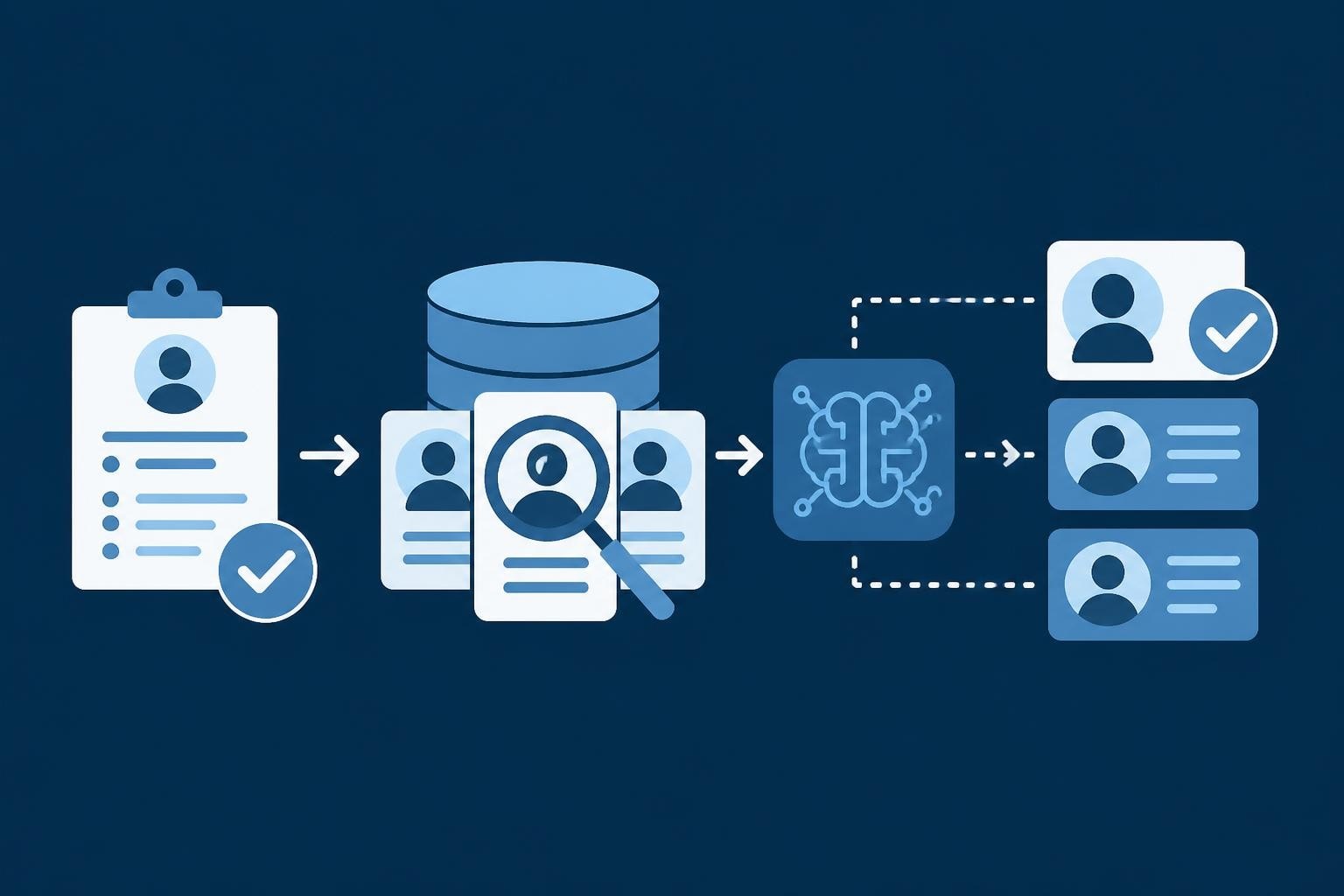
The recruitment landscape has transformed dramatically over the past few years, with automated candidate sourcing emerging as a critical capability for organizations seeking to compete for top talent. Traditional manual sourcing methods, which once required recruiters to spend countless hours scrolling through LinkedIn profiles and job boards, have given way to intelligent systems that can identify, evaluate, and engage qualified candidates at scale. This shift isn't just about speed; it's about precision, consistency, and the ability to tap into talent pools that manual methods simply cannot reach effectively.
Understanding the Evolution of Candidate Sourcing
The journey from manual to automated candidate sourcing represents one of the most significant shifts in recruitment technology. In the early 2000s, recruiters relied heavily on Boolean search strings and manual database queries. This approach was time-intensive and limited by human capacity to process information.
Today's automation and AI-powered sourcing platforms continuously scan multiple sources, applying sophisticated algorithms to match candidate profiles with job requirements. The technology has evolved from simple keyword matching to contextual understanding of skills, experience, and career trajectories.
Key evolutionary milestones include:
- Introduction of applicant tracking systems (ATS) in the 1990s
- Rise of programmatic job advertising in the 2010s
- Integration of machine learning for candidate matching
- Natural language processing for resume parsing
- Predictive analytics for candidate quality assessment
The modern automated candidate sourcing ecosystem now encompasses multiple channels simultaneously, from professional networks to niche community forums, creating a comprehensive talent intelligence network.
Core Components of Automated Sourcing Systems
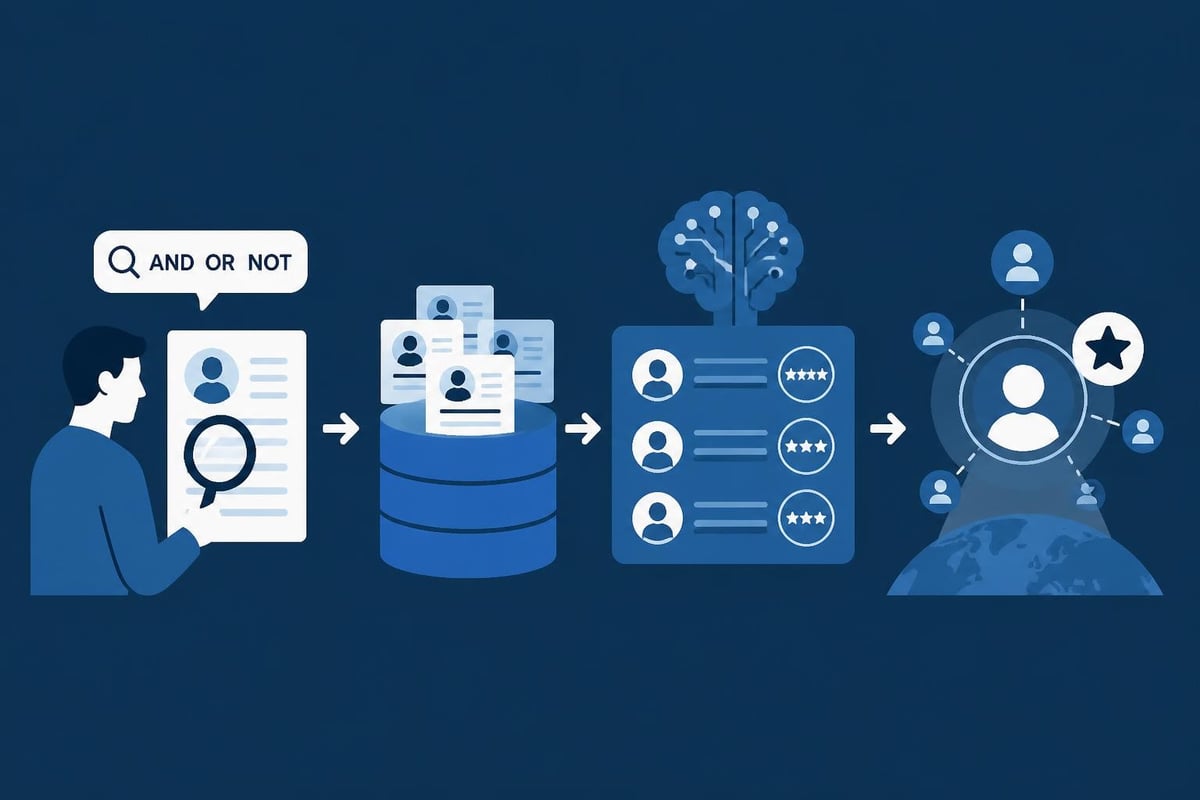
Understanding what makes automated candidate sourcing effective requires examining the technology stack that powers these systems. At the foundation lies data aggregation, where systems collect candidate information from diverse sources including job boards, social networks, open-source repositories, and professional communities.
Data Processing and Normalization
The raw data collected from various sources arrives in inconsistent formats and structures. Advanced sourcing platforms employ natural language processing to standardize this information, extracting relevant details about skills, experience, education, and certifications. This normalization process enables accurate comparison and ranking of candidates.
Machine learning models then analyze historical hiring data to identify patterns that correlate with successful placements. These models continuously improve as they process more hiring outcomes, becoming increasingly accurate at predicting candidate fit.
Matching and Scoring Algorithms
The heart of any automated candidate sourcing system is its matching engine. This component compares job requirements against candidate profiles using multiple dimensions:
| Matching Dimension | Description | Weight Factor |
|---|---|---|
| Technical Skills | Hard skills and certifications | High |
| Experience Level | Years and relevance of experience | High |
| Cultural Indicators | Work preferences and values | Medium |
| Location Compatibility | Geographic fit and remote preferences | Medium |
| Availability | Current job status and timeline | Variable |
Sophisticated platforms like Augmnt ATS go beyond basic matching by incorporating fraud detection and skill verification, ensuring that the candidates presented to hiring teams have been thoroughly validated. This additional layer of verification addresses one of the most critical challenges in modern recruitment: resume accuracy.
Engagement Automation
Once qualified candidates are identified, automated systems can initiate personalized outreach campaigns. These campaigns leverage templating with dynamic personalization, sending messages that reference specific aspects of a candidate's background while maintaining an authentic tone.
Response tracking and follow-up sequences ensure no potential candidate falls through the cracks, while A/B testing capabilities allow recruiters to optimize their messaging for higher response rates.
Strategic Implementation of Automated Sourcing
Successfully implementing automated candidate sourcing requires more than simply purchasing software. Organizations must approach implementation strategically, aligning technology capabilities with business objectives and recruitment workflows.
The implementation process typically follows these phases:
- Requirements Analysis: Define the specific roles, volumes, and quality standards your sourcing needs to meet
- Source Mapping: Identify where your ideal candidates spend time online and which platforms yield the highest quality matches
- System Configuration: Set up matching criteria, scoring weights, and automation rules that reflect your hiring priorities
- Integration: Connect sourcing tools with your existing ATS and recruitment technology stack
- Testing and Optimization: Run pilot programs, measure results, and refine your approach based on data
The transition from manual to automated sourcing doesn't happen overnight. Most successful organizations adopt a hybrid approach initially, allowing recruiters to validate automated recommendations while the system learns from their feedback.
Building Effective Candidate Profiles
The quality of automated candidate sourcing results depends heavily on how well you define what you're looking for. Generic job descriptions produce generic results. Detailed, specific requirements enable the system to identify truly qualified candidates.
Create comprehensive candidate profiles that include:
- Required technical competencies with specific tools, frameworks, or methodologies
- Preferred experience patterns such as startup versus enterprise backgrounds
- Educational requirements with acceptable alternatives
- Soft skills indicators that suggest cultural fit
- Career trajectory preferences indicating growth potential
The more granular your specifications, the more precisely the system can identify matching candidates. However, avoid over-specification, which can unnecessarily narrow your talent pool.

Measuring Sourcing Effectiveness
Automated candidate sourcing generates substantial data, but data only creates value when translated into actionable insights. Establishing the right metrics framework enables continuous improvement and demonstrates ROI to stakeholders.
Primary Performance Indicators
The most critical metrics for evaluating sourcing effectiveness include time-to-fill, which measures how quickly automated sourcing fills your pipeline with qualified candidates. Quality-of-hire tracks the long-term performance and retention of candidates sourced through automated methods compared to other channels.
Source effectiveness breaks down which specific platforms or databases yield the highest-quality candidates for different role types. This intelligence allows you to optimize where you focus your sourcing budget and efforts.
| Metric | Formula | Target Benchmark |
|---|---|---|
| Sourcing Conversion Rate | (Candidates Hired / Candidates Sourced) × 100 | 2-5% |
| Time to First Contact | Days from requisition to first candidate engagement | <48 hours |
| Response Rate | (Candidates Responding / Candidates Contacted) × 100 | 15-25% |
| Cost per Qualified Candidate | Total Sourcing Cost / Qualified Candidates | Varies by role |
Advanced Analytics
Beyond basic metrics, sophisticated platforms analyze patterns that might not be immediately obvious. Predictive analytics can forecast how long it will take to fill specific role types based on historical data and current market conditions.
Diversity analytics track whether your automated sourcing is identifying diverse candidate pools or inadvertently introducing bias. Regular audits of these metrics help ensure your technology supports rather than hinders diversity objectives.
Competition analysis reveals which other companies are pursuing the same candidates, allowing you to adjust your messaging and value proposition accordingly. Understanding the competitive landscape helps you position opportunities more effectively.
Addressing Bias and Ethical Considerations
The promise of automated candidate sourcing includes reducing human bias in candidate identification. However, automation can also perpetuate or even amplify existing biases if not carefully designed and monitored.
Algorithms learn from historical data, which may reflect past discriminatory practices. If your organization historically hired predominantly from certain demographics, the system might learn to favor similar profiles. Addressing this requires deliberate intervention and ongoing monitoring.
Bias Mitigation Strategies
Implement blind screening options that remove identifying information like names, ages, or graduation dates during initial screening phases. This ensures candidates are evaluated based on qualifications rather than demographic characteristics.
Regular algorithm audits examine whether your sourcing system produces demographically diverse candidate pools. Compare the demographics of sourced candidates against the available talent pool to identify potential issues.
Diverse training data helps ensure algorithms learn from a representative sample of successful candidates across various backgrounds. Work with your vendor to understand what data informs their matching models.
Human oversight remains essential. While automation handles volume efficiently, recruiters should review recommendations critically, questioning patterns that seem to favor particular groups consistently.
Research on recruitment bias indicates that both recruiters and candidates remain concerned about fairness in automated systems, making transparency about how decisions are made increasingly important.
Integration with Broader Recruitment Technology
Automated candidate sourcing doesn't exist in isolation. Its effectiveness multiplies when integrated seamlessly with other recruitment technologies and processes.
ATS Integration
Your applicant tracking system serves as the central hub for recruitment activity. Deep integration between sourcing tools and your ATS eliminates duplicate data entry and ensures all candidate interactions are tracked in one place.
Look for integrations that support:
- Automatic candidate profile creation when prospects are identified
- Two-way synchronization of candidate status and notes
- Workflow triggers that initiate sourcing campaigns based on new requisitions
- Consolidated reporting across all recruitment activities
Communication Platform Connectivity
Modern automated candidate sourcing platforms connect with email systems, LinkedIn, and other communication channels to enable seamless outreach. This connectivity allows recruiters to engage candidates through their preferred channels without switching between multiple applications.
Calendar integration streamlines scheduling by automatically finding available times and sending invitations, reducing the back-and-forth that often delays the hiring process.
Analytics and Business Intelligence Tools
For organizations with sophisticated analytics capabilities, sourcing data should flow into broader business intelligence systems. This enables correlation analysis between sourcing strategies and business outcomes like revenue per employee or innovation metrics.
The data science behind automated talent sourcing continues to evolve, with platforms becoming more sophisticated in how they generate and refine candidate recommendations based on feedback loops.

Specialized Sourcing for Technical and AI Roles
Sourcing for highly specialized positions, particularly in artificial intelligence and advanced technology fields, presents unique challenges that generic sourcing approaches often fail to address. The rapid evolution of AI technologies means that job requirements and skill sets change faster than traditional sourcing systems can adapt.
Technical candidates often maintain portfolios on platforms like GitHub, contribute to open-source projects, participate in specialized forums, and publish research papers. Effective automated candidate sourcing for these roles must extend beyond traditional professional networks to capture this activity.
Specialized sourcing considerations for AI roles include:
- Technical contribution analysis that evaluates code quality, project complexity, and community engagement
- Publication and research tracking for candidates with academic or research backgrounds
- Certification and continuous learning indicators showing commitment to staying current
- Domain specialization distinguishing between machine learning, natural language processing, computer vision, and other AI subspecialties
The benefits of AI-powered sourcing become particularly apparent when recruiting for these roles, as the technology can evaluate technical qualifications with a level of depth and consistency that manual review cannot match at scale.
Multi-Channel Sourcing Strategies
The most effective automated candidate sourcing strategies don't rely on a single source but orchestrate candidate identification across multiple channels simultaneously. Each channel offers distinct advantages and reaches different segments of the available talent pool.
Professional networks like LinkedIn remain crucial but represent only one piece of the puzzle. Niche technical communities, industry-specific job boards, and passive candidate databases all contribute unique candidates to your pipeline.
Building a comprehensive source map involves:
- Identifying where your ideal candidates spend time professionally and socially
- Evaluating which sources produce the highest quality candidates for specific role types
- Allocating sourcing resources proportionally to source effectiveness
- Continuously testing new sources and retiring underperforming ones
Some platforms offer Smart Sourcing capabilities that automatically build pipelines across multiple channels, routing completed applications directly into recruiter workflows. This orchestration eliminates the manual effort of checking multiple systems while ensuring no qualified candidate is overlooked.
For AI and technical roles specifically, consider emerging talent marketplaces that specialize in verified professionals. These platforms pre-vet candidates, reducing the risk of encountering resume fraud or inflated qualifications that plague general-purpose job boards.
Personalization at Scale
One of automated candidate sourcing's most powerful capabilities is delivering personalized candidate experiences at scale. While the system handles volume, personalization drives response rates and candidate quality.
Modern platforms analyze candidate profiles to identify personalization opportunities: recent achievements, shared connections, relevant projects, or career transitions that your opportunity might support. This information feeds into message templates that feel individually crafted rather than mass-produced.
Dynamic Content Generation
Advanced systems generate unique message variations based on candidate characteristics:
| Candidate Segment | Personalization Elements | Message Focus |
|---|---|---|
| Passive Candidates | Current role satisfaction, career growth | Opportunity differentiation |
| Active Job Seekers | Application timeline, role preferences | Speed and fit |
| Career Changers | Transferable skills, learning opportunities | Support and development |
| Senior Professionals | Impact potential, autonomy, compensation | Strategic importance |
The goal is making each candidate feel uniquely identified rather than part of a mass outreach campaign, while still leveraging automation to achieve scale that manual outreach cannot match.
Compliance and Data Privacy
Automated candidate sourcing operates within an increasingly complex regulatory environment. Data privacy regulations like GDPR in Europe and CCPA in California impose specific requirements on how candidate data can be collected, stored, and used.
Organizations must ensure their sourcing practices comply with relevant regulations, which typically require:
- Transparent data collection with clear notification about what information is gathered and how it will be used
- Legitimate processing basis such as consent or legitimate business interest
- Data minimization collecting only information necessary for recruitment purposes
- Candidate rights support enabling access, correction, and deletion requests
- Security safeguards protecting candidate information from unauthorized access or breaches
Work with legal counsel to develop compliant sourcing practices, and ensure your technology vendors provide necessary compliance features and documentation. The FAQ section on recruitment platforms should address common compliance questions transparently.
Future Trends Shaping Automated Sourcing
The automated candidate sourcing landscape continues evolving rapidly, with several emerging trends poised to reshape how organizations identify and engage talent.
Conversational AI and chatbots are becoming more sophisticated, handling initial candidate screening conversations that feel natural and engaging. These systems can answer candidate questions, assess basic qualifications, and schedule interviews without human intervention.
Predictive talent intelligence goes beyond identifying candidates who match current requirements to anticipating future hiring needs based on business growth patterns, attrition trends, and market dynamics. This proactive approach enables organizations to build talent pools before urgent needs arise.
Skills-based sourcing shifts focus from credentials and titles to demonstrated capabilities. As more professionals build non-traditional career paths, sourcing systems that can identify transferable skills and learning potential become increasingly valuable.
Academic research on automated recruitment explores how Large Language Models can assess candidates by integrating diverse information sources to generate structured evaluation reports that mirror expert judgment, potentially transforming how initial screening works.
The integration of video analysis and asynchronous interviewing tools with sourcing platforms creates more comprehensive candidate profiles earlier in the process, helping recruiters prioritize their time more effectively.
Building Internal Sourcing Capabilities
While technology platforms provide powerful capabilities, maximizing automated candidate sourcing requires developing internal expertise and processes. Recruitment teams need training not just on using sourcing tools but on interpreting their outputs and optimizing their configurations.
Establish a center of excellence for recruitment technology that includes:
- Platform administrators who maintain system configurations and integrations
- Analytics specialists who extract insights from sourcing data
- Sourcing strategists who develop channel strategies and candidate profiles
- Compliance experts ensuring regulatory adherence
- Vendor relationship managers working with technology providers on optimization
Document best practices as your team discovers what works, creating playbooks that new team members can reference. Include specific examples of successful searches, effective message templates, and optimal matching criteria for different role types.
Regular training updates keep the team current on new platform features and emerging sourcing channels. The recruitment technology landscape evolves quickly, and yesterday's best practices may not be optimal today.
Consider partnerships with specialized recruitment service providers who can supplement internal capabilities during high-volume hiring periods or when entering new talent markets where you lack established sourcing channels.
Cost-Benefit Analysis of Automation
Implementing automated candidate sourcing represents a significant investment in technology, training, and process change. Understanding the return on this investment requires comprehensive cost-benefit analysis that extends beyond simple cost-per-hire calculations.
Direct Cost Savings
Automation reduces the time recruiters spend on manual sourcing activities, allowing them to focus on high-value tasks like candidate engagement and stakeholder management. For organizations making dozens or hundreds of hires annually, these time savings translate directly to cost reductions or capacity for growth without proportional headcount increases.
Improved quality-of-hire reduces costs associated with bad hires: wasted onboarding investments, lost productivity, and the expense of re-recruiting for the same position. Even modest improvements in hire quality generate substantial value over time.
Faster time-to-fill minimizes the productivity gap from vacant positions and reduces the risk of losing top candidates to competing offers. In competitive talent markets, speed often determines hiring success.
Strategic Value Creation
Beyond direct cost savings, automated candidate sourcing creates strategic value that's harder to quantify but often more significant. Access to previously unreachable talent pools expands your competitive advantage, particularly for specialized or emerging skill areas.
Data-driven insights into talent market dynamics inform workforce planning and compensation strategies, helping organizations make more informed decisions about when to hire, how to structure roles, and what compensation levels are competitive.
Enhanced employer brand results from professional, timely candidate experiences. Even candidates you don't hire form impressions based on their interaction with your recruitment process, influencing whether they apply again or recommend your organization to others.
Explore pricing models that align with your hiring volume and patterns, whether that's per-hire fees, subscription-based access, or usage-based pricing for specific features.
Automated candidate sourcing has evolved from a competitive advantage to a necessity for organizations serious about attracting top talent in 2026's dynamic market. By combining intelligent technology with strategic implementation and ongoing optimization, recruitment teams can identify qualified candidates faster and more effectively than ever before. Augmnt streamlines this process further by connecting businesses with verified AI professionals through a platform that combines automation with human insight, ensuring every candidate presented meets rigorous quality and authenticity standards. Whether you're scaling your AI team or filling specialized technical roles, leveraging both automated sourcing capabilities and verified talent marketplaces positions your organization for recruitment success.