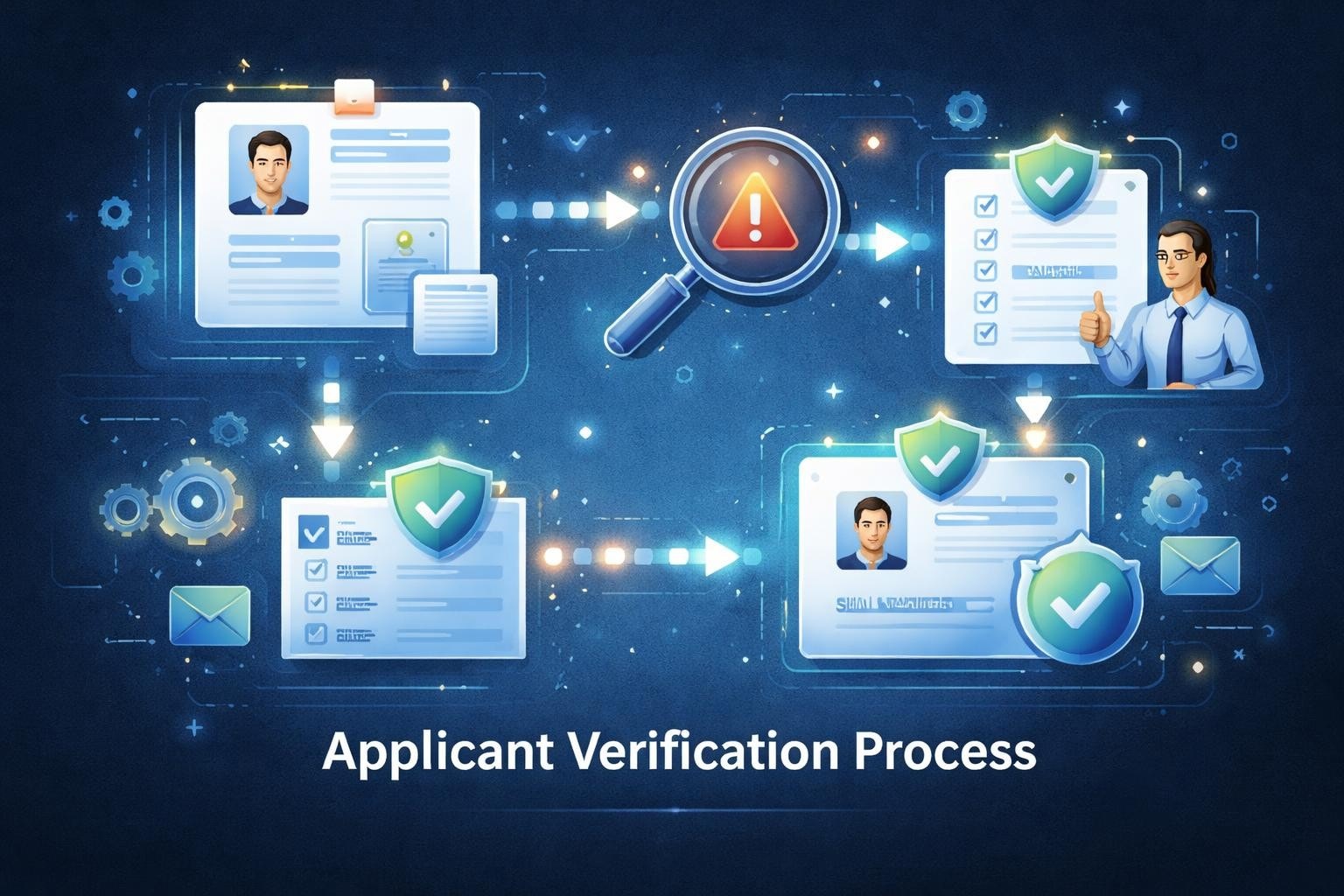
ATS Embedded Candidate Verification: Complete Guide 2026
The hiring landscape has transformed dramatically with the rise of sophisticated fraud schemes, AI-generated resumes, and misrepresented credentials. Organizations now face unprecedented challenges in identifying genuine talent from fabricated profiles. Modern recruitment demands solutions that validate candidates without disrupting workflows, which is where ats embedded candidate verification becomes essential. This integrated approach combines real-time authentication with seamless ATS functionality, allowing recruiters to maintain efficiency while ensuring every candidate meets authenticity standards.
Understanding ATS Embedded Candidate Verification
ATS embedded candidate verification represents a fundamental shift in how organizations approach talent validation. Rather than treating verification as a separate, post-screening activity, this methodology integrates authentication processes directly into the applicant tracking system itself.
The core principle involves running verification checks automatically as candidates progress through recruitment stages. When a resume enters the system, verification algorithms immediately analyze credentials, employment history, educational background, and contact information without requiring manual intervention. This real-time processing ensures that fraudulent applications are flagged before recruiters invest valuable time in reviewing them.
Key Components of Embedded Verification
Several critical elements work together to create effective ats embedded candidate verification:
- Resume fraud detection that identifies inconsistencies, timeline gaps, and fabricated achievements
- Skill validation systems that cross-reference claimed expertise with objective assessments
- Contact verification ensuring email addresses and phone numbers are legitimate and active
- Employment history authentication validating previous positions and tenure claims
- Educational credential checks confirming degrees, certifications, and institutional attendance
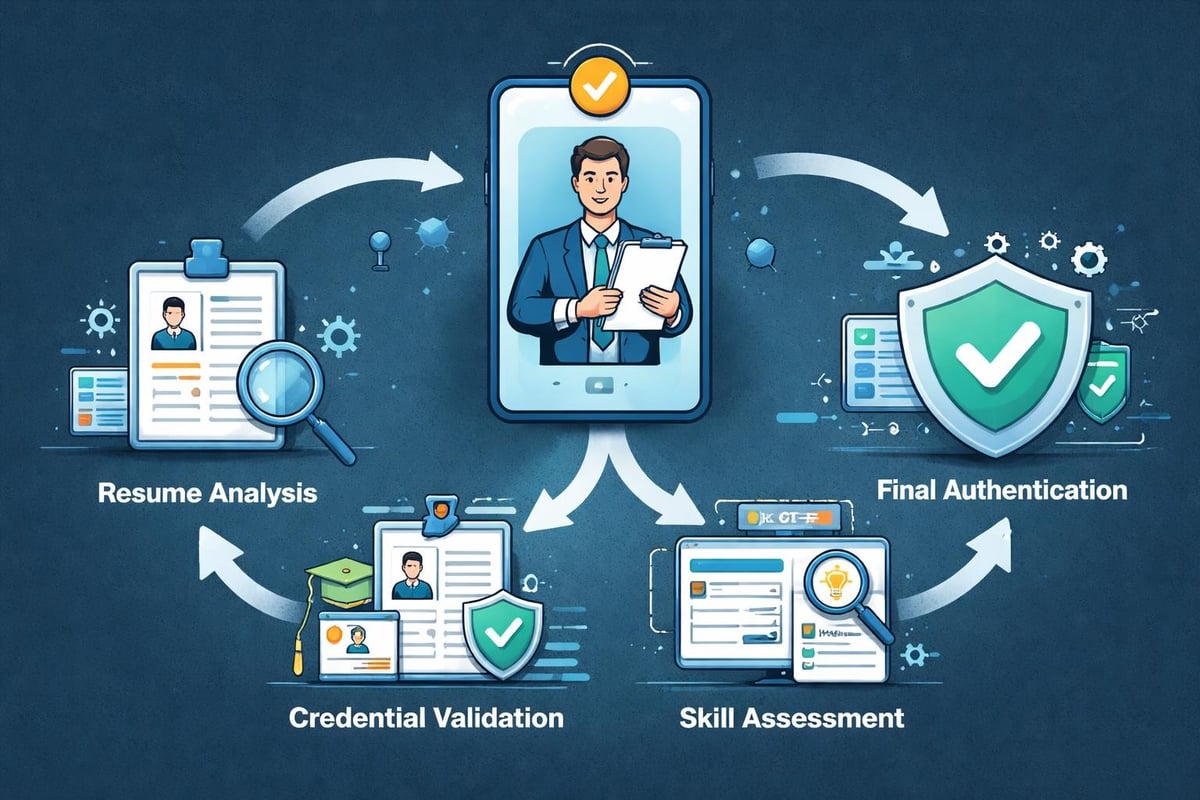
The integration depth varies across platforms, but leading solutions embed these capabilities directly within the ATS dashboard. AI-driven candidate review systems can tag and categorize applicants based on verification results, enabling recruiters to prioritize authenticated candidates immediately.
The Business Case for Integrated Verification
Organizations implementing ats embedded candidate verification report measurable improvements across multiple hiring metrics. The financial impact extends beyond preventing bad hires to include time savings, improved quality of hire, and enhanced compliance.
Cost Reduction and Efficiency Gains
Traditional verification approaches require recruiters to manually request background checks, coordinate with third-party vendors, and wait days or weeks for results. Embedded systems eliminate these delays by processing checks in real-time.
| Metric | Traditional Verification | Embedded Verification |
|---|---|---|
| Average time per candidate | 45-60 minutes | 5-10 minutes |
| Verification turnaround | 3-7 business days | Real-time to 24 hours |
| Cost per verification | $50-$150 | $15-$40 |
| False positive rate | 12-18% | 3-7% |
These efficiency gains compound across high-volume hiring scenarios. Organizations processing hundreds of applications monthly save thousands of hours annually by automating verification workflows.
Risk Mitigation and Compliance
The regulatory landscape surrounding hiring practices continues to evolve. Background check integrations with ATS platforms help organizations maintain compliance with federal and state regulations while protecting against fraudulent candidates.
Embedded verification creates comprehensive audit trails automatically. Every check performed, result obtained, and decision made becomes part of the permanent candidate record. This documentation proves invaluable during compliance reviews or legal challenges.
Technical Architecture of Embedded Verification Systems
Understanding how ats embedded candidate verification operates technically helps organizations evaluate and implement appropriate solutions. The architecture typically involves several layers working in coordination.
Data Extraction and Normalization
When candidates submit resumes, the ATS must first parse documents accurately. Modern systems use machine learning models trained on millions of resumes to extract information reliably across various formats. Optimizing resumes for ATS parsing ensures accurate data capture, but verification systems must handle imperfect inputs gracefully.
The extracted data undergoes normalization, converting varied formats into standardized structures. Job titles like "Software Engineer II" and "Sr. Software Developer" map to comparable categories, enabling consistent verification processes.
Verification Engine Processing
The verification engine represents the core intelligence of ats embedded candidate verification systems. It orchestrates multiple validation processes simultaneously:
- Initial credibility scoring based on resume completeness, formatting consistency, and historical patterns
- External database queries checking employment records, educational institutions, and professional certifications
- Contact validation pinging email addresses and phone numbers to confirm accessibility
- Behavioral analysis detecting patterns consistent with fraudulent applications
- Cross-reference matching comparing claimed experience with industry-standard skill progression

Advanced systems incorporate biometric verification capabilities to prevent AI-generated candidates and deepfake interviews. This additional layer confirms that the person communicating with recruiters matches the individual whose credentials are being verified.
Detecting Resume Fraud Through Embedded Systems
Resume fraud has evolved from simple embellishments to sophisticated fabrications involving fake companies, purchased credentials, and AI-generated work histories. Research on AI-assisted candidate evaluation emphasizes the critical need for truthfulness assessment in modern hiring.
Common Fraud Patterns
ATS embedded candidate verification systems excel at identifying recurring fraud indicators:
- Timeline inconsistencies where employment dates overlap impossibly or contain suspicious gaps
- Credential inflation claiming senior roles at ages or experience levels that don't align statistically
- Fake company references listing employers that don't exist or have no online presence
- Copy-paste job descriptions using identical language from multiple job postings rather than authentic experience
- Skill clustering anomalies claiming expertise in incompatible or historically sequential technologies simultaneously
Real-Time Fraud Detection
The first ATS-integrated fraud detection systems enable early identification without disrupting hiring workflows. These systems flag suspicious applications immediately, allowing recruiters to investigate concerns before investing time in interviews.
The detection algorithms continuously learn from verified fraud cases, improving accuracy over time. Machine learning models identify subtle patterns that human reviewers might miss, such as linguistic markers common in purchased resumes or formatting signatures from automated resume generators.
Implementing ATS Embedded Candidate Verification
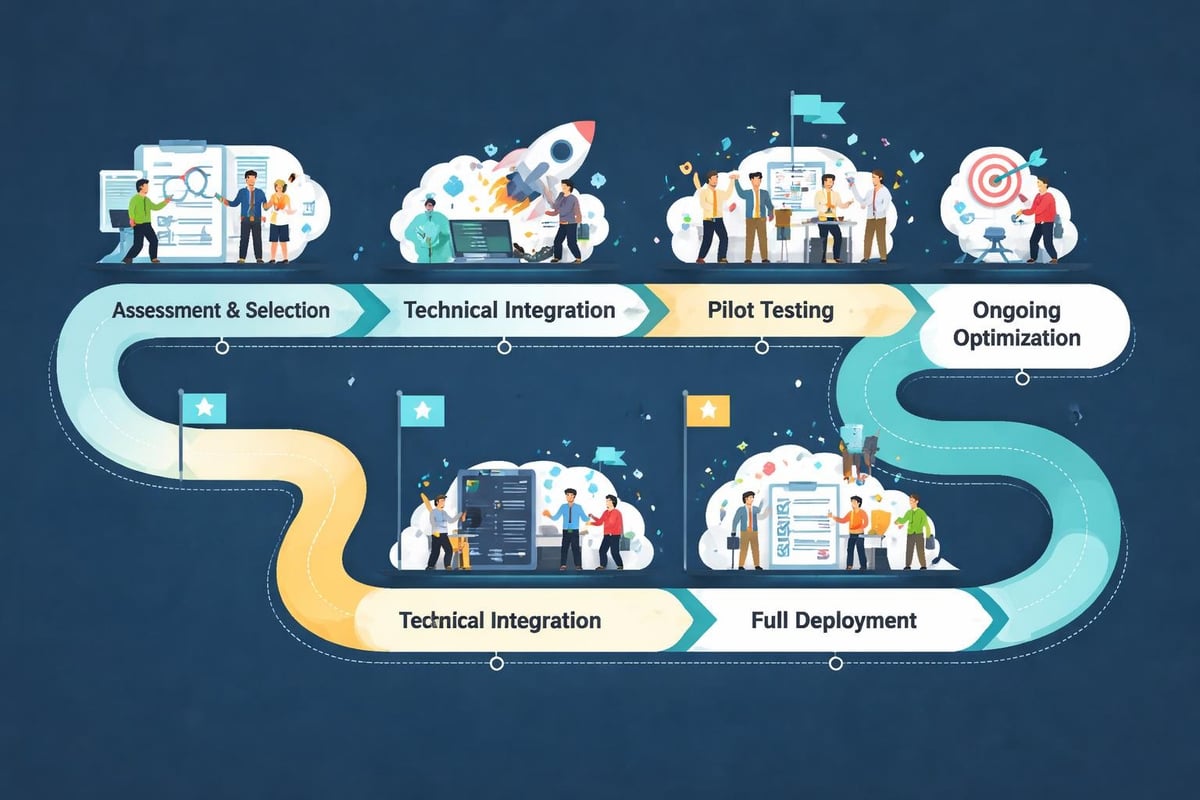
Successful implementation requires careful planning, stakeholder alignment, and phased deployment. Organizations should approach integration strategically rather than attempting wholesale replacement of existing processes.
Assessment and Selection Phase
Begin by evaluating current verification gaps and defining specific objectives:
- Audit existing processes to identify where verification failures occur most frequently
- Quantify the problem by measuring cost of bad hires, time wasted on fraudulent candidates, and compliance risks
- Define success metrics including reduction in verification time, improvement in quality of hire, and cost savings
- Research solutions that integrate with your existing ATS platform
- Request demonstrations focusing on how systems handle your specific use cases
Integration and Configuration
Technical integration typically follows a standard pattern regardless of specific platforms involved:
- API connection linking the verification service to your ATS database
- Field mapping ensuring candidate data flows correctly between systems
- Rule configuration setting thresholds for automatic approval, flagging, or rejection
- Workflow customization defining when verification occurs in your hiring process
- Notification setup alerting appropriate team members when verification completes or issues arise
Most modern ATS platforms offer pre-built integrations with leading verification providers, simplifying the technical implementation. Contact verification and enrichment tools typically integrate within hours rather than weeks.
Training and Adoption
Technology alone doesn't guarantee success. Recruiters need proper training to interpret verification results and take appropriate actions:
| Training Element | Duration | Key Topics |
|---|---|---|
| System overview | 30 minutes | Dashboard navigation, result interpretation |
| Fraud indicators | 45 minutes | Common patterns, case studies, escalation procedures |
| Compliance requirements | 30 minutes | Legal obligations, documentation standards |
| Workflow integration | 45 minutes | When to verify, handling flagged candidates |
| Advanced features | 60 minutes | Custom rules, reporting, analytics |
Regular refresher sessions ensure teams stay current with system updates and emerging fraud techniques.
Measuring Verification Impact and ROI
Organizations investing in ats embedded candidate verification need frameworks for measuring results and demonstrating value. Effective measurement combines quantitative metrics with qualitative improvements.
Quantitative Performance Indicators
Track these specific metrics before and after implementation:
- Time to verify: Average duration from candidate submission to verification completion
- Cost per hire: Total recruitment expenses divided by number of hires
- Quality of hire: Performance ratings of new employees at 90-day and one-year marks
- Offer acceptance rate: Percentage of offers accepted by verified candidates
- False positive rate: Percentage of flagged candidates who prove legitimate upon investigation
- Fraud detection rate: Number of fraudulent applications identified and prevented
Qualitative Improvements
Beyond numbers, embedded verification delivers strategic benefits:
Recruiter satisfaction typically increases as verification removes uncertainty from candidate evaluation. Teams spend less time questioning credentials and more time assessing cultural fit and potential. The streamlined workflow reduces administrative burden, allowing recruiters to focus on relationship-building activities.
Candidate experience improves when legitimate applicants move through processes quickly. Verified candidates appreciate transparent, efficient hiring that respects their time. Organizations gain competitive advantages by offering faster, more professional recruitment experiences.
Advanced Verification Capabilities
Leading ats embedded candidate verification platforms continue evolving beyond basic credential checks. Several advanced capabilities are becoming standard expectations rather than premium features.
Skill Verification and Assessment Integration
Modern verification extends beyond confirming that candidates attended claimed schools or worked at listed companies. Skill verification validates that candidates actually possess the expertise they claim.
Integration with technical assessment platforms allows verification systems to cross-reference claimed programming languages, tools, or methodologies against objective test results. Discrepancies between claimed proficiency and demonstrated ability trigger additional scrutiny.
Continuous Verification
Some organizations implement ongoing verification for contractors and temporary workers. Rather than verifying only at hire, systems periodically recheck credentials, certifications, and compliance requirements. This approach proves particularly valuable for regulated industries where certifications expire or requirements change.
Predictive Fraud Modeling
Machine learning models trained on historical fraud cases can predict likelihood of deception before traditional red flags appear. These systems analyze subtle patterns across thousands of data points, generating risk scores that guide recruiter attention toward highest-risk applications.
Detailed resume validation processes demonstrate how systematic approaches to detecting inconsistencies improve hiring outcomes. Organizations implementing predictive models report significant reductions in fraud reaching later hiring stages.
Privacy and Ethical Considerations
Implementing ats embedded candidate verification requires balancing fraud prevention with candidate privacy rights and ethical hiring practices. Organizations must navigate complex regulatory requirements while maintaining fair, unbiased processes.
Data Protection Compliance
Verification systems collect and process sensitive personal information, triggering requirements under various privacy regulations. Organizations must ensure:
- Explicit consent obtained from candidates before running verification checks
- Data minimization collecting only information necessary for legitimate verification purposes
- Secure storage protecting candidate data with appropriate encryption and access controls
- Retention limits deleting verification data according to policy and regulatory requirements
- Transparency informing candidates what verification occurs and how results influence decisions
Bias Prevention
Automated verification systems can perpetuate or amplify existing biases if not carefully designed. Organizations should:
- Regularly audit verification algorithms for disparate impact across demographic groups
- Ensure verification criteria focus on objective, job-relevant factors
- Provide human review mechanisms for flagged candidates to contest results
- Monitor outcomes to identify and correct systematic bias patterns
- Train recruiters on fair application of verification results
Integration with Broader Talent Ecosystem
ATS embedded candidate verification doesn't operate in isolation. The most effective implementations connect verification with other talent management systems and processes.
Sourcing Platform Connections
Sourcing engines that integrate with ATS systems can pre-verify candidates before they even enter the formal application process. This proactive verification reduces wasted effort on candidates who won't pass scrutiny.
Onboarding System Handoffs
Verification data collected during hiring provides value beyond the recruitment phase. Passing verified credential information to onboarding systems eliminates redundant data collection and speeds new hire processing.
Talent Pool Management
Organizations maintaining talent pools for future opportunities benefit from verification status indicators. Knowing which candidates in your database have already passed verification enables faster reactivation for new opportunities.
Implementing ats embedded candidate verification transforms hiring from a trust-based process into a validated, efficient system that protects organizations while respecting legitimate candidates. The integrated approach reduces fraud, accelerates decision-making, and improves overall hiring quality. Augmnt provides exactly this type of comprehensive verification through its AI-powered marketplace that connects businesses with authenticated AI professionals, combining automated validation with human expertise to ensure every candidate presented meets rigorous authenticity standards. Organizations ready to eliminate hiring fraud and streamline talent acquisition can explore how Augmnt's verification-first approach delivers verified, qualified candidates efficiently.