AI in Recruitment Process: Transform Your Hiring in 2026
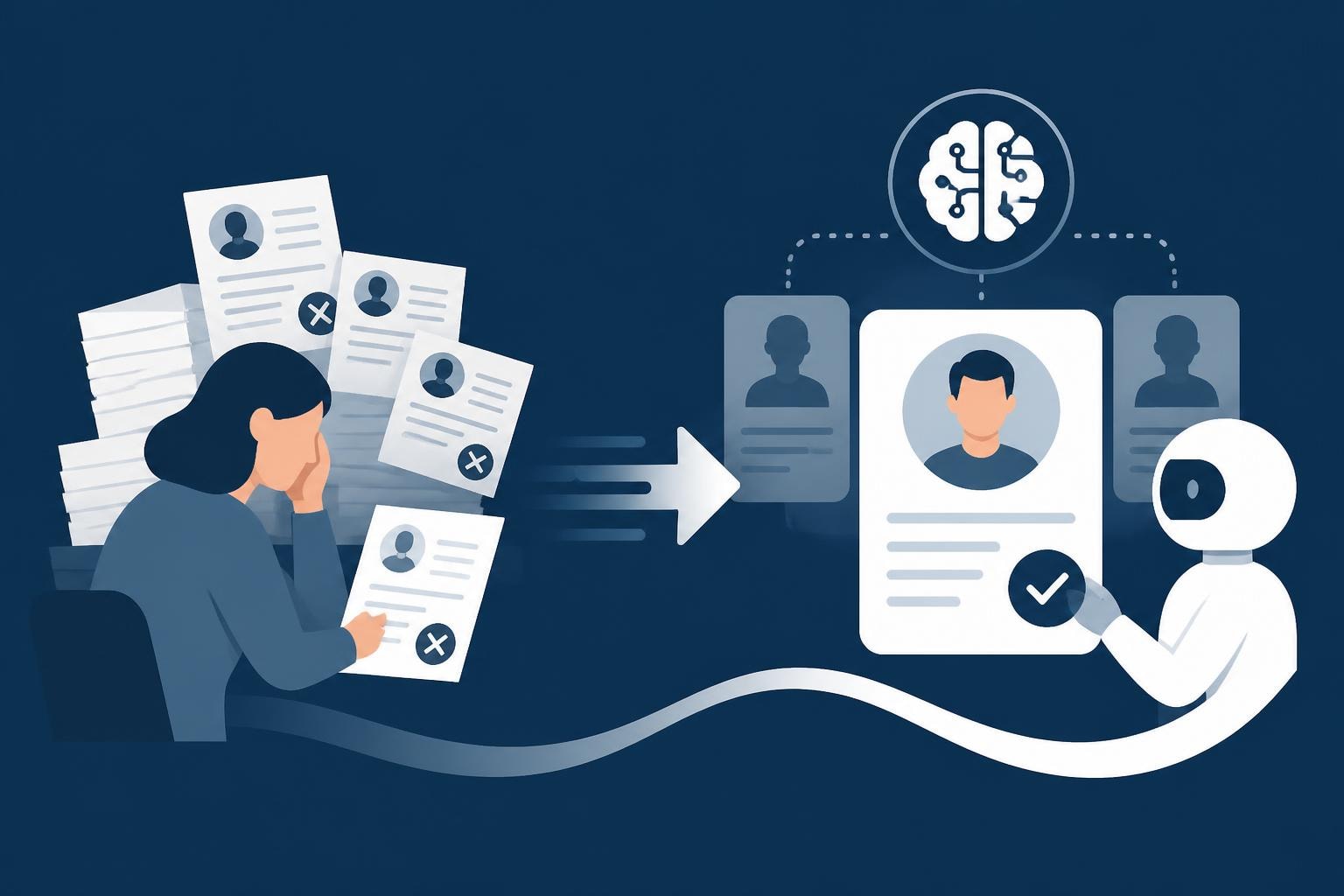
The recruitment landscape has undergone a seismic shift over the past few years, driven by the integration of artificial intelligence into talent acquisition strategies. Organizations across industries now leverage AI in recruitment process workflows to address persistent challenges like time-consuming resume screening, unconscious bias, and inefficient candidate matching. As businesses compete for top talent in an increasingly tight labor market, AI-powered tools have emerged as essential components of modern hiring infrastructure, enabling recruiters to make faster, more informed decisions while maintaining the human connection that defines exceptional candidate experiences.
The Current State of AI-Driven Talent Acquisition
Modern recruitment teams face unprecedented pressure to fill positions quickly while maintaining quality standards. Traditional hiring methods, which rely heavily on manual resume review and subjective assessments, simply cannot scale to meet the demands of today's fast-paced business environment.
AI technologies have fundamentally changed how organizations approach talent acquisition. According to research from IBM on AI in recruitment, these tools automate repetitive tasks and enhance candidate experience while allowing human recruiters to focus on relationship-building and strategic decision-making. The technology spans multiple areas:
- Resume screening and parsing that analyzes thousands of applications in minutes
- Candidate matching algorithms that compare skills and experience against job requirements
- Chatbots and virtual assistants that handle initial candidate communications
- Predictive analytics that forecast candidate success and retention
- Interview scheduling automation that eliminates coordination friction
The adoption rate continues to accelerate. More companies are implementing AI in recruitment process systems to gain competitive advantages in talent markets where speed and accuracy determine success.
Benefits That Drive Adoption
Organizations implementing AI in recruitment process workflows report measurable improvements across multiple metrics. Time-to-hire decreases significantly when algorithms handle initial candidate filtering, freeing recruiters to engage with pre-qualified prospects. The efficiency gains translate directly to cost savings, with reduced spending on job board postings and fewer hours devoted to administrative tasks.
Quality of hire represents another critical advantage. AI systems analyze candidate data with consistency that human reviewers struggle to maintain across hundreds of applications. Pattern recognition capabilities identify correlations between candidate attributes and on-the-job performance, enabling more accurate predictions about future success.
| Benefit Area | Traditional Process | AI-Enhanced Process |
|---|---|---|
| Resume Review Time | 20-30 min per candidate | 2-3 min per candidate |
| Candidate Response Rate | 45-60% | 75-85% |
| Time-to-Hire | 36-42 days | 23-28 days |
| Cost-per-Hire | $4,200-$5,000 | $2,800-$3,500 |
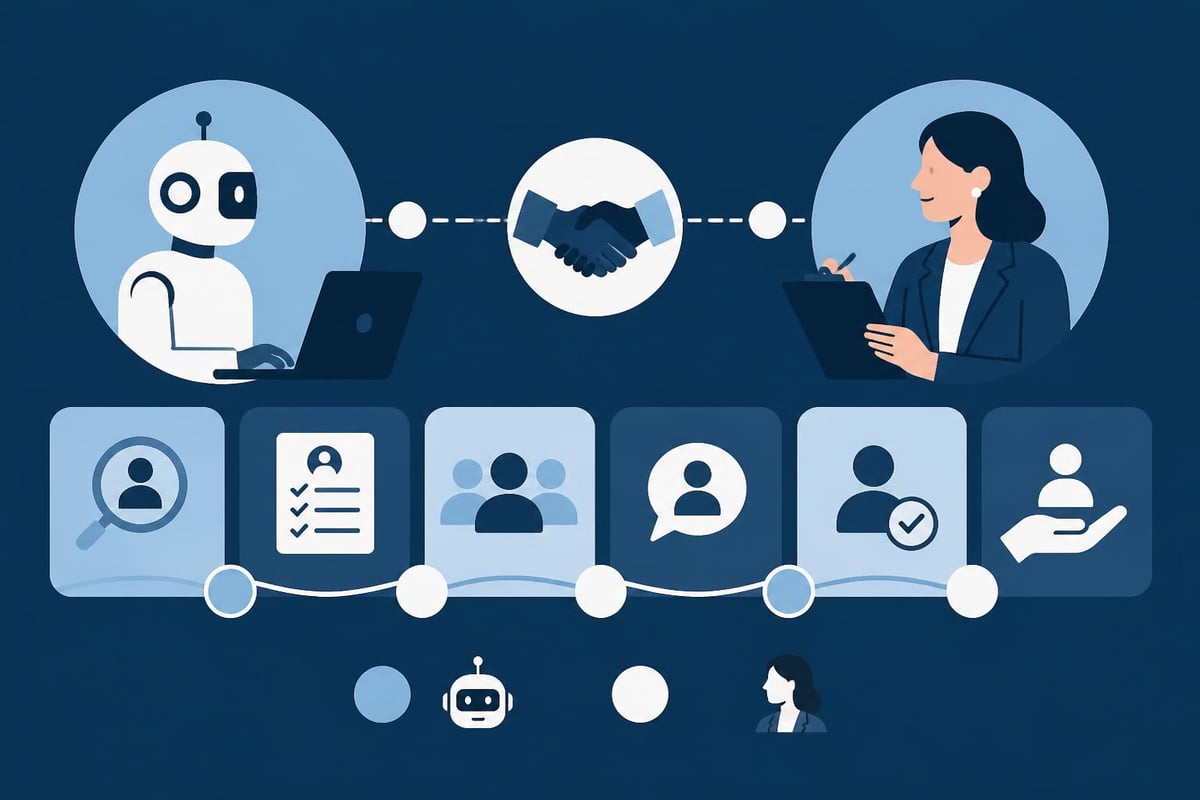
The data demonstrates clear advantages, but the human element remains irreplaceable. Successful implementations of AI in recruitment process systems maintain the balance between automation and personal interaction, using technology to enhance rather than replace human judgment.
Practical Applications Across the Hiring Funnel
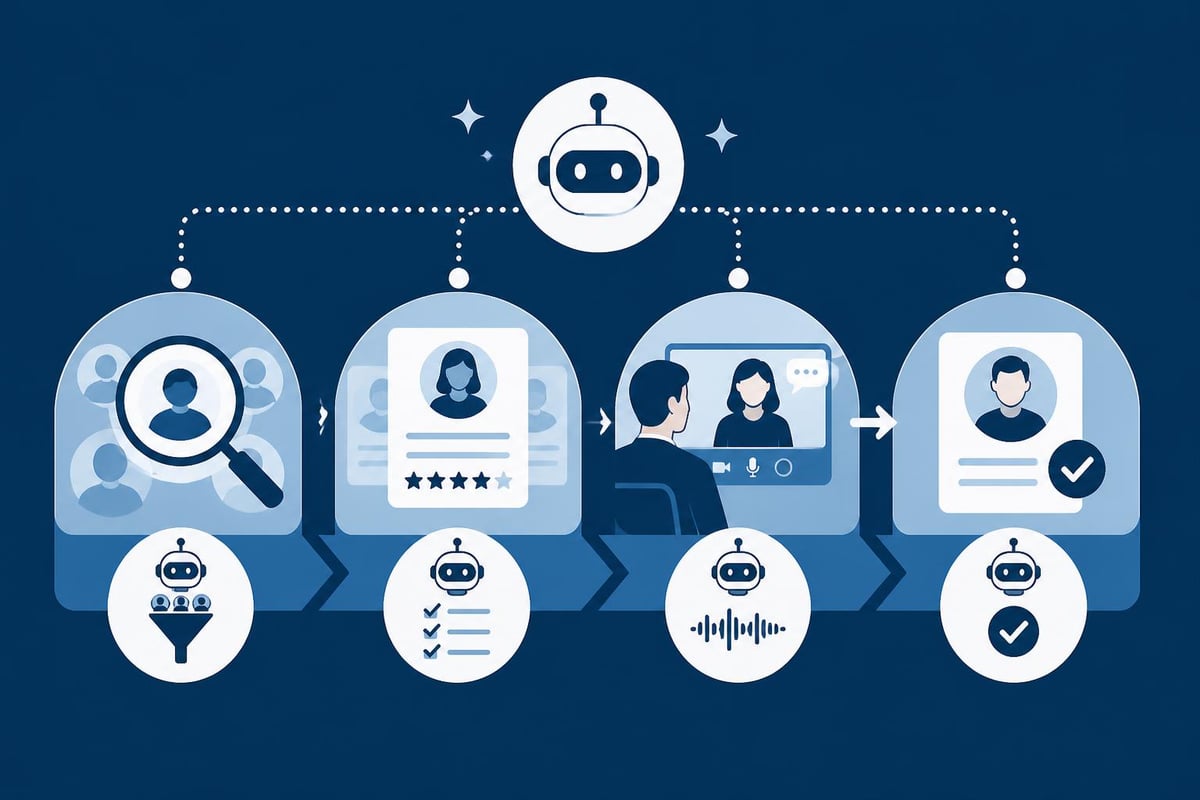
AI technologies serve distinct functions at different stages of recruitment. Understanding where and how to deploy these tools maximizes their impact while avoiding common implementation pitfalls.
Sourcing and Candidate Discovery
The top of the funnel presents opportunities for AI to expand talent pools beyond traditional sources. Built In's analysis of AI recruiting highlights how natural language processing helps craft compelling job descriptions that attract diverse candidate pools while algorithms search passive candidate databases to identify prospects who match specific criteria.
Intelligent sourcing platforms scrape professional networks, analyze publicly available career data, and recommend candidates who may not actively seek new positions but possess desired qualifications. This proactive approach to talent identification represents a significant advancement over reactive posting-and-waiting strategies.
Screening and Assessment
Once candidates enter the pipeline, AI excels at initial qualification. Resume parsing technology extracts relevant information from various document formats, standardizing data for consistent evaluation. Machine learning models trained on successful hires within specific roles can score applications based on factors that correlate with performance.
Advanced systems go beyond keyword matching to understand context and nuance in candidate backgrounds. They recognize transferable skills, equivalent experiences across industries, and non-traditional career paths that human screeners might overlook.
For organizations focused on specialized talent segments, platforms like Augmnt ATS combine AI matching with fraud detection to ensure only verified, qualified candidates advance through the process. This dual focus on automation and validation addresses critical pain points in technical hiring where credential inflation and resume embellishment pose significant risks.
Interview Coordination and Evaluation
Scheduling interviews traditionally consumes significant recruiter time, involving multiple email exchanges to find mutually convenient times. AI-powered scheduling assistants access calendar systems, propose available slots, and automatically book meetings based on candidate selections.
AI-driven interviews have become increasingly common for initial screening rounds. These systems conduct structured conversations via video or text, analyzing candidate responses for relevant skills and cultural fit indicators. While controversial among some candidates, these tools provide consistency and eliminate scheduling constraints associated with human interviewers.
Video interview platforms analyze verbal responses alongside non-verbal cues like speech patterns, word choice, and confidence levels. The technology generates detailed candidate profiles that hiring managers review before advancing prospects to live interviews.

Addressing Bias and Fairness Concerns
The promise of AI in recruitment process systems includes reducing human bias that affects hiring decisions. However, technology alone cannot guarantee fairness. AI models trained on historical hiring data may perpetuate existing biases if that data reflects discriminatory patterns.
Research examining fairness in AI-driven recruitment identifies several challenges that organizations must address. Algorithmic bias can emerge from training data, feature selection, or model design choices that inadvertently disadvantage certain demographic groups.
Mitigation Strategies
Responsible AI implementation requires deliberate effort to identify and correct bias:
- Audit training data for demographic imbalances and outcome disparities
- Test algorithms across diverse candidate pools to identify differential impacts
- Monitor outcomes continuously, tracking hiring metrics by protected characteristics
- Implement human oversight at critical decision points to catch algorithmic errors
- Maintain transparency about how AI influences hiring decisions
Organizations should regularly review which factors their AI systems prioritize and ensure these align with legitimate job requirements rather than proxy variables that correlate with protected characteristics.
The human-AI collaboration model proves most effective for reducing bias. AI handles objective skill matching while human recruiters evaluate cultural fit and potential, creating checks and balances that neither party achieves alone.
Implementation Considerations for Modern Organizations
Successfully integrating AI in recruitment process workflows requires strategic planning and change management. Technology alone does not transform hiring outcomes without proper implementation and ongoing optimization.
Technology Selection
The recruitment technology landscape offers numerous vendors with varying capabilities and specializations. Organizations should evaluate solutions based on:
- Integration capabilities with existing ATS and HRIS systems
- Scalability to handle varying hiring volumes
- Customization options for industry-specific requirements
- Vendor support and implementation services
- Data security and candidate privacy protections
Platforms that connect with ATS integrations streamline workflow continuity, ensuring candidate data flows seamlessly between systems without manual intervention or duplication.
Team Training and Adoption
Technology implementation fails when end users lack understanding or buy-in. Recruitment teams need training not just on system mechanics but on how AI enhances rather than replaces their expertise. According to insights from Monster's guide on using AI in hiring, maintaining human touch remains essential even as automation increases.
Successful adoption strategies include:
- Demonstrating time savings through pilot programs
- Highlighting quality improvements in candidate matches
- Addressing concerns about job security and role changes
- Involving recruiters in system configuration and refinement
- Celebrating early wins and sharing success metrics
Change management expertise proves as important as technical implementation skills when deploying AI in recruitment process systems.
Measuring Impact and Continuous Improvement
Organizations investing in AI recruitment technology need frameworks for evaluating return on investment and identifying optimization opportunities. Measurement strategies should capture both efficiency gains and quality improvements.
Key Performance Indicators
Effective measurement tracks metrics across multiple dimensions:
| Metric Category | Specific KPIs | Target Improvement |
|---|---|---|
| Efficiency | Time-to-hire, recruiter hours per hire | 30-40% reduction |
| Quality | 90-day retention, performance ratings | 15-25% improvement |
| Cost | Cost-per-hire, source effectiveness | 25-35% decrease |
| Experience | Candidate satisfaction, application completion rate | 20-30% increase |
| Diversity | Demographic representation, slate diversity | Measurable progress |
Organizations should establish baselines before implementation and track trends over time rather than focusing on short-term fluctuations. Recruitment automation research from IBM emphasizes the importance of data-driven decision-making in modern talent acquisition.
Optimization Cycles
AI systems improve through iteration. Regular review cycles should examine:
- Algorithm performance against stated objectives
- User feedback from recruiters and candidates
- Outcome analysis comparing predicted and actual performance
- Bias audits ensuring fairness across candidate groups
- Process bottlenecks where automation could expand
The most sophisticated implementations treat AI in recruitment process systems as dynamic tools requiring continuous refinement rather than static solutions deployed once and forgotten.
Candidate Experience in the AI Era
While organizations focus on internal efficiency, candidate experience determines whether top talent completes applications and accepts offers. AI impacts how prospects interact with employers from first contact through final decision.
Positive Experience Elements
Well-designed AI recruitment systems enhance candidate experience through:
- Rapid response times with automated acknowledgment and status updates
- Transparent communication about process stages and timelines
- Personalized interactions based on candidate background and preferences
- Convenient scheduling without protracted email exchanges
- Constructive feedback even for unsuccessful applicants
These elements build employer brand and maintain talent pool engagement for future opportunities.
Common Friction Points
However, poorly implemented AI creates frustration. Reports from TechRadar on candidate reactions to AI interviews reveal that many job seekers abandon applications when facing impersonal or opaque AI-driven processes.
Candidates express concerns about:
- Black-box decision-making with no explanation for rejection
- Inability to showcase unique qualities beyond resume keywords
- Technical difficulties with AI interview platforms
- Perception of reduced human contact signaling organizational culture
- Privacy concerns about data collection and usage
Organizations must balance automation efficiency with human touchpoints that demonstrate genuine interest in candidates as individuals. The most effective implementations of AI in recruitment process workflows use technology to handle administrative burden while preserving meaningful human interactions at strategic moments.
Future Trends Reshaping Recruitment Technology
The evolution of AI in recruitment process applications continues accelerating as new capabilities emerge and adoption deepens. Several trends will shape the next generation of talent acquisition technology.
Predictive Analytics and Workforce Planning
Advanced analytics will increasingly forecast hiring needs based on business growth patterns, turnover predictions, and market conditions. These insights enable proactive talent pipeline development rather than reactive hiring when positions open.
Machine learning models will analyze employee performance data to identify characteristics of successful hires in specific roles, continuously refining selection criteria based on actual outcomes rather than assumptions.
Enhanced Personalization
AI systems will deliver increasingly personalized candidate experiences, adapting communication styles, content emphasis, and engagement strategies based on individual preferences and behaviors. Natural language generation will create customized outreach messages and job descriptions that resonate with specific talent segments.
Integration with Broader HR Ecosystems
Recruitment AI will connect more seamlessly with onboarding, performance management, and learning systems, creating unified employee lifecycle platforms. Data from recruitment processes will inform development planning while performance data refines hiring algorithms.
Research on AI-assisted recruitment benefits demonstrates improved outcomes when AI integrates throughout the talent management lifecycle rather than operating as isolated recruitment tools.
Voice and Conversational Interfaces
Voice-activated assistants and sophisticated chatbots will handle increasingly complex candidate interactions, from answering detailed questions about roles and companies to conducting preliminary skill assessments. Natural language processing advances enable more nuanced conversations that feel less robotic and more engaging.
Organizations exploring these innovations should maintain focus on candidate outcomes rather than adopting technology for novelty. The most valuable AI in recruitment process systems solve real problems and deliver measurable improvements in hiring quality, speed, or cost-efficiency.
For additional insights on recruitment strategy and technology implementation, explore resources available through Augmnt's blog covering various aspects of modern talent acquisition.
AI has fundamentally transformed recruitment from a labor-intensive, subjective process into a data-driven discipline that combines technological efficiency with human insight. Organizations that thoughtfully implement AI in recruitment process systems gain significant advantages in talent markets where speed, quality, and candidate experience determine success. Augmnt helps businesses navigate this transformation by connecting them with verified AI professionals through intelligent matching technology that ensures quality, reduces fraud, and streamlines the hiring journey from initial search to final offer.