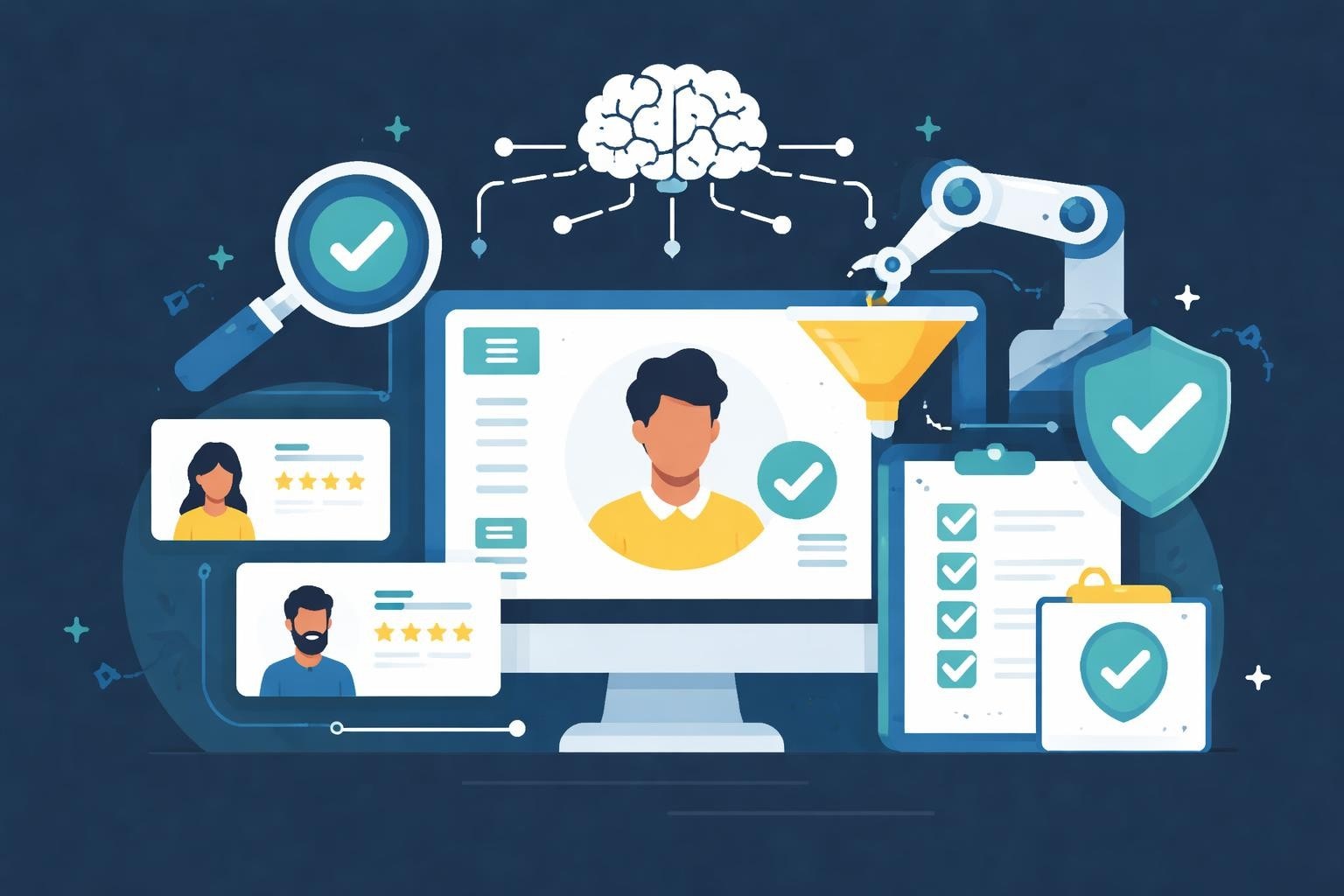
AI Hiring Platform: Transform Your Recruitment in 2026
The recruitment landscape has undergone a seismic shift as organizations face mounting pressure to identify exceptional talent quickly while maintaining hiring quality. Traditional recruitment methods struggle to keep pace with the volume of applications, the complexity of skill verification, and the rising threat of credential fraud. An ai hiring platform addresses these challenges head-on by combining machine learning algorithms with intelligent automation to transform how businesses discover, evaluate, and onboard professionals. This technology-driven approach doesn't simply digitize existing processes; it fundamentally reimagines talent acquisition by introducing capabilities that were impossible just a few years ago.
Understanding AI Hiring Platform Technology
An ai hiring platform leverages artificial intelligence to automate and optimize multiple stages of the recruitment lifecycle. These systems utilize natural language processing to parse resumes, machine learning models to predict candidate success, and computer vision to verify credentials and identities.
The core functionality extends far beyond basic applicant tracking. Modern platforms incorporate:
- Intelligent resume screening that identifies qualified candidates in seconds
- Automated interview scheduling coordinated across multiple time zones
- Skill assessment tools powered by adaptive testing algorithms
- Predictive analytics that forecast candidate performance and retention
- Bias reduction mechanisms that promote diversity in hiring decisions
These capabilities work in concert to create a recruitment ecosystem that operates continuously, processing applications and evaluating candidates around the clock. The efficiency gains are substantial, with organizations reporting time-to-hire reductions of 40-60% when implementing comprehensive AI solutions.
The Evolution from Traditional ATS to AI-Powered Solutions
Applicant Tracking Systems (ATS) have served as the backbone of recruitment technology for decades, but their limitations have become increasingly apparent. Traditional systems function primarily as databases, storing candidate information and tracking application status without providing meaningful intelligence or recommendations.
An ai hiring platform represents a quantum leap forward. Rather than simply organizing data, these systems actively analyze patterns, learn from hiring outcomes, and continuously refine their recommendations. They understand context, recognize skills across different terminology variations, and can identify transferable competencies that human reviewers might overlook.
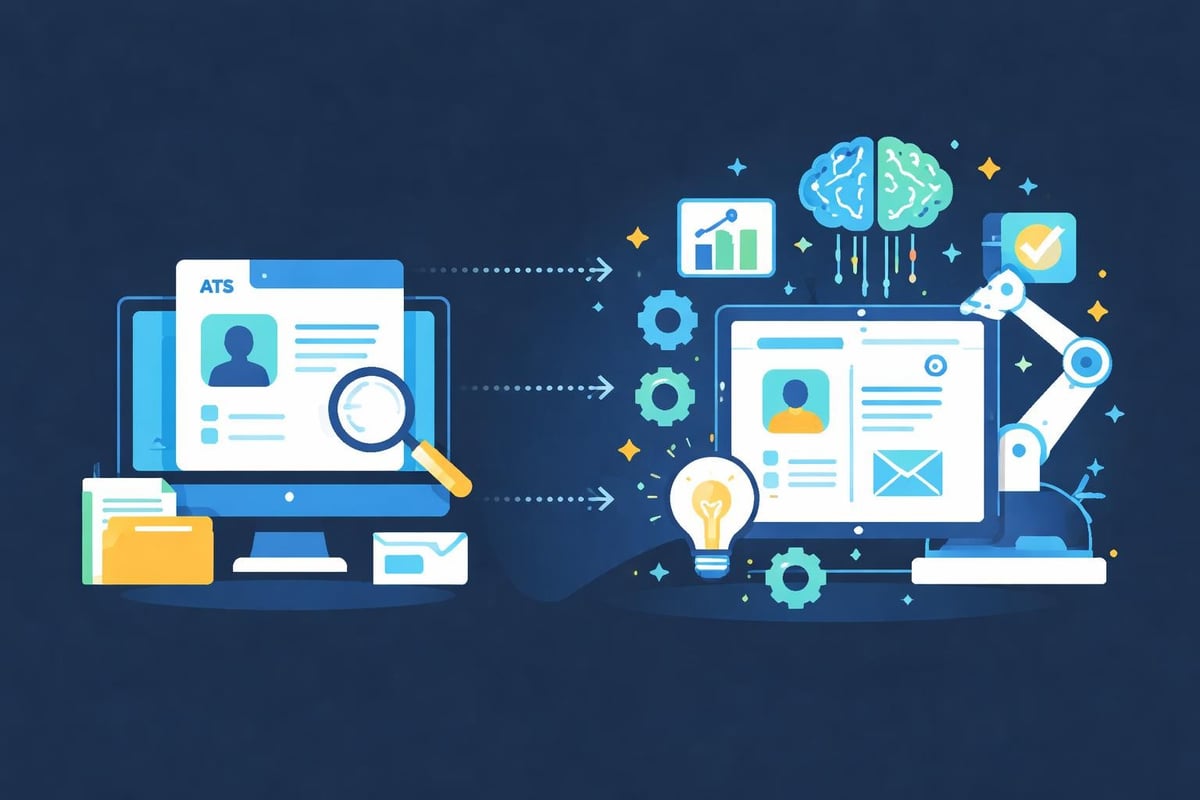
IBM's research on AI in recruitment demonstrates how AI agents streamline hiring by automating administrative tasks and enhancing candidate engagement, fundamentally changing how organizations approach talent acquisition in 2026.
Critical Features of Leading AI Hiring Platforms
When evaluating ai hiring platform options, organizations must prioritize features that deliver measurable improvements to recruitment outcomes. The market has matured significantly, with clear differentiators emerging between basic automation tools and genuinely intelligent systems.
Intelligent Candidate Matching and Scoring
The matching engine represents the heart of any effective ai hiring platform. These algorithms analyze job descriptions to extract required skills, experience levels, and competencies, then compare them against candidate profiles to generate compatibility scores.
Advanced matching systems consider:
- Hard skills measured through certifications and demonstrated experience
- Soft skills inferred from communication patterns and behavioral assessments
- Cultural alignment based on values and work style preferences
- Career trajectory indicating growth potential and ambition
- Location preferences and remote work compatibility
The most sophisticated platforms employ ensemble learning techniques, combining multiple AI models to achieve higher accuracy than any single algorithm could deliver. This approach reduces both false positives (unqualified candidates ranked highly) and false negatives (qualified candidates overlooked).
| Feature Category | Traditional Approach | AI-Powered Approach | Impact on Efficiency |
|---|---|---|---|
| Resume Review | Manual, 10-15 min per resume | Automated, 5-10 seconds per resume | 100x faster |
| Candidate Sourcing | Active job boards, referrals | Predictive talent pools, passive recruitment | 3x larger pipeline |
| Interview Scheduling | Email coordination, 3-5 days | Automated matching, <24 hours | 5x faster |
| Skills Verification | Reference checks, weeks | AI-driven assessments, hours | 30x faster |
Fraud Detection and Verification Capabilities
The rise of AI-generated resumes and sophisticated identity fraud has created an urgent need for robust verification within hiring platforms. Recent reports indicate that candidates using AI to fake identities are costing companies thousands of dollars, making fraud detection a critical component of modern recruitment technology.
An effective ai hiring platform incorporates multiple verification layers:
- Resume authenticity analysis detecting inconsistencies and fabricated experiences
- Credential verification cross-referencing claimed qualifications with issuing institutions
- Identity confirmation using document analysis and biometric validation
- Work history verification confirming employment dates and responsibilities
- Skill validation through practical assessments and coding challenges
Solutions like Augmnt ATS integrate verified matching with comprehensive fraud detection, ensuring that only legitimate, qualified candidates advance through the hiring pipeline. This dual approach protects organizations from the financial and reputational damage associated with fraudulent hires while maintaining recruitment velocity.
Implementing an AI Hiring Platform: Strategic Considerations
Successful deployment requires more than simply purchasing software. Organizations must approach implementation as a strategic transformation project that touches people, processes, and technology simultaneously.
Integration with Existing HR Technology Stack
An ai hiring platform doesn't operate in isolation. It must connect seamlessly with HRIS systems, payroll platforms, background check services, and communication tools to deliver value across the employment lifecycle.
Key integration points include:
- Single sign-on (SSO) for unified authentication across platforms
- Bidirectional data synchronization with core HR systems
- API connections to assessment providers and skill testing platforms
- Calendar integrations for automated interview scheduling
- Communication platform connections for candidate engagement
The technical architecture should support both real-time and batch data exchanges, with robust error handling and monitoring to ensure data integrity. Organizations typically underestimate the complexity of these integrations, leading to extended implementation timelines.
Change Management and User Adoption
Technology adoption fails when end users resist new workflows or lack confidence in AI-generated recommendations. Recruiting teams need comprehensive training not just on how to use the platform, but on how to interpret its outputs and when to override algorithmic suggestions.
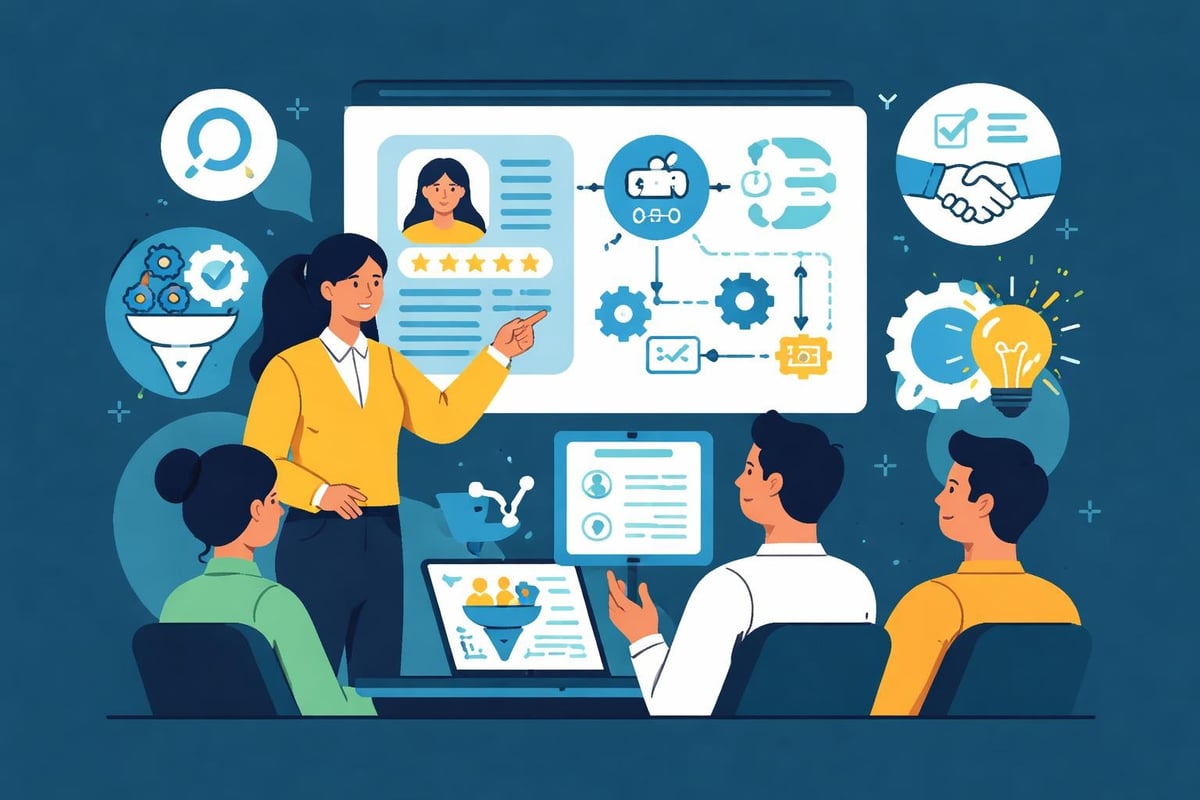
Successful organizations establish clear governance frameworks that define:
- Decision authority between AI recommendations and human judgment
- Data quality standards and maintenance responsibilities
- Performance metrics and continuous improvement processes
- Escalation paths for technical issues or edge cases
- Regular review cycles to assess platform effectiveness
TechRadar's analysis of recruitment platforms highlights how feature-rich systems require significant organizational readiness to maximize their potential value in 2026's competitive hiring environment.
Industry-Specific Applications and Use Cases
Different sectors face unique hiring challenges that an ai hiring platform can address through customized configurations and specialized features.
Technology and AI Professional Recruitment
The competition for qualified AI professionals, data scientists, and machine learning engineers has reached unprecedented levels. Traditional recruitment methods fail to adequately assess technical depth or identify candidates with cutting-edge skills in rapidly evolving fields.
An ai hiring platform tailored for technology recruitment incorporates:
- Technical skill assessments that go beyond resume keywords to verify actual coding ability
- Portfolio analysis using computer vision to evaluate project complexity and code quality
- GitHub integration assessing contribution patterns and collaboration skills
- Technology stack matching aligning candidate expertise with specific frameworks and tools
Specialized platforms like Augmnt focus exclusively on connecting businesses with verified AI professionals, combining algorithmic matching with human expertise to ensure candidates possess genuine qualifications rather than fabricated credentials. This hybrid approach proves particularly valuable in technical domains where credential inflation and resume embellishment are common.
High-Volume Hiring Operations
Organizations with continuous hiring needs across multiple locations face different challenges. Volume creates its own complexity, as manual processes become bottlenecks that slow recruitment to a crawl.
For these scenarios, an ai hiring platform delivers value through:
- Parallel processing of thousands of applications simultaneously
- Automated communication sequences maintaining candidate engagement
- Dynamic job matching that routes applicants to multiple relevant positions
- Predictive modeling identifying candidates likely to accept offers
- Attrition forecasting informing proactive talent pipeline development
The scalability of AI-powered systems allows organizations to maintain quality standards even as application volumes surge during peak hiring periods.
Measuring ROI and Performance Metrics
Justifying investment in an ai hiring platform requires establishing clear metrics that demonstrate business impact beyond anecdotal improvements.
Quantitative Performance Indicators
| Metric | Traditional Recruitment | AI Platform Recruitment | Improvement |
|---|---|---|---|
| Average Time-to-Fill | 42 days | 18 days | 57% reduction |
| Cost-per-Hire | $4,200 | $2,100 | 50% reduction |
| Offer Acceptance Rate | 68% | 84% | 24% increase |
| First-Year Retention | 71% | 87% | 23% increase |
| Recruiter Productivity | 12 hires/year | 36 hires/year | 200% increase |
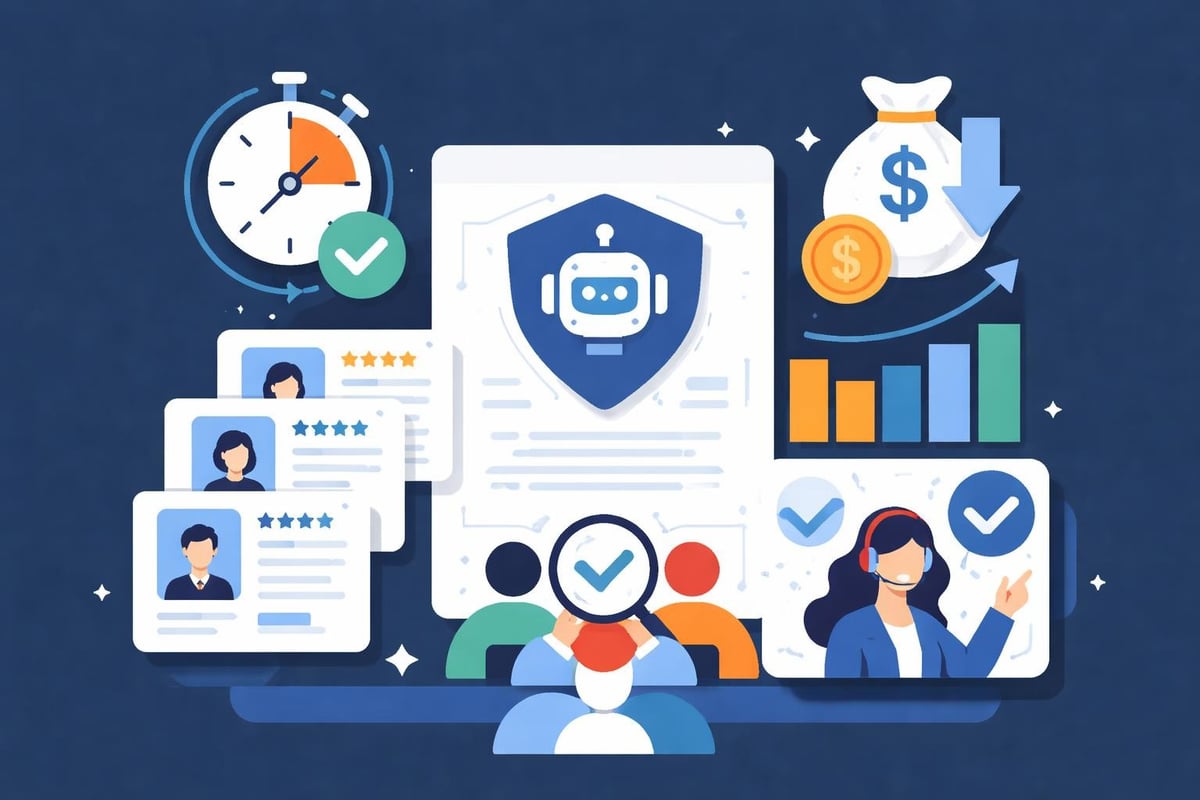
These metrics capture direct efficiency gains, but the strategic value extends further. Organizations report improved candidate quality, enhanced employer brand perception, and reduced bias in hiring decisions as secondary benefits that compound over time.
Qualitative Assessment Criteria
Beyond numbers, stakeholders should evaluate the candidate experience, hiring manager satisfaction, and recruiter confidence in platform recommendations. Regular surveys and feedback sessions provide insights that quantitative metrics miss.
Assessment areas include:
- Candidate Net Promoter Score (NPS) measuring application experience
- Hiring manager satisfaction with candidate quality and match accuracy
- Recruiter confidence in AI-generated recommendations
- Diversity metrics tracking representation improvements
- Quality of hire assessments based on performance reviews
Addressing Ethical Considerations and Bias
The deployment of AI in hiring raises legitimate concerns about algorithmic bias, transparency, and fairness. An ai hiring platform can either amplify existing biases or actively work to mitigate them depending on how it's designed and governed.
Bias Detection and Mitigation Strategies
Modern platforms incorporate multiple techniques to identify and reduce bias:
- Blind screening removing identifying information like names, ages, and addresses
- Diverse training data ensuring algorithms learn from representative candidate pools
- Regular bias audits analyzing outcomes across demographic groups
- Explainable AI providing transparency into how recommendations are generated
- Human oversight maintaining final decision authority with trained recruiters
Research from AIHR on AI in recruitment emphasizes the importance of clear governance structures and comprehensive risk-management practices when adopting AI hiring technologies to ensure responsible implementation.
The most effective approach combines technological safeguards with organizational policies. Companies should establish diverse hiring committees, implement structured interview protocols, and regularly review hiring outcomes to identify potential bias patterns that algorithms might miss.
Regulatory Compliance and Data Privacy
An ai hiring platform must navigate an increasingly complex regulatory environment. The Equal Employment Opportunity Commission (EEOC) has issued guidance on AI in hiring, while data protection regulations like GDPR and CCPA impose strict requirements on candidate data handling.
Compliance requirements include:
- Obtaining explicit consent for data collection and processing
- Providing candidates access to their data and algorithmic decisions
- Maintaining audit trails documenting how hiring decisions were made
- Ensuring data security through encryption and access controls
- Implementing data retention policies aligned with legal requirements
Organizations must work closely with legal counsel to ensure their ai hiring platform configuration complies with applicable regulations across all jurisdictions where they recruit.
Future Trends Shaping AI Hiring Platforms
The technology continues evolving rapidly, with several emerging trends poised to reshape recruitment further in coming years.
Conversational AI and Virtual Recruiters
Natural language processing advances enable AI assistants that conduct initial candidate screenings through natural conversation. These virtual recruiters ask clarifying questions, assess communication skills, and provide immediate feedback to candidates, creating more engaging experiences while gathering richer data for evaluation.
The technology has matured to the point where candidates often can't distinguish between AI and human interviewers in text-based exchanges. Voice-based systems are approaching similar capabilities, though they still lag behind text in accuracy and naturalness.
Predictive Talent Analytics and Workforce Planning
Forward-thinking organizations are extending their ai hiring platform beyond immediate recruitment needs to support strategic workforce planning. Predictive models forecast future skill requirements based on business objectives, market trends, and technological evolution.
These systems can identify skill gaps months before they become critical, enabling proactive talent development and recruitment. Analysis shows that AI is disrupting IT hiring, yet many businesses remain unprepared for its full impact on workforce planning and talent strategy.
Continuous Learning and Adaptive Algorithms
Early AI hiring systems required manual retraining when performance degraded or business requirements changed. Modern platforms incorporate continuous learning mechanisms that automatically adapt to new data, improving recommendations without human intervention.
This adaptive capability ensures the system remains effective even as job requirements evolve, candidate pools shift, and market conditions change. The platform learns which candidates succeed in specific roles and refines its matching criteria accordingly.
Selecting the Right AI Hiring Platform for Your Organization
With dozens of vendors offering ai hiring platform solutions, choosing the right partner requires careful evaluation across multiple dimensions.
Evaluation Framework and Decision Criteria
Organizations should assess potential platforms against their specific requirements:
- Technical capabilities matching your hiring complexity and volume
- Integration flexibility supporting your existing technology ecosystem
- Vendor stability ensuring long-term support and product development
- Pricing structure aligning costs with hiring volumes and ROI expectations
- Implementation support providing adequate training and change management resources
Request detailed product demonstrations focusing on your specific use cases rather than generic features. Ask vendors to process sample job descriptions and candidate profiles to evaluate matching accuracy and user experience.
Build vs. Buy Decision Considerations
Some large organizations consider building proprietary AI hiring solutions rather than purchasing commercial platforms. This approach offers maximum customization but requires substantial investment in data science talent, infrastructure, and ongoing maintenance.
Building in-house makes sense when:
- You have unique requirements that commercial platforms can't address
- You possess the technical talent to develop and maintain AI systems
- You handle sufficient hiring volume to justify the development cost
- You need complete control over algorithms and data
- Your industry has specific compliance requirements requiring custom solutions
For most organizations, purchasing a proven ai hiring platform delivers faster time-to-value, lower total cost of ownership, and access to continuous innovation that would be difficult to match with internal development.
An ai hiring platform represents a fundamental shift in how organizations approach talent acquisition, offering unprecedented efficiency, accuracy, and scale in identifying qualified candidates. The technology addresses critical challenges including application volume management, credential verification, and bias reduction while delivering measurable improvements in time-to-hire and cost-per-hire metrics. As recruitment fraud becomes more sophisticated and competition for top talent intensifies, these platforms have evolved from nice-to-have tools into essential infrastructure for modern hiring operations. Augmnt combines intelligent matching algorithms with comprehensive fraud detection to connect businesses with verified AI professionals, ensuring you hire qualified, legitimate candidates while accelerating your recruitment timeline. Discover how our platform can transform your hiring process today.